
What Is Contoura Vision LASIK? A Deep Dive into the Next-Generation Eye Correction
If you’re exploring laser vision correction options and wondering what is Contoura Vision LASIK, you’re in the right place. In this article, I’ll walk you through how it works, who it’s for, the benefits and risks, the procedure, recovery, and how it stacks up against traditional LASIK. If you’re 20 or older and considering refractive surgery, this guide will help you make an informed decision with confidence.
Understanding the Basics of LASIK
What is LASIK?
LASIK (Laser-Assisted In Situ Keratomileusis) is a well-known refractive surgery technique used to correct myopia (nearsightedness), hyperopia (farsightedness), and astigmatism.
In simple terms:
- A small flap is created on the cornea (the clear front layer of the eye).
- A laser reshapes the underlying corneal tissue so that light entering the eye focuses correctly on the retina.
- The flap is repositioned and heals naturally.
Limitations of conventional LASIK
Although LASIK has helped countless people escape glasses or contact lenses, it has some limitations:
- Traditional LASIK often uses generalized data (for example, your glasses or contact lens prescription plus basic topography) rather than very detailed mapping of the cornea.
- Because of that, subtle optical imperfections (known as higher-order aberrations) may remain, which can manifest as glare, halos, or reduced contrast sensitivity — especially under low-light conditions.
- Some patients might achieve “20/20” vision but still feel their vision isn’t quite as sharp or “crisp” as it could be.
What is Contoura Vision LASIK?
A definition
Contoura Vision LASIK (sometimes just “Contoura Vision” or “Contoura LASIK”) is a topography-guided LASIK procedure. In other words, it uses highly detailed corneal topography (mapping the surface of the cornea) to create a customised treatment plan unique to your eye.
Key distinguishing features
- It maps up to 22,000 elevation points on the cornea using a system called the “Topolyzer”.
- Unlike traditional LASIK, which often focuses on the pupillary axis (the center of the pupil), Contoura Vision treats along the visual axis — the actual optical path your eye uses to see.
- Its goal is not only to correct refractive error (glasses prescription) but also to smooth out corneal irregularities to enhance overall visual quality (sharpness, contrast, night-vision clarity).
Why this matters
For someone seeking the best possible vision, not just “good enough”, this technology represents a significant step forward. The precision and customization mean fewer residual defects and improved visual experience compared to many standard LASIK procedures.
How the Procedure Works: Step by Step
Let’s walk through what you can expect from pre-surgery to recovery if you choose Contoura Vision.
Pre-operative evaluation
Before anything else, you’ll undergo:
- A full eye exam including refraction, slit-lamp, retinal evaluation.
- Corneal topography (mapping curvature/thickness), pachymetry (thickness), possibly ocular surface assessment.
- Your suitability for the procedure is assessed (corneal thickness, health of eye, refractive stability, existing conditions).
The day of surgery
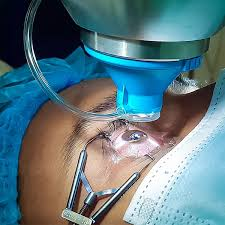
- Numbing eye drops are applied. You’ll likely be positioned under a femtosecond laser (for flap creation) or equivalent.
- A very thin corneal flap is created (often via femtosecond laser) and lifted.
- Your corneal map (topography) is used to drive the excimer laser that reshapes the underlying tissue — this is where the 22,000-point custom map comes into play.
- The flap is repositioned; no stitches needed.
- The entire process usually takes approximately 15-30 minutes (often much less for each eye) and you go home the same day.
Post-operative care & recovery
- You’ll be given antibiotic and lubricating eye drops.
- You may feel some initial discomfort, watering, or blurriness — typical for early healing.
- Many patients see substantial improvement within 24-48 hours, and most resume normal activities soon after.
- Follow-up visits are important: typically next day, one week, one month, and so on.
Benefits: What You Can Gain from Contoura Vision
Sharper, higher-quality vision
Because the laser correction is not just based on your glasses prescription but also on detailed corneal surface irregularities, many patients report better than “20/20” vision (for example 20/16) and improved visual quality, including contrast sensitivity.
Reduction in side-effects like glare and halos
Because the procedure addresses higher-order aberrations and smoother corneal surfaces, night vision problems (halos, glare, starbursts) tend to be less frequent and less severe compared to standard LASIK in many cases.
Faster recovery and less residual error
Compared to earlier techniques, the highly individualized nature of the treatment means fewer surprises, less tissue removal (in favourable cases), and potentially faster healing.
Highly tailored to your unique eye
For patients with irregular corneas or who have had prior refractive procedures, this topography-guided method offers more flexibility and precision.
Who is an Ideal Candidate? Who Might Not Be?
Ideal candidate
You might be a good candidate if you:
- Are aged 20+ (or 18+, but for long-term stability it’s ideal if you’re older).
- Have a stable prescription (no significant change for at least 12 months).
- Have healthy corneas with sufficient thickness and no active inflammation or disease.
- Want freedom from glasses/contacts and a premium visual result.
- Have myopia, hyperopia and/or astigmatism within range (your surgeon will specify).
Candidates who may not be suitable
You may be advised against it if you:
- Have thin or irregular corneas (e.g., keratoconus).
- Have uncontrolled systemic disease, severe dry eye, or certain retinal conditions.
- Are pregnant or nursing (hormonal changes can affect vision stability).
- Have unrealistic expectations (laser surgery can improve but does not guarantee “perfect” in every situation).
Always discuss candidacy thoroughly with a refractive surgeon experienced in Contoura Vision.
Potential Risks and Considerations
While Contoura Vision is highly advanced and generally safe, you should be aware of possible risks or limitations:
- Dry eye: Like all LASIK-type procedures, there may be temporary dryness.
- Undercorrection or overcorrection: In some cases, retreatment might be needed.
- Flap-related issues: Though uncommon, complications related to the corneal flap (dislocation, epithelial ingrowth) can occur.
- Night vision issues: Although reduced compared to older techniques, glare or halos may still happen, especially if you have large pupils.
- Long-term changes: The eye continues to age; for example, presbyopia (near-vision loss with age) may still occur and isn’t corrected by Contoura Vision alone.
In short: the risks are low, but not zero. Choose an experienced surgeon and reputable clinic and ensure you understand the full informed consent.
Contoura Vision vs Traditional LASIK – How Do They Compare?
| Feature | Traditional LASIK | Contoura Vision LASIK |
|---|---|---|
| Mapping points on cornea | ~200 (in many wavefront systems) | Up to ~22,000 elevation points via topolyzer |
| Focus of axis | Pupillary axis | Visual axis (more anatomically relevant) |
| Addressing higher-order aberrations | Less precise | More precise customization to reduce these errors |
| Night/low-light visual quality | Good, but some residual issues | Often improved, fewer halos/glare |
| Cost | More moderate cost | Premium cost due to advanced mapping & tech |
| Availability | Widely available | Available in selected centres with required tech |
Cost Insight & Practical Considerations
While cost varies widely by region, surgeon, and clinic facility, some ballpark figures for India (as of recent data) are:
- Standard LASIK: ₹30,000 – ₹60,000 per eye.
- Contoura Vision: ₹95,000 – ₹1,15,000 (approx) for both eyes in some centres.
Keep in mind:
- The cost reflects not just the laser but the diagnostics (topography mapping), surgeon expertise, and follow-up care.
- Make sure you ask what’s included (pre-op evaluation, follow-ups, enhancement options).
- Sometimes paying a little extra for a premium procedure with better outcomes might make sense depending on your visual demands (e.g., professionals, night drivers, active lifestyle).
Recovery, Aftercare & What to Expect
Recovery timeline
- Day of surgery: Mild blur, some watering or gritty feeling. You’ll go home the same day.
- 24-48 hours: Many patients notice marked clarity of vision; however, some visual fluctuations are normal.
- 1 week: Most have returned to many normal activities (but still avoid heavy lifting, swimming, eye-rubbing).
- 1 month and beyond: Stabilization of vision; ongoing checks for long-term outcomes.
Aftercare tips
- Use the prescribed eye drops (antibiotic, anti-inflammatory, lubricants) as directed.
- Wear UV-protective sunglasses outdoors.
- Avoid rubbing your eyes.
- Avoid dusty/windy/dirty environments for a few days.
- Attend all scheduled follow-up visits — your surgeon will monitor healing and appetite for any enhancement.
Final Thoughts: Is Contoura Vision LASIK Right for You?
If you’re looking for the best possible visual outcome, with sharper vision, reduced night vision issues, and a procedure tailored specifically to your eye’s unique topography — then Contoura Vision LASIK is certainly a strong option.
That said:
- It’s premium (cost, tech, surgeon expertise) — so carefully weigh the investment.
- Make sure your surgeon is experienced and your centre is fully equipped.
- Realistic expectations matter: even the best technology can’t guarantee “perfect” in every scenario due to individual biology.
- Always discuss candidacy, risks, benefits, and post-operative care thoroughly.
when performed well, Contoura Vision represents a meaningful leap forward in refractive surgery. If you qualify, it may be the difference between “good vision” and “exceptional vision”
Frequently Asked Questions (FAQs):
Q1. Is Contoura Vision LASIK safe?
Yes — when performed by a qualified refractive surgeon in a reputable clinic, Contoura Vision is FDA-approved and has robust safety and outcome data.
Q2. Will I be completely free from glasses after Contoura Vision?
Most patients achieve very high levels of uncorrected vision. However, long-term reading glasses may still be needed (due to aging eye). And very rarely, some minor residual correction or enhancement may be required.
Q3. How long does the effect of Contoura Vision last?
The corneal reshaping effect is permanent in the sense that the tissue is altered and stable. That said, natural changes in the eye (e.g., presbyopia, cataract) can affect vision later in life.
Q4. Is recovery faster with Contoura Vision compared to conventional LASIK?
In many cases yes — because of the precision and fewer irregularities post-op, patients often experience rapid clarity. But individual experience varies.
Q5. Can Contoura Vision correct astigmatism?
Yes — because it uses detailed mapping, it can correct spherical (myopia/hyperopia) and cylindrical (astigmatism) errors, often with better precision.
Q6. How do I choose between Contoura Vision and other procedures like SMILE or PRK?
It depends on your eye health (especially corneal thickness), lifestyle, visual demands (night driving, high contrast tasks), and budget. A detailed consultation with a refractive surgeon is crucial.