
Introduction:
If you wear glasses or contact lenses and have ever wondered whether you could see clearly without them, you have probably come across LASIK eye surgery. LASIK is a type of laser refractive surgery designed to reduce dependence on glasses or contact lenses by changing the shape of the cornea, the clear front surface of the eye. Rather than placing a lens inside the eye, LASIK uses precisely controlled laser energy to reshape corneal tissue so that incoming light can focus more accurately on the retina. The U.S. Food and Drug Administration describes LASIK as a procedure intended to reduce a person’s dependence on glasses or contact lenses. (U.S. Food and Drug Administration)
LASIK is not simply a quick “laser treatment for glasses.” It is a medical procedure that begins with detailed eye measurements and a suitability assessment. Factors such as your spectacle power, corneal thickness and shape, eye health, tear-film condition, prescription stability, and overall expectations can influence whether LASIK is appropriate for you. Modern refractive surgery has become highly precise, but it is still important to understand both its potential benefits and its limitations before making a decision. So, what exactly happens during LASIK, who can have it, and what should you realistically expect? Let’s break it down.
What Is LASIK Eye Surgery?
LASIK, or Laser-Assisted In situ keratomileusis is a surgical procedure that reshapes the cornea to correct certain refractive errors. The cornea plays an important role in focusing light as it enters the eye. When the shape or focusing power of the eye causes light to focus incorrectly on the retina, objects can appear blurred. LASIK changes the curvature of the cornea in a carefully calculated way so that light can focus more effectively. (U.S. Food and Drug Administration)
Think of the cornea like the focusing surface of a camera. If that surface bends incoming light incorrectly, the resulting image may not be sharp. Glasses and contact lenses compensate for this focusing problem from outside the eye, whereas LASIK changes the shape of the cornea itself. During the procedure, a surgeon creates a thin corneal flap, uses an excimer laser to remove microscopic amounts of corneal tissue according to the patient’s measurements, and then replaces the flap. (U.S. Food and Drug Administration)
That does not mean every person with glasses is automatically a LASIK candidate. The purpose of the preoperative examination is to determine whether the procedure is suitable for your particular eyes. Two people may have the same spectacle prescription but very different corneal measurements or eye-health conditions. That is why a proper LASIK consultation should focus on the individual rather than simply the number written on a glasses prescription.
What Does LASIK Stand For?
The name can sound complicated, but each part describes the procedure. Laser-assisted refers to the use of laser technology during the treatment, “in situ” means “in its original place,” and keratomileusis refers to reshaping the cornea. In simple language, LASIK is a laser-assisted procedure that reshapes the cornea while preserving the overall structure of the eye. The exact surgical technique and technology used can vary according to the patient’s anatomy, refractive error, and the surgeon’s assessment.
How Does LASIK Correct Vision?
To understand LASIK, it helps to understand why glasses are needed in the first place. Your eye has several structures that work together to focus incoming light, with the cornea providing a major part of the eye’s focusing power. When the eye’s optical system does not focus light precisely on the retina, the resulting image can be blurred. Common refractive errors include myopia, hyperopia, and astigmatism. (U.S. Food and Drug Administration)
LASIK works by modifying the cornea’s shape. During treatment, a computer-controlled excimer laser removes extremely small amounts of tissue from the corneal stroma. The amount and pattern of tissue removal are calculated from measurements obtained during the patient’s evaluation. Once the cornea has been reshaped, the way light bends as it enters the eye changes, helping it focus more accurately on the retina. (U.S. Food and Drug Administration)
This is one reason why LASIK is considered a refractive surgery rather than a treatment for an eye disease. The procedure is intended to correct the eye’s focusing problem and reduce dependence on corrective lenses. It does not mean that the eye becomes immune to other eye conditions in the future. Age-related changes can still occur, and someone who has had successful LASIK may eventually need reading glasses or other vision correction.
The Role of the Cornea
The cornea is the transparent surface covering the front of the eye and contributes substantially to the eye’s focusing ability. Its shape is therefore extremely important. If the cornea is too steep, too flat, or irregularly shaped in relation to the rest of the eye, incoming light may not focus correctly.
LASIK changes this focusing surface in a controlled manner. Because corneal tissue is permanently reshaped, the procedure is not comparable to simply changing a pair of glasses. This is also why surgeons carefully evaluate corneal thickness and shape before recommending surgery. The FDA identifies thin corneas and certain corneal abnormalities among factors that can make refractive surgery unsuitable or require special consideration. (U.S. Food and Drug Administration)
Which Vision Problems Can LASIK Correct?
LASIK is primarily used to correct refractive errors, including myopia, hyperopia,hyperopia, and astigmatism, within the ranges for which a particular laser system and treatment plan are approved and appropriate. Myopia, commonly called short-sightedness or near-sightedness, makes distant objects appear blurry. Hyperopia, or farsightedness, can make near vision difficult, while astigmatism results from an irregular optical shape that can cause blurred or distorted vision. (U.S. Food and Drug Administration)
The important point is that the exact range that can be treated is not the same for everyone. Different laser platforms have different approved indications, and the patient’s corneal measurements and eye health also matter. A person with a high spectacle prescription may therefore need an alternative refractive procedure rather than LASIK. A thorough assessment helps determine which option, if any, is appropriate.
Myopia, Hyperopia, and Astigmatism
Myopia: People with myopia can usually see nearby objects more clearly than distant ones. LASIK can reshape the cornea to modify its focusing power and correct suitable degrees of myopia.
Hyperopia: People with hyperopia may have difficulty focusing on nearby objects, although symptoms can vary depending on age and the degree of refractive error. LASIK can correct certain degrees of hyperopia when the patient’s eyes meet the necessary criteria.
Astigmatism: Astigmatism occurs when the optical system of the eye is not evenly curved, producing blurred or distorted vision. LASIK can correct certain forms and degrees of astigmatism by creating a more appropriate corneal shape.
Whether your particular prescription can be treated cannot be determined from the prescription alone. Corneal mapping, thickness measurements, and a comprehensive eye examination are important parts of the decision.
How Is LASIK Eye Surgery Performed?
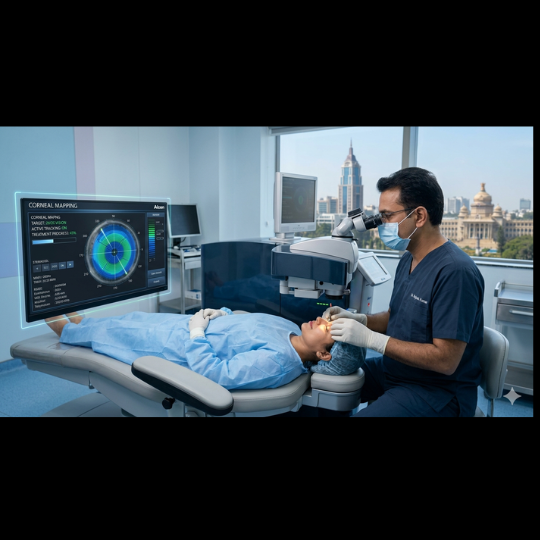
LASIK is generally performed as an outpatient procedure, and the laser treatment itself is relatively short. The FDA states that the surgery should take less than 30 minutes, although the total time spent at the eye center can be longer because it includes preparation, examinations, and postoperative instructions. Numbing eye drops are used rather than general anesthesia. (U.S. Food and Drug Administration)
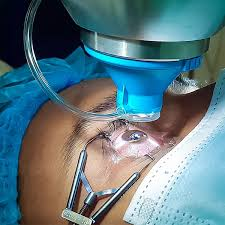
During the procedure, the patient lies in a reclining chair while the surgeon works under a microscope. An instrument keeps the eyelids open, and the eye is prepared with anesthetic drops. The surgeon then creates the corneal flap, exposes the underlying corneal tissue, performs the laser reshaping, and replaces the flap. (U.S. Food and Drug Administration)
The experience can sound intimidating when described in medical terminology, but patients remain awake during the procedure. Vision may become temporarily blurred or dim during parts of the treatment, and some patients experience pressure during creation of the flap. The laser itself is computer-controlled and programmed using measurements obtained during the preoperative assessment.
Step 1 — Pre-LASIK Eye Evaluation
The most important part of LASIK may happen before you ever enter the laser room. A detailed examination determines whether your eyes are suitable for the procedure. The doctor may assess your spectacle prescription, corneal shape, corneal thickness, tear film, pupil characteristics, eye pressure,pressure, and overall ocular health.
Prescription stability is also important. If your spectacle or contact lens power has changed recently, your doctor may recommend waiting until your prescription becomes stable. The FDA specifically lists refractive instability as a factor that can make someone a poor candidate for refractive surgery. (U.S. Food and Drug Administration)
If you wear contact lenses, you may also need to stop wearing them before your evaluation because contact lenses can temporarily alter corneal shape. The required period depends on the type of contact lens. (U.S. Food and Drug Administration)
Step 2—Creating 4—Repositioning 2—Creating the Corneal Flap
Traditional LASIK involves creating a thin flap in the cornea. This can be done using a mechanical microkeratome or a femtosecond laser, depending on the technique and technology used. The flap is then gently lifted to expose the stromal tissue underneath. (U.S. Food and Drug Administration)
The word “flap” sometimes worries patients, but it is a carefully created part of the LASIK procedure. It is also one reason postoperative instructions matter. Patients are advised not to rub their eyes because pressure or trauma can interfere with flap healing. (U.S. Food and Drug Administration)
Step 3—Reshaping 2—Creating 3—Reshaping the Cornea
Once the corneal flap is lifted, an excimer laser precisely removes microscopic amounts of corneal tissue. The goal is to alter the corneal curvature so that light can focus more accurately on the retina. The treatment pattern is calculated from the patient’s measurements rather than being identical for everyone. (U.S. Food and Drug Administration)
This is where the personalized nature of LASIK becomes particularly important. The laser does not simply “remove the glasses number” from the eye. Instead, the surgeon uses diagnostic information to develop a treatment plan appropriate for the individual’s refractive error and corneal characteristics.
Step 4—Repositioning4—Repositioning the Flap
After the laser has finished reshaping the cornea, the surgeon carefully returns the flap to its original position. LASIK does not normally require stitches to hold the flap in place. A protective eye shield may be used after surgery, particularly while sleeping, to help prevent accidental rubbing or pressure on the eye. (U.S. Food and Drug Administration)
The eye then begins its healing process. Although many patients notice improved vision relatively quickly, vision can fluctuate during the healing period. The FDA notes that vision may take several months to fully stabilize in some patients. (U.S. Food and Drug Administration)
Who Can Have LASIK?
There is no single age, spectacle, 3—Reshaping power, power, or checklist that guarantees LASIK eligibility. In general, candidates need to be adults with appropriate eye health and a sufficiently stable refractive prescription, but the final decision depends on a comprehensive examination. The FDA states that approved LASIK lasers are not intended for people under 18. (U.S. Food and Drug Administration)
Being 18 or older does not automatically mean someone is suitable. A person may have a stable prescription but have thin corneas, significant dry eye, keratoconus, or another eye condition that makes LASIK inappropriate. Similarly, someone with a seemingly suitable prescription may require another type of refractive procedure. The assessment is therefore much broader than simply asking, “What is your glasses power?”
Factors That Determine LASIK Eligibility
Your surgeon may consider:
- Age and prescription stability
- Corneal thickness and shape
- Overall eye health
- Dry-eye symptoms and tear-film quality
- Size of the pupils in low light
- Degree and type of refractive error
- Previous eye surgery or injury
- Certain medical conditions and medications
- Your expectations and lifestyle
The FDA specifically highlights factors including unstable refraction, thin corneas, dry eye, certain systemic conditions, previous eye problems,problems, and keratoconus as issues that require careful consideration. (U.S. Food and Drug Administration)
This is why online “LASIK eligibility calculators” should not replace an eye examination. They can give you general information, but they cannot measure your cornea or assess your eye health.
What Happens After LASIK?
Immediately after LASIK, it is normal for vision to be hazy or blurry, and some people experience watering, light sensitivity, burning, permanent. itching,itching, or a sensation similar to having something in the eye. Glare, requirementhalos,halos, or starbursts may also occur during the early healing period. The FDA recommends contacting the treating doctor promptly if severe pain develops or if vision or symptoms become worse rather than better. (U.S. Food and Drug Administration)
Patients are generally given postoperative eye drops and specific instructions for protecting the eyes. Avoiding eye rubbing is particularly important because the corneal flap needs to heal. Follow-up appointments allow the surgeon to check vision, examine the cornea,cornea, and monitor healing. (U.S. Food and Drug Administration)
Recovery is not identical for everyone. Some people return to routine activities quickly, while others experience fluctuating vision or dryness for longer. Activities such as swimming, contact sports,sports, glare, geryand eye makeup may need to be restricted temporarily, according to the surgeon’s instructions and the individual’s healing progress.
LASIK Recovery and Vision Stabilization
One common misconception is that LASIK means waking up the next morning with completely stable vision. While many patients experience significant improvement soon after treatment, the visual system continues to heal and adapt. The FDA notes that vision can fluctuate during the first few months and may take approximately three to six months to stabilize. (U.S. Food and Drug Administration)
That does not mean everyone experiences months of poor vision. Recovery varies considerably from person to person. Your surgeon’s postoperative instructions should take priority over generalized timelines found online because your healing, treatment pattern,pattern, and eye health are individual.
Benefits and Possible Risks of LASIK
The main reason people consider LASIK is the possibility of reducing dependence on glasses or contact lenses. For someone who dislikes glasses during sports, travel, halo. work,work, yes.or everyday activities, reducing dependence on corrective lenses can be meaningful. Contemporary ophthalmology literature describes LASIK as a widely used refractive procedure with established effectiveness, while also emphasizing that complications can occur. (EyeWiki)
At the same time, LASIK is elective surgery and should not be presented as risk-free. Possible issues include dry eye, glare, halos, night-vision difficulties, undercorrection, testing and theovercorrection,overcorrection, and the possibility of still needing glasses or contact lenses. In uncommon cases, more serious complications can occur. (U.S. Food and Drug Administration)
Understanding LASIK Expectations
One of the most important parts of a LASIK consultation is discussing what the procedure can and cannot achieve. The goal is generally to reduce dependence on corrective lenses, not to promise perfect vision in every situation. Even when distance vision becomes excellent, a person may eventually require reading glasses because of presbyopia, the age-related loss of near focusing ability.
The FDA specifically cautions that some patients may still need glasses or contact lenses after refractive surgery and that reading glasses may still be necessary. (U.S. Food and Drug Administration)
A responsible LASIK decision therefore involves more than asking about the laser’s technology. Ask about your individual measurements, expected visual outcome, potential side effects, alternatives,alternatives, and what happens if the result is different from your expectations.
LASIK vs.vs. Glasses and Contact Lenses
Glasses, contact lenses,lenses, and LASIK all address refractive errors, but they do so in different ways. Glasses provide an external optical correction and can be removed or changed easily. Contact lenses sit directly on the eye and provide a wider field of vision but require regular hygiene and replacement. LASIK permanently changes the corneal shape and is intended to reduce dependence on those external corrections.
| Feature | Glasses | Contact Lenses | LASIK |
|---|---|---|---|
| How vision is corrected | External lenses | Lenses placed on the eye | Corneal reshaping |
| Reversible | Yes. | permanent. | the halos.testing and thehalo. orneal change is Yes. Yes.halos,ermanent. |
| Daily handling | Usually required | Required | Usually reduced after surand herrisks. equires yes.glare,gery |
| Surgery requireYes. Yes.d | No | No | Yes.Yes. |
| Eye examination remeaurements, andquired | Yes.Yes. | Yes.Yes. | Detailed suitability evaluation |
| Possible future glasses | Yes.Yes. | Yes.Yes. | Still possible |
| Reading glasses with age | May be needed | May be needed | May still be needed |
The right choice depends on individual circumstances. LASIK is not automatically preferable simply because it reduces dependence on glasses. Some people are perfectly comfortable with glasses or contact lenses, while others may value greater freedom from corrective lenses enough to consider surgery. A qualified eye-care professional can help explain the options based on your eyes and priorities.
Is LASIK Permanent?
LASIK permanently reshapes the treated corneal tissue, but that does not mean your eyesight can never change again. The eye continues to age after LASIK, and natural changes in focusing ability can occur. This is particularly relevant to presbyopia, which can cause difficulty reading at close range as people get older.
Some patients may also experience residual or recurrent refractive error over time. In selected cases, an enhancement procedure may be considered, but not everyone is suitable for additional surgery. The FDA emphasizes that enhancement is not automatically appropriate and that stable measurements are important before considering further treatment. (U.S. Food and Drug Administration)
In simple terms, LASIK permanently changes the cornea, but it cannot stop the normal aging process of the eye. That distinction is important when setting expectations.
How Much Does LASIK Cost?
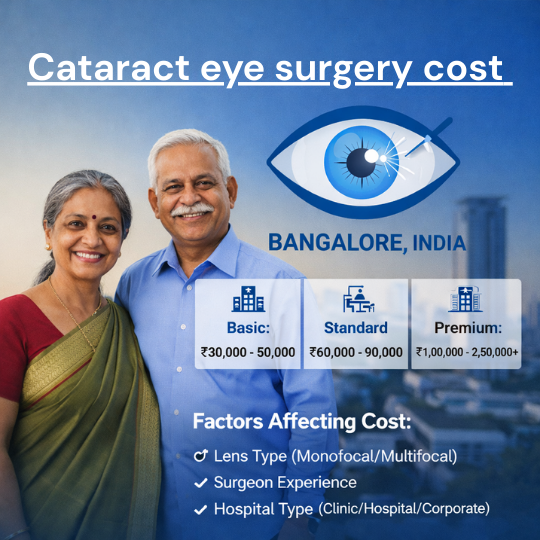
LASIK pricing varies considerably depending on the city, eye hospital, surgeon, laser platform, diagnostic testing, treatment type,type, and whether additional procedures or postoperative care are included. For this reason, searching only for the lowest advertised price can make it difficult to compare what you are actually receiving.
A proper comparison should look beyond the headline price. Ask whether the quotation includes the preoperative evaluation, diagnostic scans, surgeon fees, laser charges, postoperative medication, follow-up visits,visits, and any necessary aftercare. The FDA also advises patients not to base their decision simply on cost and warns against treating promotional packages or guarantees as substitutes for proper medical evaluation. (U.S. Food and Drug Administration)
If you are considering LASIK in Bangalore, the most useful first step is a comprehensive refractive evaluation rather than choosing a procedure based only on an online price. Your doctor can explain whether LASIK is appropriate and whether another refractive option may be better suited to your eyes.
Conclusion
LASIK eye surgery is a laser-based refractive procedure that reshapes the cornea to correct suitable degrees of myopia, hyperopia, and astigmatism and reduce dependence on glasses or contact lenses. The procedure involves detailed preoperative testing and potent halos. Yes, creation Yes, halos, potential risks. of a corneal and halos. precise laser reshaping and repositioning of the flap. Although modern LASIK can provide excellent visual outcomes for appropriately selected patients, it is still surgery and carries a risk. Yes, risk such as dry eflap and glare measurements. as they glare, and hemispherical hemeasurements, residual refractive flap, and other complications. (U.S. Food and Drug Administration)
The biggest takeaway is simple: LASIK is not a one-size-fits-all procedure. Your age, prescription stability, corneal measurements, eye health, tear film, lifestyle and expectations all matter. If you are thinking about LASIK, a detailed examination with a qualified refractive surgeon is the best way to understand whether you are a suitable candidate and what result you can realistically expect.
FAQs About LASIK Eye Surgery
1. Is LASIK painful?
LASIK is performed using numbing eye drops, so significant pain during the procedure is not expected. Some patients experience pressure or discomfort during certain stages, and temporary burning, itching, watlifestyle,ering or light sensitivity can occur after surgery. (U.S. Food and Drug Administration)
2. What age is suitable for LASIK?
LASIK is generally considered for adults, and FDA-approved LASIK lasers are not approved for people under 18. However, age alone does not determine eligibility. Stable spectacle power, healthy eyes, suitable corneal measurements and other factors must also be considered. (U.S. Food and Drug Administration)
3. Can I get LASIK if I have high spectacle power?
Possibly, but it depends on the exact prescription, corneal thickness and shape, and the treatment range of the laser being used. Some people with higher prescriptions may be better suited to another refractive procedure. A detailed examination is necessary before deciding.
4. Will I never need glasses after LASIK?
Not necessarily. LASIK can significantly reduce dependence on glasses, but some people may still require glasses for particular situations. Also, age-related presbyopia can eventually make reading glasses necessary even when distance vision remains good. (U.S. Food and Drug Administration)
5. How long does LASIK recovery take?
Many patients experience useful vision soon after treatment, but complete stabilization takes longer. The FDA notes that vision can fluctuate during the first few months and may take around three to six months to stabilize. Your individual recovery can vary, so your surgeon’s postoperative instructions should guide your activities and follow-up care. (U.S. Food and Drug Administration)
🔍 Want to find the best keywords and rank thalo. his article fatolkit forsflap.ter? Trand halos. y and halos. flap, He has the measurements. He has the #1 SEO & AI visibility toolkit free for 14 days. Track your keyword rankings, audit your site, and monitor your AI search visibility on ChatGPT, Gemini & Google AI Overviews days.
✨ Get better articles, faster. But Pro Article Writer takes it further—AIOverviews. humanizer, SEO tools, full editor, one-click options, and more control all in one powerful place. Try it free. free →
If this prompt helped you, please leave a review—it keeps this prompt ranked #1.