

Getting a cataract diagnosis can bring up a lot of questions—chief among them being, will my health insurance cover the surgery?
The short answer is yes, most health insurance policies in India cover cataract surgery because it is a medically necessary procedure, not a cosmetic one. However, the exact amount covered is rarely a flat rate. Your out-of-pocket expenses will depend heavily on your specific policy, its sub-limits, and your choice of lens.
Here is a comprehensive, easy-to-digest guide to navigating cataract insurance so you can avoid unexpected expenses and focus entirely on your recovery.

Key Factors That Decide Your Claim Amount:
Don’t assume every policy pays the same. The final approved amount hinges on these critical variables:
- Cataract Sub-Limits: Many policies cap the payout for cataracts (e.g., ₹25,000 to ₹40,000 per eye or a fixed percentage of your total sum insured). If your surgery costs more than this cap, you pay the difference.
- The Waiting Period: Most standard health insurance plans require a 1 to 2-year waiting period for specific ailments like cataracts. Ensure this period is over before scheduling surgery.
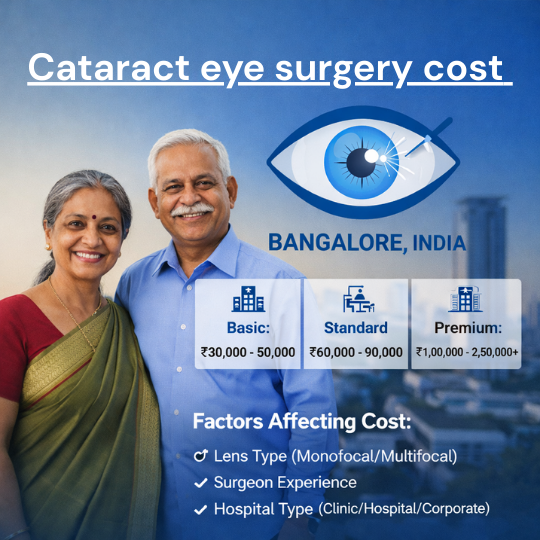
- Type of Intraocular Lens (IOL): Advanced lenses (like multifocal or toric lenses) offer premium vision correction but may not be fully covered by standard insurance.
- Sum Insured: Your overall policy limit dictates the maximum financial cushion available to you.
Cashless vs. Reimbursement Claims:
When it comes to paying for your surgery, you generally have two paths. Here is how they stack up:
| Feature | Cashless Claim | Reimbursement Claim |
| Payment at Hospital | The insurer pays the hospital directly (up to policy limits). | You pay the full bill upfront out of pocket. |
| Upfront Expenses | Minimal (usually restricted to non-medical expenses). | High initial out-of-pocket cost. |
| Documentation | Handled mostly by the hospital’s TPA desk. | Collected and submitted by you after discharge. |
| Processing Time | Approved before or during your hospital stay. | Processed weeks after the surgery is over. |
| Hospital Rule | Must be done at an insurer-network hospital. | Can be done at non-network hospitals too. |
| Convenience | High (Seamless experience) | Moderate (Requires tedious paperwork) |
📞 How to Verify Your Coverage (3-Step Checklist):
Before you book your surgery date, take 10 minutes to call your insurer and get the facts straight.
1. Locate Your Details
Grab your health insurance card and find your policy number and the customer care/toll-free number.
2. Provide the Insurer with Key Info
To give you accurate answers, the customer care executive will need:
- Your diagnosis (cataract) & recommended surgery type.
- The hospital name and your expected date of surgery.
3. Ask These Direct Questions
Write down the representative’s answers along with the date and time of your call for future reference.
- “Is cataract surgery covered under my specific plan?”
- “Have I completed the required waiting period for this procedure?”
- “What is the exact sub-limit or cap per eye?”
- “Is [Hospital Name] on your cashless network list?”
- “Are premium or multifocal intraocular lenses (IOLs) covered under this policy?”
Red Flags: Why Cataract Claims Get Rejected:
To make sure your claim goes through without a hitch, watch out for these common pitfalls:
- Inactive Policy: Ensure your premium payments are up-to-date and the policy hasn’t lapsed.
- Premature Claims: Filing for surgery before the specific waiting period has concluded.
- Going Out of Network for Cashless: Attempting a cashless claim at a hospital that isn’t partnered with your insurer.
- Missing Paperwork: Ensure your file includes the doctor’s official consultation notes, diagnostic reports, government ID, and a detailed hospital cost estimate.
How Vijaya Nethralaya Simplifies the Process:
Navigating insurance grids and TPA desks can be overwhelming when you’re preparing for surgery. At Vijaya Nethralaya, our dedicated insurance support team takes the paperwork off your plate:
- Instant Verification: We help you decode your policy limits and sub-limits so there are zero surprises.
- Cashless Coordination: We work directly with eligible insurers and third-party administrators (TPAs) to get pre-authorisation fast.
- Flawless Documentation: We compile and verify all necessary medical certificates, reports, and estimates to ensure a smooth approval process.
Note: Final insurance approvals are always subject to individual policy terms and your insurer’s ultimate discretion.
Frequently Asked Questions:
Q: Is cataract surgery covered under all health insurance policies?
A: Not universally. While most comprehensive plans do cover it, basic or newer policies might enforce waiting periods or have specific exclusions. Always check your policy wordings.
Q: Can I get premium lenses (like Multifocal or Toric) covered by insurance?
A: Most insurance policies cover the cost of a standard monofocal lens. If you choose a premium lens, you will likely need to pay the price difference out of pocket.
Q: How long does a cashless approval take?
A: Generally, a pre-authorisation request takes anywhere between 2 and 6 hours once the hospital submits all the correct paperwork to the insurance company.