

Introduction:
Choosing an eye surgeon is not simply about finding someone who performs a particular procedure. Your eyes are highly individual, and the right treatment depends on your eye health, visual requirements, lifestyle, age, corneal condition and several other clinical factors. Dr Sushruth Appaji Gowda is an ophthalmologist and cataract and refractive surgeon associated with Vijaya Nethralaya Super Speciality Eye Hospital in Nagarbhavi, Bangalore. According to the hospital’s current profile, he holds MBBS, MS in Ophthalmology and FAICO in Refractive Surgery, and serves as the hospital’s CEO and consultant cataract and refractive surgeon. His listed areas of expertise include cataract surgery, refractive surgery and LASIK, with additional experience in corneal transplantation, clinical research and healthcare management.
His professional profile is particularly relevant to people searching for information about cataract surgery, LASIK, PRK, ICL and other refractive procedures in Bangalore.
Who Is Dr Sushruth Appaji Gowda?
Dr Sushruth Appaji Gowda is an ophthalmologist based in Bangalore whose practice focuses particularly on cataract and refractive eye surgery. He is listed by Vijaya Nethralaya as the hospital’s CEO and consultant cataract and refractive surgeon. His professional qualifications include an MBBS, an MS in Ophthalmology and an FAICO in Refractive Surgery. The hospital profile also states that he completed a fellowship at Sankara Academy of Vision, Sankara Group, in 2015 and has participated in national and international academic meetings involving cataract and LASIK-related topics.
For someone researching an eye surgeon, these details matter because ophthalmology covers a wide range of subspecialties. A retina specialist, glaucoma specialist, corneal specialist and refractive surgeon may all be ophthalmologists, but their day-to-day clinical focus can differ considerably. Dr Sushruth’s published profile places particular emphasis on cataract and refractive surgery, making those areas central to understanding his professional practice..
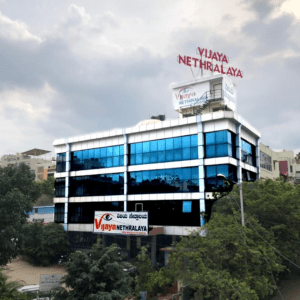
The hospital where he practises, Vijaya Nethralaya, was established in Nagarbhavi in 1985 by Dr Appaji Gowda. The hospital’s current website describes Dr. Sushruth Appajigowda as its CEO and consultant cataract and refractive surgeon, while Dr. Appaji Gowda is identified as founder, chairman and chief eye surgeon.
Education and Professional Qualifications:
A surgeon’s educational background provides an important starting point when patients compare specialists. Dr Sushruth Appaji Gowda’s published hospital profile lists MBBS, MS Ophthalmology and FAICO in Refractive Surgery. The FAICO qualification is particularly relevant to his refractive surgery profile because it represents advanced training in this area. His hospital profile states that he completed the FAICO superspeciality degree in refractive surgery in 2023.
His professional development also includes fellowship training at the Sankara Academy of Vision, Sankara Group, which the hospital profile dates to 2015. In addition to formal qualifications, the profile notes participation in national and international meetings where he presented papers and conducted seminars related to cataract and LASIK. These activities can be useful indicators of continued engagement with developments in a specialised field, although patients should always evaluate a surgeon based on their own clinical needs rather than relying on qualifications alone.
When someone searches online for “Dr Sushruth Gowda”, it is therefore useful to distinguish between a simple name search and the complete professional identity of Dr. Sushruth Appaji Gowda. His published profile connects him with Vijaya Nethralaya in Nagarbhavi, Bangalore, and identifies cataract and refractive surgery as his principal areas of practice.
Dr Sushruth Appaji Gowda’s Role at Vijaya Nethralaya:
Dr Sushruth Appaji Gowda holds a leadership and clinical role at Vijaya Nethralaya Super Speciality Eye Hospital. The hospital’s official management page identifies him as CEO and Consultant Cataract & Refractive Surgeon. This means his professional role extends beyond performing eye procedures; he is also involved in the organisation’s broader healthcare environment. The hospital’s profile describes Vijaya Nethralaya as a multi-speciality eye hospital with services spanning cataract, refractive surgery, retina, glaucoma and other areas of ophthalmology.
For patients, the significance of a specialist working within a multi-speciality eye hospital is that complex cases may require assessment beyond a single procedure. Someone considering cataract surgery, for example, may also have glaucoma, diabetic eye disease, corneal problems or retinal changes that influence treatment planning. A comprehensive ophthalmic evaluation helps identify these factors before surgery rather than treating the procedure as an isolated event. The hospital states that it has advanced equipment covering cataract and refractive surgery, retina and diabetes management, and glaucoma care.
The hospital’s current doctors page lists Dr Sushruth Appajigowda as a phaco & refractive surgeon alongside specialists from other ophthalmic disciplines. This multidisciplinary setting can be particularly relevant for patients whose visual complaints have more than one possible cause. Instead of assuming that every blurred-vision problem is simply a spectacle number or cataract, an ophthalmologist can determine whether the underlying issue involves the cornea, lens, retina, optic nerve or another part of the visual system.
Experience in Ophthalmology and Eye Surgery
Experience is one of the factors patients commonly consider when selecting an eye surgeon, but it should be interpreted carefully. The official hospital profile currently states that Dr Sushruth Appaji Gowda has over 15 years of experience in his field. A separate current hospital article describes him as having more than 12 years of experience across multiple LASIK platforms and reports that he has performed more than 5,000 LASIK procedures.
Different websites may display experience figures differently because they can refer to total professional experience, specialist experience or experience in a particular procedure. Therefore, patients should not judge a surgeon solely by a single number appearing in an online profile. The more useful question is whether the surgeon regularly performs the specific procedure being considered and whether the patient’s eye condition is suitable for it.
For example, LASIK is not appropriate for every person who wants freedom from spectacles. Corneal thickness, corneal shape, refractive error, tear-film health, age and other factors need assessment before surgery. Similarly, cataract surgery involves selecting an appropriate intraocular lens after evaluating the eye and discussing the patient’s visual priorities. The role of the surgeon is therefore not simply to perform an operation but to determine which treatment, if any, makes clinical sense for that individual.
Areas of Specialisation
Dr Sushruth Appaji Gowda’s published professional profile focuses primarily on cataract surgery and refractive surgery. The hospital identifies him as a phaco and refractive surgeon, while his detailed profile lists cataract, refractive lens surgery and LASIK among his specialisations. His profile also mentions experience with corneal transplantation and clinical research, although cataract and refractive care remain the central themes of his published professional information.
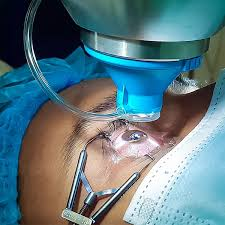
The term “refractive surgery” covers several approaches designed to reduce dependence on spectacles or contact lenses. Corneal laser procedures such as LASIK and PRK reshape the cornea, while lens-based procedures such as ICL or refractive lens surgery use an implanted lens to change how light focuses inside the eye. These procedures are not interchangeable, and the safest option depends on the patient’s anatomy and visual requirements.
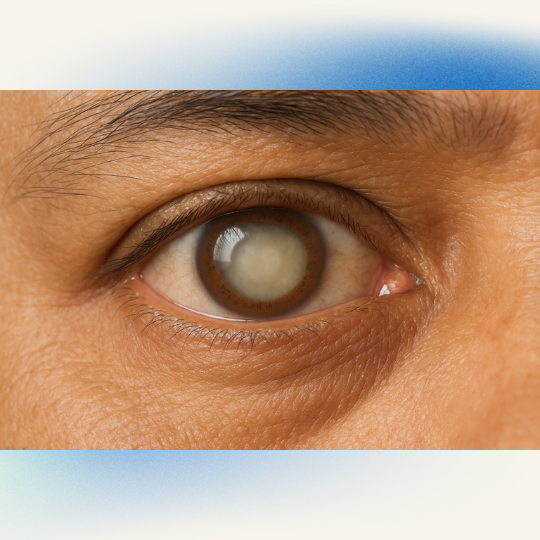
Cataract surgery addresses a different problem. A cataract develops when the eye’s natural lens becomes cloudy, causing symptoms such as blurred vision, glare, difficulty seeing at night or reduced contrast. During cataract surgery, the cloudy natural lens is removed and replaced with an artificial intraocular lens. The choice of lens can influence the patient’s postoperative vision, which is why a consultation should include a discussion of expectations, lifestyle and the available lens options.
Cataract Surgery
Cataract surgery is one of the principal areas associated with Dr Sushruth Appaji Gowda’s professional profile. The hospital identifies him as a cataract and refractive surgeon, and his profile specifically lists cataract among his specialisations. Cataract treatment has changed significantly over the years, with modern procedures focusing on smaller incisions, precise measurements, advanced intraocular lenses and careful postoperative management.
For a patient, the process begins well before entering the operating room. An ophthalmologist needs to examine the eye and determine whether cataract is actually responsible for the visual symptoms. Measurements are then used to help plan the intraocular lens power. Other eye conditions, previous surgeries, corneal health and retinal status may also influence the surgical plan. The goal is not simply to remove the cataract but to create a treatment plan appropriate to the individual eye.
Dr Sushruth has also discussed cataract surgery in educational content published by Vijaya Nethralaya. In a hospital video, he explains cataract development, symptoms, treatment and the role of modern cataract surgery, including the importance of preoperative assessment and postoperative care. Educational communication can be valuable because cataract patients often arrive with concerns about pain, safety, recovery and lens selection. A good consultation gives patients the opportunity to ask those questions before making a decision.
Refractive Surgery and LASIK
Refractive surgery is another major part of Dr Sushruth Appaji Gowda’s professional profile. The hospital lists him as a refractive surgeon and states that his experience includes LASIK. Its current eye-care article reports experience with several LASIK platforms and more than 5,000 LASIK procedures. This area of ophthalmology focuses on correcting refractive errors such as myopia, hyperopia and astigmatism to reduce dependence on spectacles or contact lenses.
The idea behind laser vision correction is straightforward, but the clinical decision is more complex. A laser changes the shape of the cornea so that incoming light focuses more accurately on the retina. However, not every cornea can safely undergo the same amount of reshaping. Doctors therefore examine corneal thickness, topography, tear-film condition, prescription stability and other factors before recommending a procedure.
Patients often search for phrases such as “best LASIK surgeon in Bangalore” or “Dr Sushruth Gowda LASIK” because they want a quick answer. In reality, the best procedure for one person may not be the best procedure for another. A detailed examination can determine whether LASIK, PRK, another refractive procedure or continued use of spectacles is the more appropriate choice.
PRK, LASIK and Other Vision Correction Procedures
LASIK and PRK both use an excimer laser to reshape the cornea, but they differ in how the corneal surface is accessed. LASIK involves creating a corneal flap before reshaping the underlying tissue, whereas PRK works through the surface layer of the cornea. The choice between procedures depends on clinical factors rather than personal preference alone. A surgeon may recommend one approach over another after reviewing corneal measurements, prescription and lifestyle.
The hospital’s current profile states that Dr Sushruth has experience with multiple refractive surgery platforms, including ZEISS, ALCON, SCHWIND, AMO and Bausch + Lomb systems. This is relevant because modern refractive surgery involves both technology and surgical judgement. Equipment can provide detailed measurements and precise laser treatment, but the technology still needs to be matched to the patient’s individual anatomy.
Patients should also understand that laser vision correction is elective and that eligibility cannot be determined from spectacle power alone. A person with a relatively low prescription may still have a corneal condition that makes laser surgery unsuitable, while another person with a different prescription may be an appropriate candidate. The consultation should therefore focus on eye health and suitability, not simply on removing glasses as quickly as possible.
Advanced Lens-Based Vision Correction:
Not every refractive correction involves reshaping the cornea. Lens-based procedures provide another category of vision correction, and Dr. Sushruth Appaji Gowda’s professional listing includes procedures such as ICL and IPCL, along with toric and multifocal intraocular lenses, according to his Practo profile. These options may be considered for selected patients depending on age, prescription, corneal characteristics, anterior chamber anatomy and other clinical factors.
ICL, or implantable collamer lens surgery, places a lens inside the eye without removing the natural crystalline lens. This differs from LASIK because the cornea is not reshaped to correct the refractive error. Lens-based correction can therefore be relevant when corneal laser surgery is not the preferred option. However, it is still an intraocular procedure and requires careful assessment.
Similarly, toric lenses are designed to address astigmatism, while multifocal and other advanced IOL designs may be considered in selected cataract patients who want a broader range of vision. These lenses involve trade-offs, and patients should discuss their expectations carefully with the surgeon. No lens can guarantee perfect vision in every lighting condition, and factors such as glare, halos, contrast and existing eye disease can influence the final experience.
ICL, IPCL and Premium IOL Options:
The availability of multiple refractive and lens-based procedures means that treatment planning should begin with the patient’s visual needs rather than with a particular product name. A younger patient with high myopia may ask about ICL, while someone with cataracts may need an IOL chosen according to their distance, intermediate and near-vision goals. Someone with significant astigmatism may require a toric option. These are fundamentally different clinical situations.
Dr Sushruth’s listed areas of interest include laser cataract surgery, LASIK, PRK, ICL, IPCL, toric IOLs and multifocal IOLs, according to his Practo profile. This range reflects the overlap between cataract and refractive ophthalmology, where lens technology can be used both to restore vision after cataract removal and, in selected cases, to address refractive errors.
Patients should resist the temptation to choose a lens solely because it is described as “premium”. A premium lens is not automatically the best lens for every eye. The appropriate choice depends on corneal health, retinal health, ocular surface condition, lifestyle, occupation, driving habits and visual expectations. A surgeon’s role is to explain those trade-offs so that the patient can make an informed decision.
Dr Sushruth Appaji Gowda and Modern Cataract Care:
Modern cataract surgery combines surgical skill, diagnostic measurements, intraocular lens technology and postoperative follow-up. Dr Sushruth Appaji Gowda’s profile places him within this cataract and refractive environment, and Vijaya Nethralaya describes itself as a multi-speciality eye hospital with advanced equipment for cataract and refractive surgery. For patients, this means that choosing cataract surgery should involve more than asking about the operation’s price.
A useful consultation should address the severity of the cataract, the health of the cornea and retina, the desired postoperative vision and the available lens choices. The surgeon should also discuss what the patient can realistically expect after surgery. Some people prioritise excellent distance vision, while others place greater importance on reading, computer work or reducing dependence on spectacles across several distances.
The hospital’s educational video featuring Dr Sushruth explains cataracts and the treatment journey from evaluation through surgery and postoperative care. This type of patient education can help people understand why cataract surgery is not simply a mechanical process of “removing the cataract”. Every eye has its own characteristics, and a carefully planned procedure can account for those differences.
Choosing the Right Intraocular Lens:
The intraocular lens is an important part of cataract surgery because it replaces the eye’s cloudy natural lens. Patients may encounter terms such as monofocal, toric, multifocal and other advanced IOL designs during their consultation. Each option has different characteristics, and the right choice depends on the patient’s eye health and visual goals.
A monofocal lens generally targets one main viewing distance. A toric lens incorporates astigmatism correction. Multifocal or other advanced lens technologies may provide a broader range of vision for selected patients, potentially reducing dependence on spectacles. However, advanced optics can also produce visual phenomena such as glare or halos in some patients, which is why the surgeon needs to consider the patient’s lifestyle and tolerance for these effects.
The decision should also account for conditions that may limit the performance of an advanced IOL. Retinal disease, glaucoma, corneal problems, dry eye and other ocular conditions can influence the expected outcome. This is why a detailed preoperative evaluation remains central to cataract planning. Instead of asking only “Which lens is best?”, patients should ask, “Which lens is most appropriate for my eyes and the way I use my vision?”
Approach to Patient Evaluation:
A detailed eye examination is the foundation of responsible cataract and refractive surgery planning. A patient may arrive with a specific request—such as LASIK or a premium cataract lens—but the surgeon first needs to determine whether the requested treatment is appropriate. This distinction is especially important in refractive surgery because apparently straightforward spectacle correction can sometimes coexist with corneal or ocular-surface problems.
Dr Sushruth’s professional focus on cataract and refractive surgery means that patient assessment is an important part of the treatment pathway. His published profile highlights refractive surgery, LASIK and refractive lens procedures, while the hospital’s cataract education content describes preoperative assessment as part of the cataract surgery process.
For patients, this means that an appointment should not be viewed simply as a procedure booking. It is an opportunity to understand what is causing the visual problem, what options exist, what risks apply to the individual eye and what outcome is realistically achievable. That conversation is often more valuable than choosing a procedure based only on an online advertisement or a friend’s experience.
Why Detailed Eye Assessment Matters:
Two people can have the same spectacle prescription and still have very different eyes. One may have a healthy cornea and stable tear film, while another may have an irregular corneal shape or significant dry eye. Similarly, two cataract patients of the same age may have different retinal or optic nerve health. Their surgical plans and expected visual outcomes can therefore differ.
A comprehensive assessment helps the ophthalmologist identify these differences. For refractive surgery, corneal topography, thickness measurements, refraction and ocular-surface evaluation can all contribute to determining suitability. For cataract surgery, biometry helps calculate the intraocular lens power, while examination of the retina and other structures can help identify conditions that may affect postoperative vision.
This is why responsible refractive care does not promise that everyone can “remove glasses”. The objective is to determine whether vision correction can be achieved safely and predictably for that particular patient. When the procedure is appropriate, the surgeon can then explain the available options and expected recovery. When it is not appropriate, recommending against surgery can be just as important as recommending it.
Clinical, Academic and Professional Contributions:
A surgeon’s professional development does not stop after completing medical training. Ophthalmology changes continuously as diagnostic technology, laser platforms, intraocular lenses and surgical techniques evolve. Dr Sushruth Appaji Gowda’s published profile notes participation in national and international meetings where he has presented papers and conducted seminars related to cataract and LASIK.
His profile also states that he completed the FAICO superspeciality degree in refractive surgery in 2023. Advanced training in a focused subspeciality can complement a surgeon’s broader ophthalmology qualification, particularly in fields such as refractive surgery where patient selection and technology continue to develop.
Academic participation can also benefit patients indirectly. When clinicians engage with professional forums, research and education, they remain exposed to evolving techniques and discussions about outcomes and safety. Still, patients should remember that conference participation alone does not determine whether a specific procedure is appropriate for them. Clinical judgement, examination findings and transparent discussion of benefits and limitations remain central.
Seminars, Presentations and Refractive Surgery Training
Dr Sushruth’s official profile states that he has presented papers and conducted seminars related to cataract and LASIK at national and international meetings. His profile also documents advanced refractive surgery training through FAICO and fellowship training at Sankara Academy of Vision. These details provide insight into the professional development behind his current role as a cataract and refractive surgeon.
For patients searching online, academic credentials can sometimes be difficult to interpret. A useful approach is to look at the complete picture: medical qualification, ophthalmology specialisation, focused training, clinical experience, the procedures regularly performed and the quality of the diagnostic and surgical infrastructure available. No single credential tells the entire story.
Ultimately, the most important professional question is whether the surgeon can appropriately evaluate the patient’s eye and explain the treatment decision. This includes explaining alternatives, potential risks, expected recovery and situations in which surgery may not be advisable. Good medical care is not simply about having access to advanced technology; it is about knowing when and how to use it.
Why Patients Consider Dr Sushruth Appaji Gowda:
People searching for Dr Sushruth Gowda in Bangalore may be considering cataract surgery, LASIK or another refractive procedure. His published professional profile combines cataract surgery with refractive surgery, creating a clinical focus that covers both lens-related vision loss and elective vision correction. The hospital also lists him as a phaco and refractive surgeon.
Another consideration is the broader hospital environment. Vijaya Nethralaya states that it provides multiple ophthalmic specialities and has advanced equipment for cataract and refractive surgery, retina and diabetes management, and glaucoma. This can matter when patients have more complicated eye histories or need evaluation for conditions outside the primary reason for their visit.
Patients should nevertheless make decisions based on their own clinical assessment. Online reviews, testimonials, experience figures and technology lists can help people research a surgeon, but none of them can replace an examination. A surgeon who is appropriate for one patient may not necessarily be the right choice for another. The final decision should come after discussing the diagnosis, treatment options and expected outcomes.
Technology, Experience and Personalised Treatment:
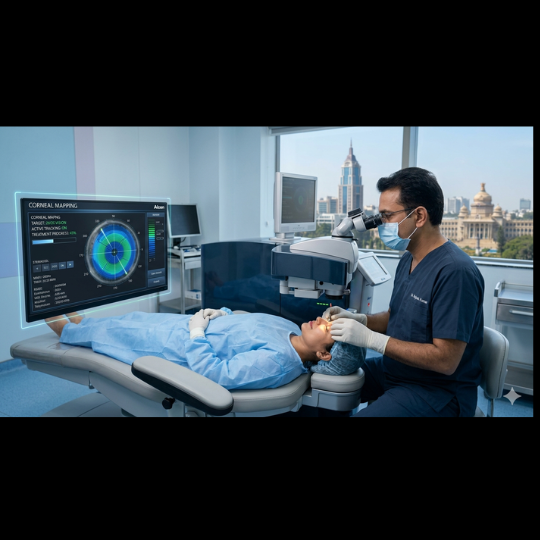
Technology plays an important role in contemporary ophthalmology, but it works best when combined with careful patient selection. Refractive surgery can involve corneal mapping and laser platforms, while cataract surgery involves biometry, surgical microscopes and intraocular lens technology. The equipment provides information and precision, but the surgeon uses that information to create an individual treatment plan.
Vijaya Nethralaya’s website states that the hospital has advanced equipment supporting cataract and refractive surgery and other ophthalmic specialities. Dr Sushruth’s profile also identifies cataract and refractive surgery as his core areas. Together, these factors may be relevant to patients researching where to undergo eye surgery in Bangalore.
Personalisation is particularly important for refractive procedures. Someone who spends eight hours a day working on a computer may have different visual priorities from a person who drives extensively at night. A cataract patient who loves reading may have different expectations from someone whose primary goal is comfortable distance vision. These details should form part of the consultation because successful eye surgery is about more than achieving a number on an eye chart.
How to Consult Dr Sushruth Gowda:
Patients interested in consulting Dr Sushruth Gowda can find his professional profile through Vijaya Nethralaya Super Speciality Eye Hospital in Nagarbhavi, Bangalore. The hospital’s current website identifies him as CEO and consultant cataract and refractive surgeon. The hospital’s contact page lists its Nagarbhavi location and current contact information, while the doctors’ page provides access to his profile.
Before an appointment, patients can prepare by carrying previous eye reports, spectacle prescriptions, details of earlier eye surgeries and a list of current medications. If the consultation is for LASIK, it can be useful to bring information about how long the spectacle prescription has remained stable and whether contact lenses are being used. If the consultation is for cataract surgery, patients should think about their daily visual priorities, including reading, computer use, driving and activities that require clear vision.
The consultation should then provide an opportunity to understand the diagnosis, available treatments and expected outcomes. Patients should feel comfortable asking about the procedure, recovery time, possible side effects, alternatives and follow-up requirements. The goal is an informed treatment decision rather than simply selecting the most expensive or technologically advanced option.
What to Expect During Your Consultation:
A consultation for cataract or refractive surgery generally begins with a detailed history and eye examination. Depending on the reason for the visit, the evaluation may include vision testing, refraction, examination of the cornea and other eye structures, and specialised measurements required for surgical planning. The exact tests depend on the patient’s condition and the procedure under consideration.
If the consultation concerns LASIK or another refractive procedure, the surgeon may assess corneal shape, thickness, prescription and ocular-surface health before determining eligibility. If cataract surgery is being considered, the examination may focus on cataract severity, ocular health and measurements needed to calculate the intraocular lens power. The final treatment recommendation should come after these findings have been considered together.
Patients should also use the appointment to discuss expectations. Asking “Will I need glasses after surgery?”, “How long will recovery take?”, “Which lens is suitable for me?” or “Am I a suitable LASIK candidate?” can help create a clearer understanding of the treatment plan. A thorough consultation turns a general online search for a doctor into a personalised medical decision based on the patient’s actual eyes.
Conclusion:
Dr Sushruth Appaji Gowda is a Bangalore-based ophthalmologist whose professional profile focuses on cataract and refractive surgery. Vijaya Nethralaya identifies him as its CEO and consultant cataract and refractive surgeon, with qualifications including MBBS, MS Ophthalmology and FAICO in Refractive Surgery. His published profile highlights cataract surgery, refractive lens surgery and LASIK, while additional professional information lists interests including PRK, ICL, IPCL, toric IOLs and multifocal IOLs.
For patients considering eye surgery, the most important step is not simply searching for a surgeon by name. It is understanding whether the surgeon’s area of expertise matches the patient’s condition and whether a detailed examination supports the proposed treatment. Cataract surgery, LASIK and lens-based vision correction each require different forms of assessment, and the safest choice depends on the individual eye.
1. Who is Dr Sushruth Appaji Gowda?
Dr Sushruth Appaji Gowda is an ophthalmologist and cataract and refractive surgeon associated with Vijaya Nethralaya Super Speciality Eye Hospital in Nagarbhavi, Bangalore. His published qualifications include an MBBS, an MS in Ophthalmology and an FAICO in Refractive Surgery. The hospital identifies him as its CEO and consultant cataract and refractive surgeon.
2. What does Dr Sushruth Appaji Gowda specialise in?
His official hospital profile identifies cataract, refractive lens surgery and LASIK as his specialisations. His professional listing also includes interests such as PRK, ICL, IPCL, toric IOLs and multifocal IOLs.
3. Does Dr Sushruth Appaji Gowda perform LASIK?
LASIK is one of the refractive procedures listed in Dr Sushruth Appaji Gowda’s professional profile. The hospital’s current article reports experience across multiple LASIK platforms and more than 5,000 LASIK procedures. Suitability for LASIK must still be determined through a detailed eye examination.
4. Where does Dr Sushruth Appaji Gowda practise?
Dr Sushruth Appaji Gowda practices at Vijaya Nethralaya Super Speciality Eye Hospital in Nagarbhavi, Bangalore. The hospital’s official contact information lists its Nagarbhavi location and appointment details.
5. How can I know whether cataract surgery or LASIK is right for me?
The appropriate procedure depends on your eye health, age, prescription, corneal condition, cataract status, lifestyle and visual expectations. A comprehensive examination by an ophthalmologist is necessary before deciding on cataract surgery, LASIK, PRK, ICL or another vision-correction option. A consultation allows the surgeon to assess your eyes and explain the benefits, limitations, risks and alternatives relevant to your individual situation.