

Understanding Laser Eye Surgery:
If you’ve spent years depending on spectacles or contact lenses, you’ve probably wondered whether laser eye surgery is safe. It’s one of the most frequently asked questions by people considering permanent vision correction. The reassuring answer is that modern laser vision correction has become one of the safest and most commonly performed elective procedures worldwide when performed on the right candidate by an experienced ophthalmologist.
Laser eye surgery reshapes the cornea so that light entering the eye focuses correctly on the retina. This correction improves vision in people with myopia (short-sightedness), hyperopia (long-sightedness), and astigmatism. Today’s advanced technologies provide exceptional precision, allowing surgeons to customise treatment according to the patient’s eye measurements.
Safety depends on several important factors, including your eye health, corneal thickness, prescription stability, and the technology used. A detailed preoperative evaluation is just as important as the surgery itself because it determines whether laser vision correction is suitable for you. Patients who undergo comprehensive screening generally experience excellent visual outcomes with a very low complication rate.
What Is Laser Vision Correction?
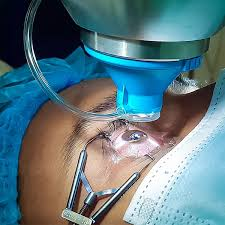
Laser vision correction is a group of procedures designed to reduce or eliminate the need for glasses and contact lenses. Rather than placing an artificial lens inside the eye, the surgeon reshapes the cornea using an excimer laser with micron-level precision.
The most common procedures include:
| Procedure | Best For | Recovery |
|---|---|---|
| LASIK | Most patients with suitable corneal thickness | 24–48 hours |
| Contoura Vision | Irregular corneas with personalised treatment | Very fast |
| Topography-Guided LASIK | Customised corneal correction | Quick |
| PRK | Thin corneas or contact sports | Slightly longer |
| SMILE | Moderate to high myopia | Fast with minimal incision |
Each technique has specific indications, which is why a detailed eye examination is essential before deciding on surgery. The surgeon evaluates your prescription, corneal mapping, tear film quality, pupil size, and retinal health before recommending the most appropriate procedure.
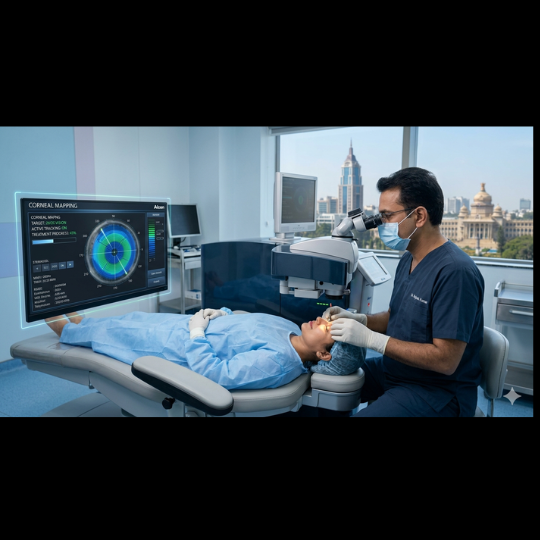
Modern laser systems use sophisticated eye-tracking technology that compensates for tiny eye movements during treatment, improving both safety and accuracy. Many procedures are completed within 10–15 minutes, while the actual laser application often takes less than one minute per eye.
How Safe Is Laser Eye Surgery?
The safety of laser eye surgery has improved dramatically over the last two decades because of technological advancements, improved patient screening, and refined surgical techniques. According to published clinical studies, LASIK has a patient satisfaction rate exceeding 95%, making it one of the highest-rated elective medical procedures worldwide.
Complications are uncommon, especially when patients are carefully selected. Temporary symptoms such as dry eyes, mild glare, halos around lights, or fluctuating vision usually improve during the healing period. Serious vision-threatening complications are rare and are significantly reduced when surgery is performed using modern equipment by an experienced refractive surgeon.
One important point to remember is that no surgery is entirely risk-free. However, laser eye surgery has an excellent safety profile when compared with many other elective surgical procedures. Advances such as wavefront-guided treatment, femtosecond lasers, corneal topography, and computer-aided eye tracking have made today’s procedures more predictable and safer than ever before.
Patients should also understand that the safest surgery is one performed only after confirming that they are suitable candidates. Ethical eye hospitals prioritise patient selection over performing surgery on everyone who walks through the door.
Who Is an Ideal Candidate for Laser Eye Surgery?
Choosing the right candidate is one of the biggest reasons why laser eye surgery is considered safe. A skilled ophthalmologist doesn’t simply check your glasses prescription and schedule surgery. Instead, they perform a series of advanced diagnostic tests to ensure your eyes are healthy enough for the procedure. These tests evaluate corneal thickness, corneal shape, tear film quality, pupil size, retinal health, and the stability of your vision. Every eye is unique, and personalised evaluation helps minimise risks while maximising visual outcomes.
Most surgeons recommend laser eye surgery for adults who are at least 18 years old, although many prefer patients to be 21 years or older with a stable prescription for at least one year. Individuals with changing vision, uncontrolled diabetes, severe dry eye disease, keratoconus, active eye infections, or certain autoimmune conditions may not be suitable candidates. Pregnancy and breastfeeding can also temporarily affect vision due to hormonal changes, so surgeons generally advise postponing surgery during this period.
Lifestyle is another important consideration. If you play sports, work in dusty environments, spend long hours on digital screens, or travel frequently, laser vision correction can significantly improve convenience and quality of life. A thorough consultation helps your surgeon recommend the most suitable procedure—whether LASIK, SMILE, PRK, or another advanced technique—based on your eye health and daily needs.
Benefits of Laser Eye Surgery
One of the biggest reasons people choose laser vision correction is the freedom it offers. Imagine waking up in the morning and being able to see clearly without reaching for your glasses or inserting contact lenses. For many patients, this simple change has a significant positive impact on daily life, whether it’s driving, exercising, swimming, or travelling.
Beyond convenience, laser eye surgery often improves overall quality of vision. Modern customised procedures can reduce issues such as glare, halos, and night vision problems in suitable candidates. Many patients achieve 20/20 vision or better, although individual results depend on the original prescription and eye health. While no surgeon can ethically guarantee perfect vision, the vast majority of suitable patients experience a dramatic improvement in visual clarity.
There are financial benefits as well. Although laser eye surgery involves an upfront investment, it may reduce long-term spending on prescription glasses, contact lenses, lens solutions, repairs, and regular eyewear replacements. Over several years, many patients find that the procedure becomes cost-effective while providing unmatched convenience and independence.
Potential Risks and Side Effects
Like every surgical procedure, laser eye surgery carries some risks, but understanding these risks helps patients make informed decisions rather than relying on myths or misinformation. The most common side effects are temporary and typically resolve within a few weeks or months as the eyes heal.
Some patients may experience:
- Dry eyes
- Light sensitivity
- Glare or halos around lights at night
- Fluctuating vision during healing
- Mild discomfort for a few hours after surgery
These symptoms are generally managed with lubricating eye drops and regular follow-up visits. Your surgeon will provide detailed aftercare instructions to ensure smooth healing.
Serious complications are rare but can include infection, inflammation, corneal ectasia, under-correction, over-correction, or the need for an enhancement procedure. These risks have become increasingly uncommon due to better screening, advanced laser technology, sterile surgical environments, and improved surgical techniques. Choosing an experienced refractive surgeon and following all post-operative instructions greatly reduces the likelihood of complications.
One of the biggest misconceptions is that laser eye surgery can cause blindness. In reality, permanent vision-threatening complications are extremely rare when surgery is performed at a reputable eye hospital with modern equipment and appropriate patient selection.
Recovery After Laser Eye Surgery
Recovery is one of the most impressive aspects of modern laser vision correction. Most LASIK patients notice a significant improvement in vision within the first 24 hours, although complete stabilisation may take several weeks. Procedures such as PRK require a slightly longer healing period because the surface layer of the cornea needs time to regenerate.
Immediately after surgery, patients are advised to rest their eyes, avoid rubbing them, and use prescribed eye drops exactly as instructed. Wearing protective eye shields while sleeping during the first few nights helps prevent accidental rubbing. Most people can return to office work within one or two days, although swimming, heavy exercise, eye makeup, and dusty environments should be avoided until the surgeon confirms adequate healing.
Regular follow-up appointments are essential because they allow your ophthalmologist to monitor healing and address any concerns early. Patients should also protect their eyes from excessive sunlight by wearing UV-protective sunglasses outdoors. Maintaining good eye hygiene and attending every scheduled review contributes to excellent long-term outcomes and stable vision.
Choosing the Right Eye Hospital for Safe Laser Eye Surgery
Even the most advanced laser technology cannot replace the expertise of an experienced refractive surgeon. The safety of laser eye surgery depends not only on the equipment used but also on the hospital’s diagnostic protocols, infection control measures, surgical experience, and post-operative care. Before making a decision, research the hospital thoroughly, read verified patient reviews, and schedule a consultation to understand the treatment process.
A high-quality eye hospital will never rush you into surgery. Instead, it will perform a comprehensive eye examination that includes corneal topography, pachymetry (corneal thickness measurement), tear film assessment, retinal evaluation, and a detailed discussion about your expectations. If the surgeon determines that laser eye surgery is not suitable for you, they may recommend alternatives such as implantable contact lenses (ICL) or simply advise continuing with glasses or contact lenses. Ethical recommendations are a strong indicator of a trustworthy practice.
When selecting a hospital, consider the following factors:
| Factor | Why It Matters |
|---|---|
| Experienced Refractive Surgeon | Extensive surgical experience improves precision and patient outcomes. |
| Advanced Diagnostic Equipment | Ensures accurate eligibility assessment and customised treatment planning. |
| Modern Laser Technology | New-generation lasers improve precision, comfort, and safety. |
| Transparent Pricing | Clear package details help avoid unexpected costs. |
| Patient Reviews & Testimonials | Real experiences provide insight into satisfaction and care quality. |
| Follow-Up Care | Regular post-operative reviews support safe recovery and long-term vision stability. |
Don’t hesitate to ask your surgeon questions during the consultation. Understanding the procedure, expected outcomes, possible risks, and recovery timeline will help you feel confident and prepared before surgery.
Questions to Ask Before Undergoing Laser Eye Surgery
A consultation is your opportunity to gather information and ensure that laser eye surgery is the right choice for you. Asking the right questions also reflects a hospital’s commitment to patient education and transparency. Consider discussing the following:
- Am I a suitable candidate for laser eye surgery?
- Which procedure is best for my eyes—LASIK, SMILE, PRK, or Contoura Vision?
- What results can I realistically expect?
- What are the potential risks and side effects in my specific case?
- How long will recovery take?
- Will I need reading glasses as I get older?
- What technology and laser platform do you use?
- What follow-up care is included in the treatment package?
A trustworthy surgeon will answer these questions patiently, explain both the benefits and limitations, and help you make an informed decision without unnecessary pressure.
Common Myths About Laser Eye Surgery
Many people delay vision correction because of myths they hear from friends or social media. Separating facts from fiction is essential.
| Myth | Reality |
|---|---|
| Laser eye surgery is painful. | Most patients experience little to no pain due to numbing eye drops. |
| The laser can damage the eye if you move. | Modern lasers use advanced eye-tracking technology and automatically pause if significant movement occurs. |
| Everyone gets perfect 20/20 vision. | Results vary depending on individual eye conditions and prescription. |
| Laser eye surgery causes blindness. | Serious vision-threatening complications are extremely rare when performed by qualified surgeons. |
| The results wear off after a few years. | Vision correction is generally long-lasting, although age-related changes such as presbyopia can still occur naturally. |
Understanding these facts helps patients make evidence-based decisions instead of relying on misconceptions.
Conclusion:
So, is laser eye surgery safe? For the vast majority of carefully selected patients, the answer is yes. Modern laser vision correction procedures have evolved significantly over the years, combining advanced laser technology, precise diagnostic tools, and personalised treatment planning to deliver excellent outcomes with a strong safety record. Millions of people around the world have successfully reduced or eliminated their dependence on glasses and contact lenses, enjoying clearer vision and greater convenience in their daily lives.
The key to achieving the best possible results lies in selecting the right surgeon, undergoing a comprehensive pre-operative evaluation, and following all post-operative care instructions. While every surgical procedure carries some level of risk, today’s laser eye surgery offers predictable results, quick recovery, and high patient satisfaction when performed in experienced hands. Rather than focusing solely on cost, prioritise expertise, technology, safety standards, and long-term follow-up care. Investing in quality treatment today can provide years of improved vision and a better quality of life.
Frequently Asked Questions (FAQs):
1. Is laser eye surgery permanently safe?
Yes. The reshaping of the cornea is permanent. While natural age-related vision changes can occur later in life, the laser treatment itself remains stable for most patients.
2. How long does laser eye surgery take?
The complete procedure usually takes 10–15 minutes for both eyes, while the laser treatment itself often lasts less than one minute per eye.
3. Does laser eye surgery hurt?
No. Numbing eye drops are used before the procedure, so patients generally feel only mild pressure rather than pain. Some temporary irritation or watering may occur afterward.
4. Can everyone undergo laser eye surgery?
No. Eligibility depends on several factors, including age, stable vision, corneal thickness, overall eye health, and medical history. A comprehensive eye examination is required to determine suitability.
5. How soon can I return to work after surgery?
Many patients return to desk-based work within 24 to 48 hours after LASIK. Recovery time may vary depending on the type of procedure and individual healing.