
Introduction:
Corrective eye surgery, also known as refractive surgery, is designed to reduce or eliminate dependence on spectacles and contact lenses. When considering these procedures, many people want to know about the cost for corrective eye surgery. These procedures correct common vision problems such as myopia (short-sightedness), hyperopia (long-sightedness), and astigmatism. Modern refractive surgery has evolved dramatically over the past decade. Today’s technologies provide better precision, faster recovery, and improved visual outcomes compared to older methods.
Think of your eye like a camera. If the lens is not focusing correctly, the image becomes blurry. Corrective eye surgery reshapes the cornea or implants a lens to improve how light focuses on the retina. The result is clearer vision without relying heavily on glasses. While many patients focus solely on the price, the more important consideration is whether a procedure is suitable for their specific eye condition. A cheaper surgery that is not ideal for your eyes may cost more in the long run due to complications or enhancements.
Why More People Are Choosing Vision Correction Surgery:
The demand for refractive surgery continues to rise because people want freedom from glasses and contact lenses. Professionals who spend long hours on computers, athletes, travellers, and individuals with active lifestyles often find spectacles inconvenient. Contact lenses, while effective, require continuous maintenance and replacement costs.
When you calculate the long-term expense of glasses, prescription sunglasses, contact lenses, cleaning solutions, and periodic eye examinations, many patients discover that corrective eye surgery becomes a cost-effective investment over time. Someone spending ₹10,000–₹15,000 annually on eyewear may spend well over ₹1 lakh over a decade. In comparison, a one-time surgical procedure can provide years of improved vision.
Patients are also attracted by modern technologies such as SMILE Pro, Contoura Vision, and EVO ICL, which offer enhanced safety profiles and rapid visual recovery. Advanced diagnostic equipment now allows surgeons to customise treatments based on individual corneal characteristics, improving accuracy and patient satisfaction.
Average Cost of Corrective Eye Surgery in India
The cost varies significantly depending on the procedure selected. Recent industry estimates place refractive surgery costs within the following ranges.
Quick Cost Comparison Table:
| Procedure | Approximate Cost (Both Eyes) |
|---|---|
| Standard LASIK | ₹40,000 – ₹70,000 |
| Femto LASIK | ₹70,000 – ₹110,000 |
| Contoura Vision | ₹90,000 – ₹130,000 |
| SMILE | ₹100,000 – ₹160,000 |
| SMILE Pro | ₹130,000 – ₹180,000 |
| PRK | ₹40,000 – ₹90,000 |
| ICL | ₹240,000 – ₹360,000 |
| EVO ICL | ₹260,000 – ₹400,000 |
These figures can vary based on city, surgeon expertise, and technology platform. Metro cities generally command higher prices due to advanced infrastructure and experienced specialists.
LASIK Surgery Cost
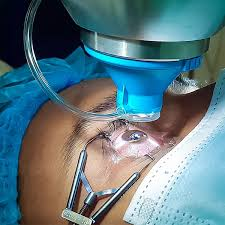
LASIK remains one of the most popular corrective eye surgeries worldwide. It reshapes the cornea using a laser after creating a corneal flap.
Standard LASIK Pricing:
Traditional LASIK generally costs between ₹40,000 and ₹70,000 for both eyes. This remains one of the most affordable vision correction options available today. Patients with mild to moderate refractive errors often consider standard LASIK because it provides excellent visual outcomes at a lower cost.
Although less expensive, standard LASIK may not include advanced customisation technologies. Recovery is still relatively quick, and most patients experience significant vision improvement within a few days.
Femto LASIK Pricing:
Femto LASIK is a bladeless procedure that uses a femtosecond laser instead of a mechanical blade to create the corneal flap. The cost typically ranges between ₹70,000 and ₹110,000 for both eyes.
Patients often choose Femto LASIK because it offers greater precision, enhanced safety, and improved predictability. While the upfront investment is higher, many patients appreciate the advanced technology and smoother surgical experience.
Contoura Vision LASIK Cost:
Contoura Vision is considered one of the most advanced forms of LASIK available today. Rather than treating only the spectacle number, it maps thousands of unique points on the cornea and creates a personalised treatment plan.
The average cost ranges from ₹90,000 to ₹130,000 for both eyes.
Patients frequently report better night vision quality, reduced glare, and sharper visual outcomes compared to traditional LASIK. If your goal is not merely reducing dependence on glasses but achieving superior visual quality, Contoura Vision often justifies its premium pricing.
SMILE Eye Surgery Cost:
SMILE (Small Incision Lenticule Extraction) has gained immense popularity because it is a minimally invasive, flapless procedure. Instead of creating a large flap, the surgeon removes a small lenticule through a tiny incision.
Current pricing for SMILE generally ranges from ₹100,000 to ₹160,000 for both eyes.
Benefits of SMILE Surgery
SMILE offers several advantages over traditional LASIK. Since no flap is created, there is less disruption to corneal nerves, potentially reducing post-operative dry eye symptoms. Many patients return to work quickly and experience excellent visual outcomes.
Athletes, military personnel, and individuals engaged in contact sports often prefer SMILE because there is no flap-related risk after surgery. The higher cost reflects advanced femtosecond laser technology and specialised surgical expertise.
SMILE Pro Surgery Cost:
SMILE Pro is the next generation of SMILE technology. The laser treatment itself can be completed in just a few seconds, providing improved comfort and efficiency.
Pricing generally ranges between ₹130,000 and ₹180,000 for both eyes.
Patients seeking the latest technology often choose SMILE Pro because of its speed, precision, and reduced treatment time. While the difference in outcomes may not be dramatic for every patient, many appreciate the cutting-edge technology and enhanced surgical experience.
ICL Surgery Cost:
Not everyone qualifies for laser vision correction. Patients with thin corneas, very high spectacle powers, or certain corneal conditions may be better candidates for Implantable Collamer Lens (ICL) surgery.
ICL involves placing a customised lens inside the eye without removing the natural lens. The cost generally ranges from ₹240,000 to ₹360,000 for both eyes.
EVO ICL Cost
EVO ICL is an advanced version of ICL technology and may cost between ₹260,000 and ₹400,000 for both eyes depending on lens type and surgeon expertise.
Many surgeons consider ICL an excellent solution for patients with extremely high prescriptions. Unlike laser procedures, ICL preserves corneal tissue and is reversible if necessary.
PRK Surgery Cost:
PRK (photorefractive keratectomy) is one of the earliest forms of laser vision correction and remains useful for selected patients. Instead of creating a flap, the surface layer of the cornea is removed before laser treatment.
The typical cost ranges from ₹40,000 to ₹90,000 for both eyes.
PRK is often recommended for patients with thinner corneas or specific occupational requirements. Recovery takes longer than LASIK or SMILE, but long-term visual outcomes are generally excellent.
Factors That Affect Eye Surgery Pricing:
Several factors determine the final cost of corrective eye surgery.
Technology Used
Newer laser platforms are significantly more expensive for hospitals to purchase and maintain. Advanced systems such as SMILE Pro, Contoura Vision, and premium femtosecond lasers naturally increase treatment costs.
Surgeon Experience
Highly experienced refractive surgeons often charge more for their expertise. This additional cost reflects years of training, surgical volume, and proven clinical outcomes. Many patients consider surgeon experience one of the most important investments in their treatment journey.
Hospital Infrastructure
Premium eye hospitals often provide advanced diagnostic testing, sterile operating environments, dedicated refractive surgery teams, and comprehensive follow-up care. These factors contribute to higher pricing but can also improve the overall patient experience.
Hidden Costs to Consider:
Many patients focus only on the advertised surgical fee. However, additional expenses may include:
- Comprehensive eye evaluation
- Corneal topography
- Diagnostic testing
- Post-operative medications
- Follow-up visits
- Enhancement procedures if required
Pre-operative evaluations alone may cost between ₹500 and ₹2,000 depending on the centre.
Always ask whether the quoted package includes all investigations, medications, and follow-up appointments. Transparent pricing helps avoid unpleasant surprises later.
Is Corrective Eye Surgery Covered by Insurance?
In most cases, corrective eye surgery is considered an elective procedure and is not covered by standard health insurance policies. However, exceptions exist. Some insurers may provide coverage if the refractive error exceeds a specific threshold, commonly around +-7.5 diopters, or when the procedure is medically necessary.
Patients should carefully review policy documents and speak directly with their insurance provider before making assumptions about coverage. Employer-sponsored health plans occasionally offer additional benefits that may include refractive surgery.
Which Eye Surgery Offers the Best Value?
The answer depends entirely on your eyes and lifestyle. A patient with mild myopia may achieve outstanding results with Femto LASIK, while someone with high power and thin corneas may benefit more from ICL.
| Goal | Recommended Procedure |
|---|---|
| Budget-Friendly | Standard LASIK |
| Better Precision | Femto LASIK |
| Premium Visual Quality | Contoura Vision |
| Flapless Surgery | SMILE |
| Latest Technology | SMILE Pro |
| High Power Correction | ICL/EVO ICL |
| Thin Cornea | PRK or ICL |
The best value comes from selecting the procedure that matches your eye health rather than choosing solely based on price.
How to Choose the Right Procedure:
Choosing corrective eye surgery is similar to choosing a vehicle. The cheapest option may get you from point A to point B, but it may not offer the comfort, features, or long-term value you desire. A detailed eye examination remains the most important step.
A qualified refractive surgeon will assess corneal thickness, prescription stability, tear film quality, pupil size, and overall eye health before recommending a procedure. The ideal surgery is not always the most expensive one. Instead, it is the procedure that safely delivers the best possible visual outcome for your specific eyes.
Patients should ask detailed questions about technology, surgeon experience, expected recovery, enhancement policies, and total package costs before making a final decision.
Conclusion:
Corrective eye surgery has become safer, more accurate, and more accessible than ever before. In India, prices typically range from ₹40,000 for basic LASIK to over ₹350,000 for premium ICL procedures, depending on technology and individual requirements.
The smartest approach is not to search for the cheapest surgery but to identify the procedure best suited to your eye condition. A comprehensive evaluation by an experienced refractive surgeon can help determine whether LASIK, Femto LASIK, Contoura Vision, SMILE, SMILE Pro, PRK, or ICL is the ideal choice for achieving clear, spectacle-free vision.
FAQs:
1. What is the cheapest corrective eye surgery in India?
Standard LASIK is generally the most affordable option, costing approximately ₹40,000–₹70,000 for both eyes.
2. Is SMILE better than LASIK?
SMILE is a flapless procedure and may offer advantages such as reduced dry eye symptoms and greater corneal stability for some patients. Eligibility depends on individual eye characteristics.
3. How much does ICL surgery cost?
ICL surgery generally ranges from ₹240,000 to ₹360,000 for both eyes, depending on the lens type and surgeon.
4. Can eye surgery permanently remove glasses?
Most patients achieve significant reduction or complete elimination of spectacle dependence, though age-related changes may still occur later in life.
5. Which eye surgery is best for high power?
Patients with very high myopia or thin corneas are often considered for ICL or EVO ICL because these procedures do not remove corneal tissue.