
Introduction
If you’re tired of wearing glasses or contact lenses, modern advancements in eye care offer multiple types of eye surgery to correct vision safely and effectively.
Choosing the right procedure depends on your eye health, age, and lifestyle. In this guide, we’ll explain all major options in simple terms so you can make an informed decision.
1. LASIK (Laser-Assisted In Situ Keratomileusis)
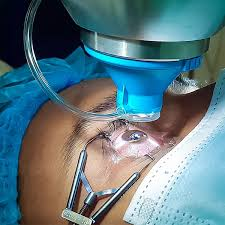
LASIK is the most popular among all types of eye surgery to correct vision.
How it works
- A thin flap is created in the cornea
- Laser reshaping the cornea
- The flap is repositioned
Best for
- Mild to moderate power
- People seeking quick recovery
Advantages
✔️ Painless procedure
✔️ Fast recovery (1–2 days)
✔️ Immediate vision improvement
2. PRK (Photorefractive Keratectomy)
PRK is one of the oldest and safest types of eye surgery to correct vision, especially for thin corneas.
How it works
- The outer corneal layer is removed
- Laser reshaping the cornea
Best for
- Thin cornea patients
- Athletes or high-impact professions
Recovery
- Slightly longer (5–7 days) compared to LASIK
3. SMILE (Small Incision Lenticule Extraction)
SMILE is an advanced, minimally invasive option.
How it works
- A small piece of corneal tissue (lenticule) is removed through a tiny incision
Best for
- Myopia and astigmatism
- Patients prone to dry eyes
Advantages
✔️ No flap creation
✔️ Less dryness
✔️ Faster healing
4. ICL (Implantable Contact Lens)
ICL is a premium option among types of eye surgery to correct vision, especially for high power.
How it works
- A biocompatible lens is placed inside the eye
Best for
- High myopia (above -8)
- Thin corneas unsuitable for LASIK
Advantages
✔️ Reversible procedure
✔️ High-definition vision
✔️ No corneal tissue removal
5. Refractive Lens Exchange (RLE)
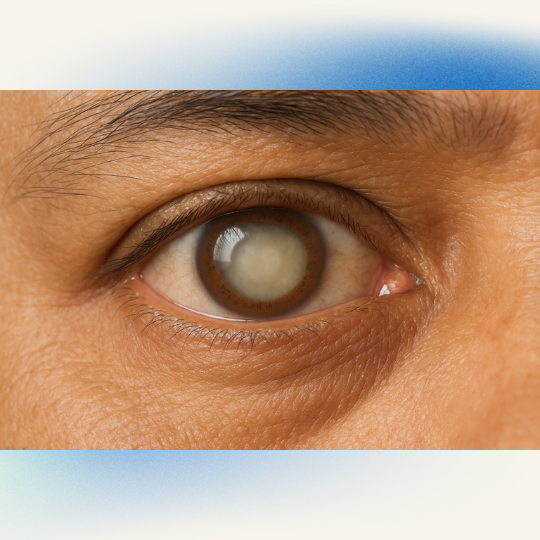
RLE is similar to cataract surgery and is ideal for older patients.
How it works
- The natural lens is replaced with an artificial lens
Best for
- Age 40+
- Presbyopia or high refractive errors
Advantages
✔️ Permanent solution
✔️ Prevents future cataracts
6. Contoura Vision (Topography-Guided LASIK)
This is advanced customized LASIK.
How it works
- Uses corneal mapping for precise correction
Best for
- Patients seeking superior visual quality
Advantages
✔️ Sharper vision than standard LASIK
✔️ Reduced glare and halos
Comparison Table of Vision Correction Surgeries
| Procedure | Best For | Recovery Time | Key Benefit |
|---|---|---|---|
| LASIK | Mild–Moderate Power | 1–2 days | Quick recovery |
| PRK | Thin cornea | 5–7 days | Safe alternative |
| SMILE | Myopia | 2–3 days | Minimally invasive |
| ICL | High power | 2–3 days | No tissue removal |
| RLE | Age 40+ | 1 week | Permanent solution |
How to Choose the Right Surgery
Not all types of eye surgery to correct vision are suitable for everyone.
Your doctor will evaluate the following:
- Corneal thickness
- Eye power
- Age
- Lifestyle
- Eye health
👁️ Get Expert Guidance at Vijaya Nethralaya
Choosing the right procedure is crucial—and expert consultation makes all the difference.
Why Choose Vijaya Nethralaya
✔️ Advanced LASIK & ICL technology
✔️ Experienced refractive surgeons
✔️ Personalized treatment plans
✔️ High success rates
🔥 Book Your Vision Correction Consultation Today
Say goodbye to glasses and contact lenses.
👉 Call: +91 78924 92098
👉 Visit: vijayanethralaya.com
👉 Location: Near Nagarbhavi & Vijayanagar
💡 Limited slots available—book your appointment now!
FAQs
What are the safest types of eye surgery to correct vision?
LASIK, SMILE, and ICL are considered safe when performed by experienced surgeons.
Which eye surgery is best for high power?
ICL is usually the best option for high refractive errors.
Is vision correction surgery permanent?
Yes, most procedures provide long-term results, though natural aging may affect vision later.
How long does recovery take?
Recovery varies from 1–7 days depending on the procedure.
Conclusion
There are several types of eye surgery to correct vision, each designed for specific needs. From LASIK’s quick recovery to ICL’s suitability for high power, modern eye care offers safe and effective solutions.