
Introduction:
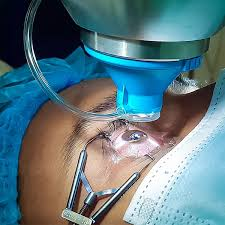
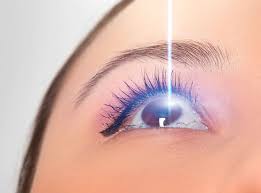
What Is Laser Eye Surgery? Is laser treatment good for the eyes? Laser eye surgery refers to a group of procedures that reshape the cornea using a laser to correct vision problems like nearsightedness, farsightedness, and astigmatism. These treatments aim to reduce or eliminate the need for glasses or contact lenses.
Evolution of Laser Technology in Ophthalmology:
From the first excimer lasers in the late ’80s to today’s bladeless, computer-guided procedures, laser eye surgery has evolved into a safe, precise, and highly effective option for vision correction.
Types of Laser Eye Treatments:
LASIK (Laser-Assisted In Situ Keratomileusis)
This is the most common type of laser surgery. A flap is created in the cornea, then the underlying tissue is reshaped using a laser to correct vision.
PRK (Photorefractive Keratectomy)
Ideal for patients with thin corneas, PRK removes the outer corneal layer, which then grows back naturally. It has a longer recovery than LASIK but offers comparable results.
SMILE (Small Incision Lenticule Extraction)
This minimally invasive technique uses a femtosecond laser to create and remove a small disc of tissue, improving vision without creating a large flap.
Laser Treatments for Retinal Diseases
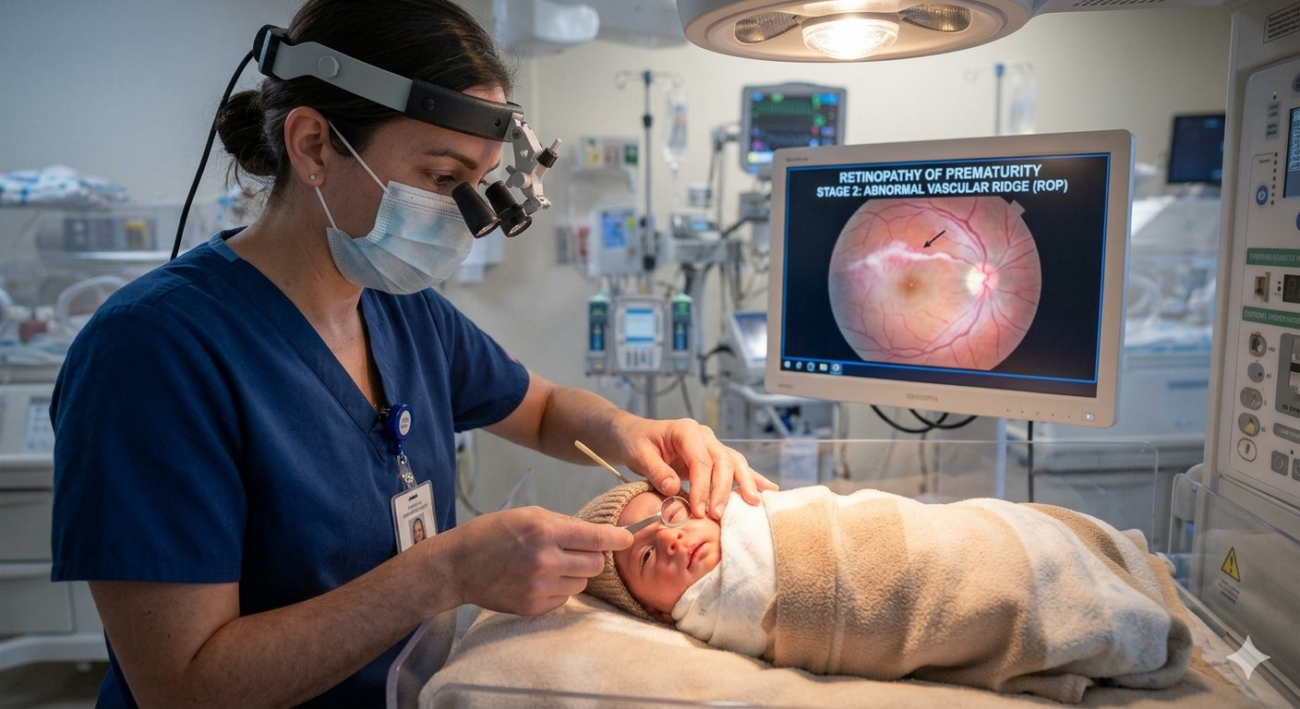
Laser photocoagulation is commonly used for conditions like diabetic retinopathy and retinal tears. SLT (selective laser trabeculoplasty) is used in glaucoma treatment to reduce eye pressure.
Who Is a Good Candidate for Laser Eye Surgery?
Age and Eye Health Requirements
Generally, candidates must be over 18, have stable vision for at least a year, and be in good overall eye health.
Common Eligibility Factors
- No active eye infections
- Not pregnant or breastfeeding
- No autoimmune disorders
When Is Laser Surgery Not Recommended?
Patients with extremely thin corneas, dry eye syndrome, or severe refractive errors may not be ideal candidates. A comprehensive consultation is a must.
Benefits of Laser Eye Treatment:
Improved Vision Quality
Most patients achieve 20/20 vision or better. Say goodbye to smudged glasses and fogged-up lenses!
Long-Term Cost Savings
While the upfront cost may seem high, it often pays off compared to years of buying lenses, solutions, or glasses.
Quick Recovery and Minimal Pain
Most people return to normal activities within 24–48 hours. The procedure itself takes about 15 minutes total!
Risks and Side Effects:
Temporary Side Effects
Some patients experience dry eyes, glare, halos, or light sensitivity for a few days or weeks post-surgery.
Rare Complications
Infections, flap dislocations (LASIK), or vision regression are rare but possible. Choosing an experienced surgeon minimizes these risks.
💡 Myths vs. Facts About Laser Eye Surgery:
“Laser Surgery Is Painful”
Truth: Most patients feel only mild discomfort. Numbing eye drops are used during the procedure.
“It’s Not Safe for Long-Term Vision”
Fact: Over 98% of LASIK surgeries are successful. Long-term results are stable and safe when properly performed.
“It’s Only for the Wealthy”
Actually, many clinics offer EMI options and insurance support. It’s more accessible than you might think.
Real-Life Success Stories:
Testimonials from LASIK Patients
“Waking up and seeing the world clearly was life-changing.” — Ramesh, 29, Bangalore
Celebrities Who’ve Undergone Laser Eye Surgery
Stars like Tiger Woods, Kim Kardashian, and Brad Pitt have all opted for LASIK. If it’s good enough for them…
Pre-Surgery Preparation:
What Happens During the Evaluation?
Expect vision tests, corneal thickness measurements, and a full eye exam. Your doctor will assess if you’re a good candidate.
Instructions Before the Procedure
You may be asked to stop wearing contact lenses a few days before and avoid makeup on the day of surgery.
The Laser Surgery Procedure Step-by-Step:
What to Expect in the Operating Room
You’ll be awake but relaxed. Eye drops numb the eye, and a device holds it open. The laser reshapes your cornea in seconds.
Duration and Pain Level
The procedure is usually completed in 15–20 minutes. Most patients describe it as pressure, not pain.
Post-Surgery Care and Recovery:
Recovery Timeline
- Day 1: Vision improves noticeably
- Day 2–7: Mild dryness, light sensitivity
- Week 1+: Resume most daily activities
- 1–3 months: Full recovery
Do’s and Don’ts After Laser Eye Surgery
Do: Wear sunglasses, use prescribed drops
Don’t rub your eyes or swim for at least 2 weeks
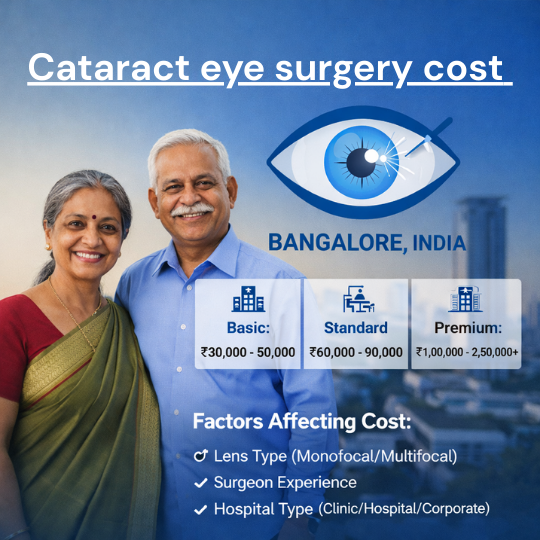
How Much Does Laser Eye Surgery Cost?
Cost Breakdown by Type
| Procedure | Average Cost (INR) |
|---|---|
| LASIK | ₹30,000–₹60,000 per eye |
| SMILE | ₹50,000–₹75,000 per eye |
| PRK | ₹25,000–₹45,000 per eye |
Insurance and EMI Options
Most insurance doesn’t cover cosmetic laser vision correction, but EMI plans are widely available.
Comparing Laser Eye Surgery to Glasses & Contact Lenses:
Visual Freedom
No more fogging, slipping, or cleaning. Laser eye surgery gives you the freedom to live lens-free.
Lifestyle Benefits
Perfect for athletes, travelers, and those with busy lives. You wake up with clear vision every day.
Is Laser Eye Treatment Permanent?
Will I Need Glasses Again?
Some patients may need reading glasses after 40 due to presbyopia, but distance vision remains sharp.
How Long Do Results Last?
For most, results are stable for decades. Enhancements may be needed in rare cases.
Future of Laser Eye Treatments:
Technological Advancements
AI-guided lasers and wavefront mapping are pushing precision to new levels. Expect even better outcomes.
What’s Next in Vision Correction?
Non-invasive laser options and lens-based procedures like ICL are emerging alternatives for high corrections.
Conclusion:
So, is laser treatment good for the eyes? The short answer: Yes, for the right person, it can be life-changing. It’s safe, effective, and incredibly rewarding when performed by skilled professionals. While not everyone qualifies, a proper consultation can determine the best option for your eyes.
FAQs:
Q1: Is laser eye surgery painful?
Nope! It’s usually painless thanks to numbing drops, and most patients feel only mild pressure.
Q2: How long do laser eye surgery results last?
Most people enjoy clear vision for years or even decades, especially if done in their 20s–30s.
Q3: Can I get laser surgery if I have astigmatism?
Absolutely. LASIK, PRK, and SMILE can all correct astigmatism effectively.
Q4: Is it safe for both eyes to be done on the same day?
Yes! In fact, most procedures treat both eyes in a single session.
Q5: What age is best for laser eye surgery?
The sweet spot is usually between 20 and 40, once your vision is stable.