
Introduction to LASIK Eye Surgery
If you’ve ever wished to wake up with crystal-clear vision instead of reaching for glasses or contacts, LASIK eye surgery might be the solution. Millions of people worldwide have undergone this life-changing procedure, which reshapes the cornea to improve vision. But here’s the catch: not all LASIK surgeries are the same. There are different types of LASIK eye surgery, each designed to fit specific eye conditions and patient needs.
Let’s explore what LASIK is, how it works, and which type might be best for you.
What is LASIK and How Does It Work?
LASIK (Laser-Assisted In Situ Keratomileusis) is a vision correction surgery that uses a laser to reshape the cornea. The cornea is the clear front surface of your eye, and its shape determines how light focuses on the retina. A misshapen cornea can cause nearsightedness, farsightedness, or astigmatism.
By reshaping the cornea, LASIK corrects these refractive errors, allowing light to focus properly and improving vision.
Brief History and Evolution of LASIK Surgery
LASIK surgery has come a long way since its introduction in the 1990s. The earliest versions involved mechanical blades to create corneal flaps, but modern techniques now use ultra-precise lasers. Today, patients can choose from standard LASIK, bladeless LASIK, and advanced customized techniques that improve both safety and accuracy.

Benefits of LASIK Eye Surgery
Improved Vision Quality
Most patients achieve 20/20 vision or better after LASIK. The procedure is especially effective for people with mild to moderate refractive errors.
Fast Recovery Time
Unlike many other surgeries, LASIK offers quick results. Many patients notice clearer vision within 24 hours.
Reduced Dependence on Glasses or Contact Lenses
LASIK doesn’t just improve eyesight—it transforms lifestyles. From swimming without contacts to enjoying outdoor activities without glasses, patients often experience a newfound freedom.
Types of LASIK Eye Surgery Explained
Conventional LASIK Surgery
This is the original form of LASIK, where a microkeratome blade creates a thin flap in the cornea before the laser reshapes it.e
Bladeless (All-Laser) LASIK
Instead of a blade, this technique uses a femtosecond laser to create the corneal flap. This makes the procedure more precise and reduces the risk of complications.
Wavefront-Guided LASIK (Custom LASIK)
Wavefront technology maps the eye’s unique imperfections, allowing for a highly customized treatment. This method can improve night vision and reduce halos and glare.
Topography-Guided LASIK
Using detailed corneal mapping, this technique corrects even subtle irregularities. It’s often recommended for patients with corneas that aren’t perfectly shaped.
Epi-LASIK
Instead of cutting the epithelium (the cornea’s outer layer), this LASIK variation gently lifts it. This method may be better for patients with thin corneas.
PRK vs. LASIK: Key Differences
PRK (Photorefractive Keratectomy) is not technically LASIK but a similar procedure. Instead of creating a flap, PRK removes the cornea’s surface layer. Healing takes longer, but it’s an option for patients with very thin corneas.

Who is a Candidate for LASIK?
Age and Eye Health Requirements
Most surgeons recommend LASIK for people aged 18 to 40, as younger patients may still have changing prescriptions, and older patients often develop age-related eye conditions. Stable vision for at least a year is usually required.
Conditions That May Prevent LASIK
Not everyone is an ideal candidate. Patients with severe dry eyes, thin corneas, glaucoma, or uncontrolled diabetes may not qualify. Doctors advise pregnant or breastfeeding women to wait before they undergo LASIK.
Risks and Side Effects of LASIK Surgery
Common Side Effects (Dry Eyes, Halos, Glare)
While LASIK is generally safe, some patients experience temporary side effects such as:
- Dry eyes: Often treated with eye drops.
- Halos or glare: Especially noticeable when driving at night.
- Fluctuating vision: Usually stabilizes within a few weeks.
Rare Complications
Although rare, complications may include flap dislocation, infection, or under/over-correction. Choosing a skilled surgeon significantly lowers these risks.
LASIK Eye Surgery Procedure Step by Step
Pre-Surgery Consultation
The surgeon conducts an eye exam to measure corneal thickness, pupil size, and prescription stability, and uses advanced imaging to choose the right LASIK type.
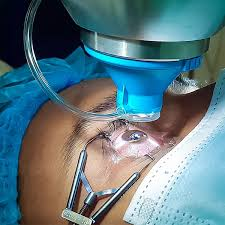
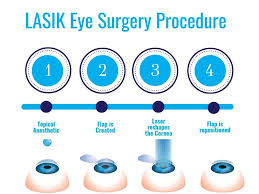
The LASIK Operation Process
- Numbing drops are applied.
- A flap is created in the cornea (with a blade or laser).
- The excimer laser reshapes the cornea.
- The flap is repositioned, and natural healing begins.
The procedure typically takes less than 15 minutes per eye.
Post-Surgery Recovery
Most patients notice improvements within 24–48 hours. Doctors recommend avoiding rubbing the eyes, swimming, or using makeup for at least a week. Protective eye shields may be worn at night to prevent accidental rubbing.
Cost of LASIK Surgery
Factors Affecting the Price
- Type of LASIK (conventional vs. custom)
- Technology used (blade vs. bladeless)
- Surgeon’s expertise
- Geographic location
Average Cost in Different Regions
- United States: $2,000–$3,500 per eye
- Europe: €1,500–€2,500 per eye
- Asia: $1,000–$2,000 per eye
Most insurance plans don’t cover LASIK because they consider it an elective procedure, but many financing options are available.
How to Choose the Right LASIK Surgery Type for You
Consultation with an Eye Specialist
Your eye doctor will perform detailed tests to determine which LASIK type suits your eye structure, lifestyle, and visual needs.
Considering Lifestyle and Eye Health
- Frequent night drivers: Wavefront-guided LASIK is often recommended.
- Patients with irregular corneas: Topography-guided LASIK may be ideal.
- Thin corneas: Epi-LASIK or PRK might be safer.
Alternatives to LASIK Eye Surgery
SMILE (Small Incision Lenticule Extraction)
A minimally invasive surgery where a small lens-shaped piece of corneal tissue is removed. SMILE offers faster healing and less dry-eye risk.
Implantable Contact Lenses (ICL)
An artificial lens is implanted inside the eye. This is reversible and suitable for patients with very high prescriptions.
Refractive Lens Exchange (RLE)
Similar to cataract surgery, the natural lens is replaced with an artificial one. Often recommended for older patients.
Conclusion: Choosing the Best LASIK Option for Clear Vision
LASIK eye surgery has revolutionized vision correction, offering millions of people freedom from glasses and contacts. With options like bladeless LASIK, wavefront-guided LASIK, topography-guided LASIK, and Epi-LASIK, patients can find a tailored solution for their eyes.
The best way to decide is through a professional consultation, where your surgeon will recommend the ideal approach based on your unique eye structure and lifestyle. Whether you choose LASIK or alternatives like SMILE or ICL, the ultimate goal remains the same: clear, lasting vision and a better quality of life.
FAQs About Types of LASIK Eye Surgery
Q1. Which type of LASIK is the safest?
Bladeless LASIK and wavefront-guided LASIK are considered safer due to advanced precision.
Q2. How long does LASIK last?
Results are usually permanent, but age-related vision changes may occur over time.
Q3. Can LASIK fix astigmatism?
Yes, most LASIK techniques can correct astigmatism effectively.
Q4. Is LASIK painful?
The surgery is virtually painless thanks to numbing drops, though mild discomfort may occur afterward.
Q5. How soon can I return to work after LASIK?
Many patients return to work within 1–2 days, depending on the job.
Q6. What’s better: PRK or LASIK?
LASIK offers quicker recovery, but PRK may be better for patients with thin corneas or dry eyes.