
Introduction to Modern Vision Correction
In today’s fast-paced world, clear vision is no longer a luxury—it’s a necessity. For decades, glasses and contact lenses were the primary solution for people with refractive errors such as myopia, hyperopia, or astigmatism. But advancements in medical technology have made laser vision correction surgeries more accessible and effective. Two of the most popular procedures today are LASIK (Laser-Assisted In Situ Keratomileusis) and SMILE (Small Incision Lenticule Extraction) SMILE vs LASIK eye surgery.
While LASIK has been the gold standard for over 20 years, SMILE has emerged as a less invasive alternative that appeals to patients seeking faster recovery and fewer complications. But which one is truly better for you? Let’s dive into a detailed SMILE vs LASIK comparison that will help you make an informed decision.

What is LASIK Eye Surgery?
How LASIK Works
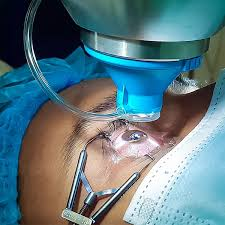
LASIK is one of the most common vision correction surgeries worldwide. SMILE vs LASIK eye surgery The procedure reshapes the cornea using an excimer laser. First, a flap is created on the cornea using a microkeratome blade or femtosecond laser. Then, the underlying corneal tissue is reshaped to improve how light focuses on the retina. Finally, the flap is repositioned for natural healing.
Benefits of LASIK
- Over 90% of patients achieve 20/20 vision or better.
- Quick procedure (10–15 minutes per eye).
- Recovery within 24–48 hours.
- Long track record with millions of successful surgeries worldwide.
Risks and Limitations of LASIK
- Risk of dry eyes post-surgery.
- Possibility of flap complications (though rare).
- Not ideal for people with thin corneas or extreme prescriptions.
- Night vision disturbances like glare and halos in some cases.
What is SMILE Eye Surgery?
How SMILE Works
SMILE is a newer, minimally invasive laser eye surgery. Instead of creating a corneal flap, a femtosecond laser creates a small disc-shaped piece of corneal tissue (called a lenticule). This lenticule is removed through a tiny 2–4 mm incision, reshaping the cornea without creating a large flap.
Advantages of SMILE
- No corneal flap—reduces risk of flap-related complications.
- Less dry eye risk compared to LASIK.
- Stronger corneal stability, making it suitable for active lifestyles.
- Shorter healing time for corneal nerves.
Potential Risks and Side Effects
- Slightly slower visual recovery than LASIK (a few days instead of 1–2).
- Limited availability—requires advanced equipment and skilled surgeons.
- Currently approved mainly for myopia and astigmatism, not hyperopia.
SMILE vs LASIK: Key Differences
Surgical Procedure Comparison
- LASIK: Creates a flap → reshapes cornea → repositions flap.
- SMILE: Removes lenticule via small incision → no flap.
Recovery Time and Healing
- LASIK: Fast recovery (24–48 hours).
- SMILE: Slightly longer recovery (2–5 days).
Accuracy and Vision Outcomes
- Both provide excellent results; however, LASIK may have a slight edge in extremely high prescriptions.
Suitability for Different Eye Conditions
- LASIK: Suitable for a wider range, including hyperopia.
- SMILE: Better for patients with dry eyes or thin corneas.
Cost and Accessibility
- LASIK: Widely available, often slightly cheaper.
- SMILE: Newer technology, usually costs more, and not available in all regions.
Which Procedure is Safer: SMILE or LASIK?
Both procedures are safe, with high success rates. SMILE has fewer flap-related risks, while LASIK has a longer history of proven results. Safety often depends more on patient suitability and surgeon expertise than the procedure itself.
Who is an Ideal Candidate for LASIK?
- Age 18+ with stable vision.
- Myopia, hyperopia, or astigmatism.
- Healthy corneal thickness.
- No severe dry eye syndrome.
Who is an Ideal Candidate for SMILE?
- Patients with myopia (-1.00D to -10.00D).
- Mild to moderate astigmatism.
- Active individuals prone to eye trauma (athletes, military).
- Patients with chronic dry eye concerns.
Technology Behind SMILE vs LASIK
- LASIK: Uses both femtosecond laser (for flap) and excimer laser (for reshaping).
- SMILE: Relies only on femtosecond laser, making it a single-step, flapless procedure.
Long-Term Results and Patient Satisfaction
Studies show both LASIK and SMILE patients maintain excellent vision years after surgery. However, SMILE patients report lower dry eye symptoms long-term, while LASIK patients benefit from faster immediate clarity.
Myths and Misconceptions about SMILE and LASIK
- ❌ Myth: SMILE is risk-free.
✅ Reality: Every surgery has risks, but SMILE minimizes flap-related ones. - ❌ Myth: LASIK always causes dry eyes.
✅ Reality: Dry eyes are temporary for most patients and manageable with eye drops.
Expert Opinions: What Ophthalmologists Recommend
Eye surgeons often suggest LASIK for patients seeking fast clarity and broad correction, while SMILE is recommended for those with dry eye issues or who want a safer, flap-free option.
SMILE vs LASIK: Pros and Cons Table
| Factor | LASIK | SMILE |
|---|---|---|
| Flap Creation | Yes | No |
| Recovery Speed | 1–2 days | 2–5 days |
| Dry Eye Risk | Higher | Lower |
| Range of Correction | Myopia, Hyperopia, Astigmatism | Myopia, Astigmatism |
| Cost | Slightly cheaper | Higher |
| Long-Term Stability | Excellent | Excellent |
FAQs on SMILE vs LASIK Eye Surgery
1. Is SMILE safer than LASIK?
Both are safe, but SMILE has the advantage of no flap, reducing flap-related risks.
2. Does SMILE last as long as LASIK?
Yes, both provide permanent results if your vision is stable before surgery.
3. Can SMILE correct farsightedness (hyperopia)?
Currently, SMILE is not widely approved for hyperopia. LASIK remains the choice.
4. Which surgery is more painful: SMILE or LASIK?
Both are virtually painless, thanks to numbing eye drops. Discomfort is mild and temporary.
5. How much does SMILE vs LASIK cost?
LASIK usually costs $1,500–$3,000 per eye. SMILE often costs $2,000–$3,500 per eye.
6. Which surgery has faster results?
LASIK offers quicker clarity within a day, while SMILE patients may take a few extra days.
Conclusion: Choosing the Right Eye Surgery for You
The choice between SMILE vs LASIK depends on your eye health, lifestyle, and budget. LASIK is ideal for those seeking quick vision clarity and a long track record, while SMILE is better suited for patients concerned about dry eyes, flap risks, and long-term corneal strength.
Ultimately, consulting with an experienced ophthalmologist is the best way to decide. Both surgeries can give you the freedom from glasses and contacts you’ve been dreaming of.