
Choosing to liberate yourself from glasses and contact lenses is a life-changing decision. While LASIK remains a household name, surface ablation procedures like PRK and the advanced TransPRK have become the gold standard for patients with active lifestyles or specific corneal profiles.
If you are researching the best surface ablation laser eye surgery, you have likely encountered two main options: traditional PRK and the modern, “no-touch” TransPRK. This guide provides an exhaustive comparison to help you navigate your journey toward visual freedom.
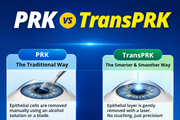
Understanding Refractive Eye Surgery: The Evolution of Vision Correction
Refractive surgery reshapes the cornea—the clear front window of the eye—to change how light focuses on the retina. Broadly, these surgeries fall into two categories:
- Flap-based procedures (LASIK/SMILE): A flap or lenticule is created in the corneal tissue, which is then lifted or removed.
- Surface Ablation (PRK/TransPRK): The surgeon does not create a flap. Instead, they remove the thin outer layer of the cornea, called the epithelium, to allow the laser to reshape the underlying stromal tissue.
Surgeons often choose surface ablation for patients who are not ideal candidates for LASIK, including those with thin corneas, dry eye concerns, or individuals in high-impact professions (such as athletes or military personnel) where a corneal flap could be dislodged.
What is PRK? (The Traditional 2-Step Process)
Photorefractive Keratectomy (PRK) was the first laser eye surgery approved by the FDA in the 1990s. Despite the advent of newer technologies, it remains a highly reliable and successful procedure.
The Procedure
PRK is a two-step process:
- Manual Epithelial Removal: The surgeon uses a diluted alcohol solution or a specialized surgical “brush” to soften and manually remove the epithelium (the skin of the eye).
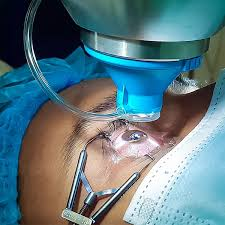
- Laser Reshaping: An excimer laser then reshapes the exposed corneal tissue to correct nearsightedness, farsightedness, or astigmatism.
Once the laser treatment is complete, the surgeon places a “bandage” contact lens on the eye to protect it while the epithelium regrows—a process that typically takes about a week.
What is TransPRK? (The Single-Step ‘No-Touch’ Method)
Transepithelial PRK (TransPRK) represents the next generation of surface ablation. Often marketed as “SmartSurfACE” or “No-Touch” surgery, it streamlines the process using advanced software.
The Procedure
Unlike traditional PRK, TransPRK is a single-step procedure:
- The “No-Touch” Laser: A single laser (the excimer laser) performs both tasks. It first evaporates the epithelium with extreme precision and then immediately transitions into reshaping the cornea.
- Zero Manual Contact: No alcohol, no brushes, and no manual scraping are required. The entire process is automated and computer-controlled.
Because the laser precisely removes the epithelium according to the exact size of the treatment zone, it creates a smaller and smoother “wound” than manual removal, which leads many clinicians to describe the healing process as more comfortable.
Key Differences: PRK vs TransPRK
When comparing PRK vs TransPRK, the differences lie primarily in the surgical technique and the precision of the epithelial removal.
1. Epithelial Removal Method
- PRK: Uses chemical (alcohol) or mechanical (brush) methods. This can occasionally cause a slightly larger area of epithelial loss than strictly necessary.
- TransPRK: Uses the laser to remove a precise, uniform layer. This minimizes the “insult” to the eye’s surface.
2. Precision and Consistency
Because TransPRK is entirely digital, it eliminates the variable of human manual pressure. Studies indicate that the laser-sculpted edges of the epithelium in TransPRK are smoother, which facilitates faster cellular regrowth.
3. Surgical Time
TransPRK is significantly faster. While PRK requires several minutes of preparation to soften and scrape the epithelium, the TransPRK laser treatment often lasts less than 60 seconds per eye.
PRK vs TransPRK Recovery: What to Expect
The most common question patients ask is: “How long will I be out of commission?” Recovery from surface ablation is generally longer than LASIK, but TransPRK has a clear edge in efficiency.
Pain Levels and Comfort
During both procedures, you are numbed with drops and feel no pain. However, as the numbing wears off, the “regrowth” phase begins.
- PRK: Patients often report moderate to significant discomfort (grittiness, burning, or watering) for 48–72 hours.
- TransPRK: Because the laser creates a smaller, smoother treatment area, pain is generally reported as lower. The “no-touch” approach avoids the chemical irritation associated with alcohol.
TransPRK Recovery Time vs. PRK
The healing of the epithelium is the first milestone.
- TransPRK Recovery Time: Most patients see the epithelial defect close within 3 to 5 days.
- PRK Recovery Time: Healing typically takes 5 to 7 days.
Visual Stabilization Time
While functional vision (the ability to walk around and do light work) returns within a week, “HD” quality vision takes time. Clinical studies have shown that TransPRK often has a faster visual recovery in the first month compared to traditional PRK, though both procedures yield nearly identical, excellent visual outcomes at the six-month mark.
Pros and Cons: A Transparent Look
TransPRK (The Modern Choice)
Pros:
- Reduced Pain: Less surgical trauma means a more comfortable first 48 hours.
- Reduced Infection Risk: Fewer instruments touching the eye and no chemicals mean a lower risk of post-operative complications.
- Suitability for Thin Corneas: Like PRK, it preserves more corneal thickness than LASIK, but with higher precision.
- No Flap: Zero risk of flap-related complications (dislodgment or epithelial ingrowth).
Cons:
- Cost: Often more expensive due to the advanced laser software required.
- Availability: Not all clinics have the specific excimer lasers (like the Schwind Amaris) required for “true” TransPRK.
Traditional PRK (The Time-Tested Standard)
Pros:
- Proven Track Record: Millions of successful surgeries over 30 years.
- Cost-Effective: Generally the most affordable laser vision correction option.
- Widely Available: Can be performed on almost any excimer laser system.
Cons:
- Longer Healing: More days of discomfort and slower epithelial closure.
- Alcohol Use: The chemical used can sometimes lead to temporary dryness or mild inflammation.
Who is a Candidate for Surface Ablation?
You might be the perfect candidate for PRK or TransPRK if you fall into these categories:
- Athletes & High-Impact Professionals: If you are a boxer, MMA fighter, or in the special forces, you cannot risk a LASIK flap being dislodged by a blow to the head. Surface ablation is the only safe option.
- Patients with Thin Corneas: If your cornea is too thin for a LASIK flap, TransPRK allows for safe correction while leaving the structural integrity of the eye intact.
- Dry Eye Sufferers: Surface ablation disrupts fewer corneal nerves than LASIK, making it a better choice for those prone to chronic dry eyes.
- Small Eyes or Deep-Set Orbits: Sometimes, the anatomy of the eye makes it difficult for a LASIK suction ring to fit. Surface ablation bypasses this issue entirely.
Side-by-Side Comparison Table
| Feature | Traditional PRK | TransPRK (SmartSurfACE) |
| Method | 2-Step (Manual + Laser) | 1-Step (All-Laser) |
| Instruments | Alcohol, Brush, or Spatula | No-Touch (Laser Only) |
| Pain Level | Moderate to High (2-3 days) | Mild to Moderate (1-2 days) |
| Epithelial Healing | 5–7 Days | 3–5 Days |
| Visual Recovery | Slower (Weeks to Months) | Faster (Days to Weeks) |
| Risk of Haze | Low (with Mitomycin-C) | Very Low |
| Average Cost | Lowest | Moderate to High |
Benefits and Pricing Difference
Investing in your vision is a long-term financial decision. While prices vary by region and surgeon expertise, here is a general breakdown:
- Traditional PRK: Often costs between $1,500 and $2,500 per eye. It is frequently the “entry-level” price point for laser centers.
- TransPRK: Usually commands a premium of $300 to $500 more per eye than traditional PRK.
Is the extra cost worth it? For many, the answer is yes. The reduction in initial pain and the ability to return to work 2 days sooner often outweighs the price difference.
Final Thoughts: Choosing Your Path
When deciding between PRK vs TransPRK, the goal is the same: 20/20 vision or better without the burden of frames.
If budget is your primary concern and you have a flexible schedule for a slightly longer recovery, Traditional PRK is a reliable, high-quality choice. However, if you are looking for the best surface ablation laser eye surgery available today—prioritizing comfort, speed, and the latest “no-touch” technology—TransPRK is the clear winner.
Author Details:
Dr. Sushruth Appajigowda holds a prominent position as a Cornea, Cataract, Glaucoma, and LASIK Surgeon in Bangalore. He serves as the chief Cataract and Refractive surgeon at Vijaya Nethralaya Eye Hospital, Nagarbhavi Bangalore. Renowned as one of the finest LASIK surgeons nationwide, he brings with him over 12+ years of experience across multiple LASIK platforms, including ZEISS, ALCON, SCHWIND, AMO, and Bausch and Lomb. Having successfully conducted over 5000 LASIK procedures, Dr. Sushruth holds the title of a Certified Refractive Surgeon and a Fellow of the All India Collegium Of Ophthalmology. Furthermore, he stands as a distinguished speaker at various National and International Forums, using his expertise to guide you in selecting the most suitable procedure based on your health requirements.

http://vijayanethralaya.com/link-in-bio/
FAQs: Addressing Your Concerns
Which is safer, PRK or TransPRK?
Both are exceptionally safe. However, TransPRK is technically “safer” from an infection standpoint because nothing but light touches the eye. There are no blades, no brushes, and no manual manipulation of the tissue.
Does TransPRK hurt less?
Generally, yes. While neither surgery is “painless” during the recovery phase, TransPRK patients typically report a “gritty” sensation, whereas PRK patients may feel a more intense stinging or burning for the first few days.
Can I get TransPRK if I have high astigmatism?
Yes. Modern TransPRK software is excellent at treating high degrees of astigmatism. In fact, the precision of the laser often provides a smoother treatment profile for complex prescriptions than manual methods.
How long do I need to take off work?
For PRK, we recommend a full week. For TransPRK, most patients are comfortable returning to a computer screen by day 4 or 5, though you will need to use lubricating drops frequently.