
Introduction:
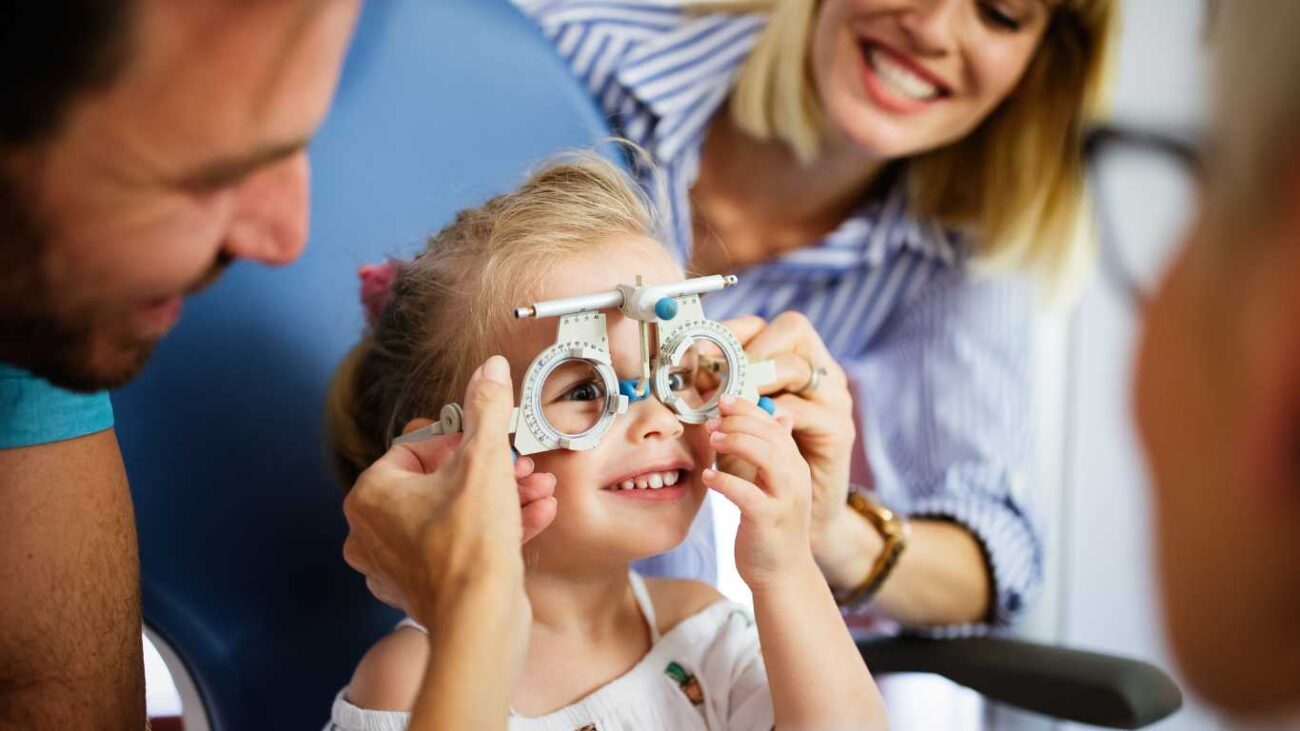
If you’ve ever noticed your child squinting, rubbing their eyes often, or sitting too close to the TV, you might have asked yourself, “Does my child have power in their eyes already?” Can children develop power in their eyes at a young age? The short answer is—yes, it’s absolutely possible. Children can develop refractive errors like myopia, hyperopia, or astigmatism even at a very young age. Let’s break this down in simple terms, answer your questions, and explore what you can do about it.
Understanding Refractive Errors in Children:
What Is “Power” in the Eyes?
When people say a child “has power in the eyes,” they usually mean the child needs corrective lenses to see clearly. This “power” refers to a refractive error—a mismatch in how light focuses on the retina.
The Three Common Types of Refractive Errors
Myopia (Nearsightedness)
Children with myopia can see nearby objects clearly but struggle to see distant ones. This is the most rapidly growing issue among kids today.
Hyperopia (Farsightedness)
Kids with hyperopia see distant objects more clearly than near ones. Interestingly, mild farsightedness is quite normal in young kids and often self-corrects.
Astigmatism
This is due to an irregularly shaped cornea or lens, leading to blurry or distorted vision at all distances.

At What Age Can Vision Problems Start?
Infant Vision Development
Babies are born with blurry vision. By 6 months, they start tracking objects and seeing colors. However, eye problems can still begin at this stage.
Early Childhood Red Flags
Between 1 and 5 years, warning signs like eye rubbing, head tilting, or difficulty recognizing people across the room could suggest an issue.
School-Age Eye Issues
Once school starts, the visual demands increase. Many cases of myopia get discovered in children aged 6 to 12 because of reading, screen time, and classroom activities.
Causes of Power in the Eyes at a Young Age
Genetics
If parents wear glasses, there’s a higher chance their child will need them too. Myopia, especially, tends to run in families.
Screen Time & Digital Devices
Tablets and phones have become babysitters. Long hours of close-up work without breaks can strain young eyes and promote myopia.
Lack of Outdoor Activities
Spending less than 2 hours outside a day is linked to an increased risk of developing myopia. Natural light matters!
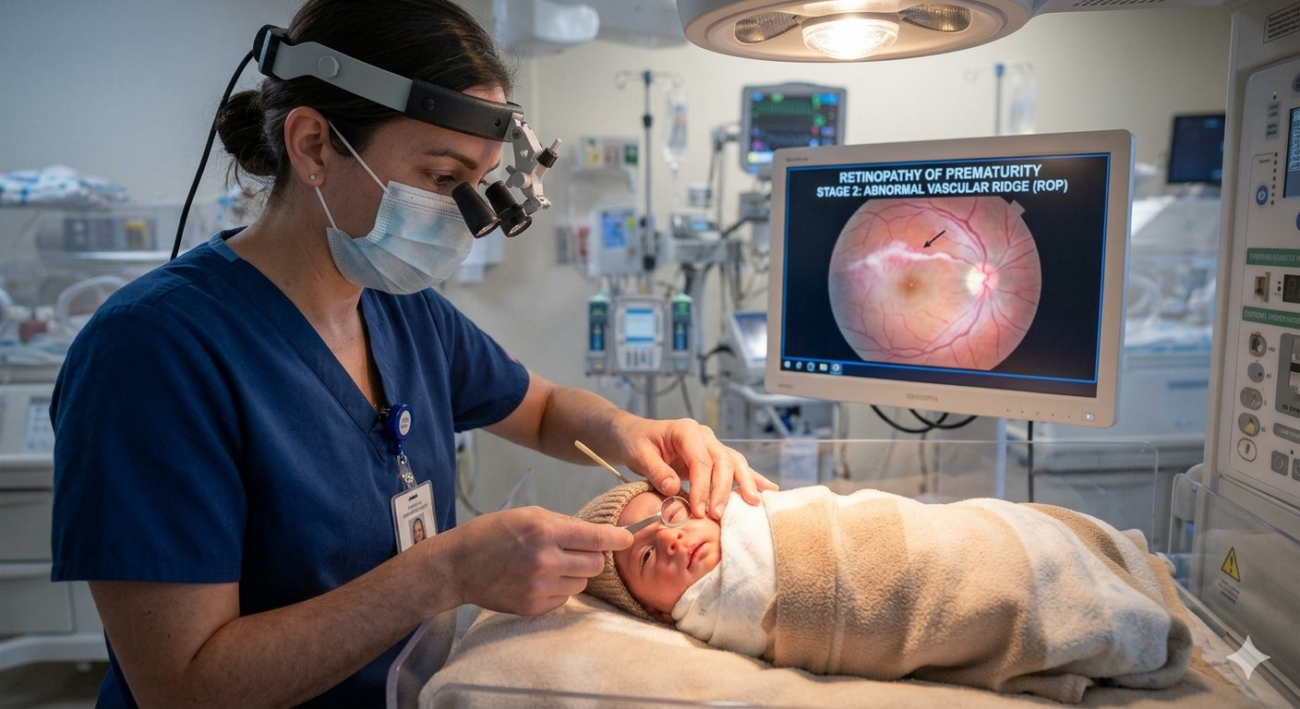
Premature Birth and Other Risk Factors
Premature babies, children with developmental delays, or those with certain syndromes may face higher chances of vision issues early on.
How to Know If Your Child Has Power in Their Eyes
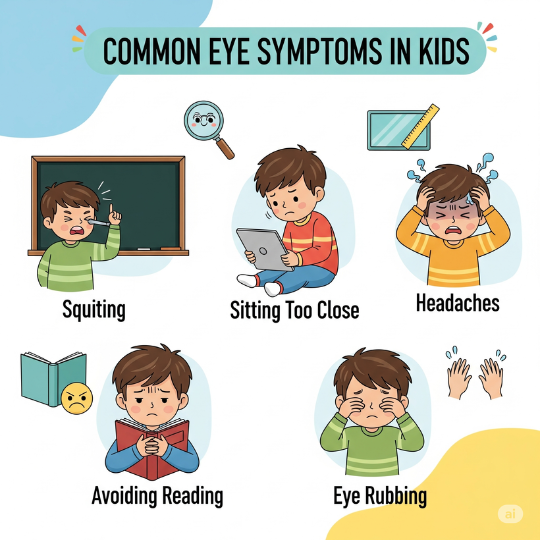
Common Symptoms to Watch For
- Squinting frequently
- Sitting too close to screens
- Complaints of headaches or tired eyes
- Avoiding reading or near tasks
- Eye rubbing or blinking a lot
Importance of Early Eye Exams
Don’t wait for obvious signs. Pediatricians recommend the first eye exam by age 1, then again before preschool.
How Is Eye Power Diagnosed in Kids?
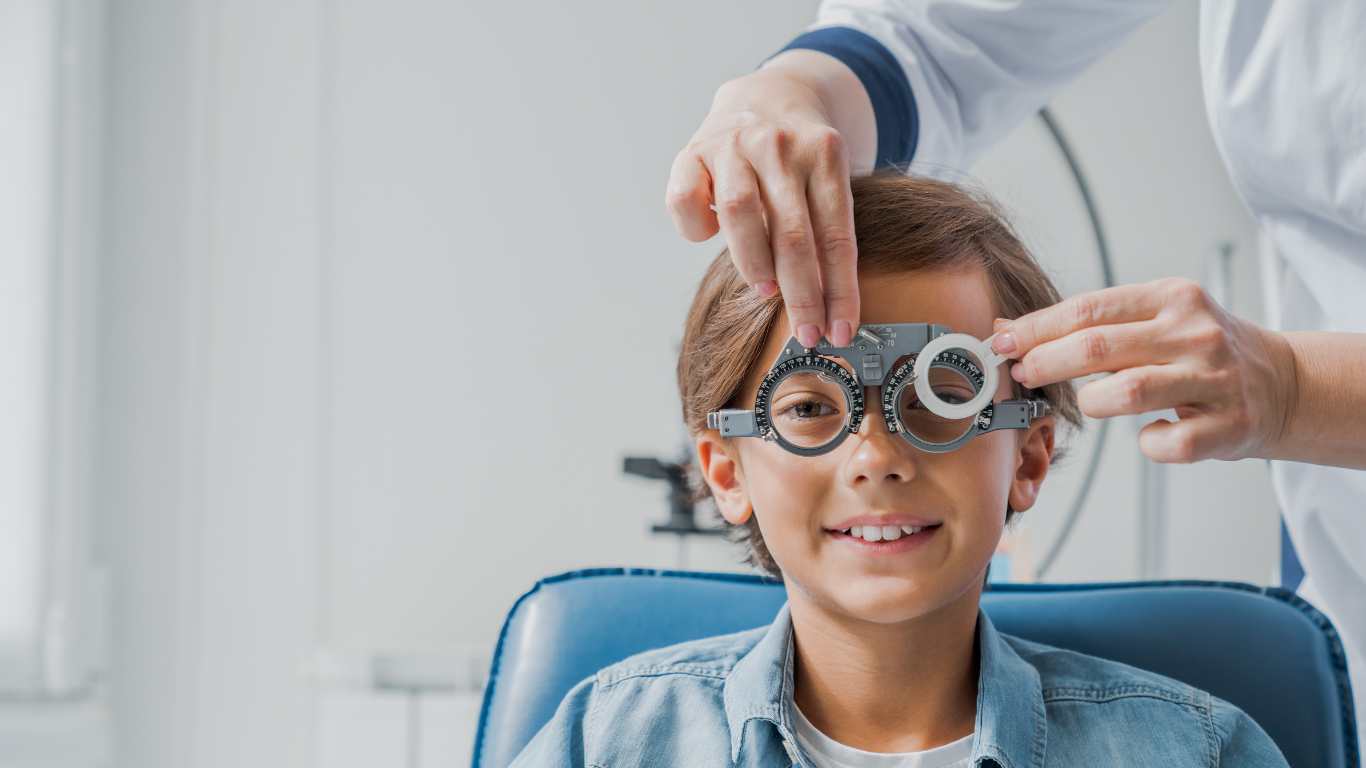
Pediatric Eye Testing Techniques
Using child-friendly charts, light toys, and non-verbal cues, pediatric eye specialists can evaluate vision even in infants.
Role of Cycloplegic Refraction
This test involves special eye drops that temporarily relax eye muscles. It gives the most accurate power measurement, especially in younger children.
Treatment Options for Children with Refractive Errors
Glasses: Most Common First Step
Safe, effective, and customizable—glasses remain the go-to solution.
Contact Lenses for Older Kids
Once children are responsible enough (usually 11+), soft lenses or even specialty lenses can be an option.
Orthokeratology (Ortho-K)
These overnight lenses reshape the cornea temporarily and may slow down myopia progression.
LASIK or Surgical Options—Are They Safe for Children?
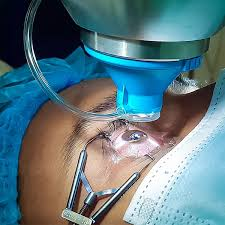
LASIK is generally not recommended for kids, as their eyes are still growing. It’s best to wait until age 18–21.
Can Eye Power Increase or Decrease Over Time?
What Parents Should Expect
Myopia often worsens during school years. Hyperopia can reduce as the eye grows. Regular checkups help monitor changes.
Myopia Progression in Childhood
This is a major concern. In some kids, power increases every year. Tools like atropine drops or myopia control lenses can help.
Preventive Tips to Protect Children’s Vision
20-20-20 Rule
Every 20 minutes, take a 20-second break and look at something 20 feet away.
Limiting Screen Time
Less than 2 hours/day of recreational screen time is ideal for kids under 12.
Encouraging Outdoor Play
Natural daylight helps eye development. Aim for 2+ hours outdoors daily.
Myths vs Facts About Kids and Eye Power
Can Wearing Glasses Worsen Vision?
Myth: Glasses don’t worsen vision—they help kids see clearly and reduce eye strain.
Is Eye Power Reversible in Children?
In some cases (especially mild farsightedness), yes. But not all types of power go away completely.
When to Visit an Eye Doctor
Regular Eye Checkup Schedule
- First check: by 12 months
- Second: at age 3
- Every year after starting school
When to Seek Urgent Attention
- Eye injury
- Sudden vision changes
- Misaligned eyes (squint)
How Schools and Parents Can Work Together
Vision Screening in Schools
Periodic screenings can detect early signs and reduce long-term problems.
Educating Kids on Eye Health
Teach children to speak up if they can’t see well. Encourage breaks, blinking, and good lighting.
Advances in Pediatric Eye Care
AI-Based Eye Tests
Quick, non-invasive tools are being developed to identify vision problems through machine learning and mobile apps.
Myopia Control Lenses
Innovative lenses like MiYOSMART are proven to slow myopia progression in children.
Conclusion
Yes, children can develop power in their eyes at a young age—and it’s more common than you think. The good news? With early detection, proper care, and a few lifestyle adjustments, your child can enjoy clear, comfortable vision as they grow. Keep an eye out (pun intended!), schedule regular checkups, and foster good screen and outdoor habits. Your child’s future literally depends on how they see the world today.
Author Details:
Dr. Sushruth Appajigowda holds a prominent position as a Cornea, Cataract, Glaucoma, and LASIK Surgeon in Bangalore. He serves as the chief Cataract and Refractive surgeon at Vijaya Nethralaya Eye Hospital, Nagarbhavi Bangalore. Renowned as one of the finest LASIK surgeons nationwide, he brings with him over 12+ years of experience across multiple LASIK platforms, including ZEISS, ALCON, SCHWIND, AMO, and Bausch and Lomb. Having successfully conducted over 5000 LASIK procedures, Dr. Sushruth holds the title of a Certified Refractive Surgeon and a Fellow of the All India Collegium Of Ophthalmology. Furthermore, he stands as a distinguished speaker at various National and International Forums, using his expertise to guide you in selecting the most suitable procedure based on your health requirements.
http://vijayanethralaya.com/link-in-bio/
❓ FAQs
1. Is it normal for a 3-year-old to wear glasses?
Yes, it’s normal. Many children need glasses early on to correct vision and aid in development.
2. Can eye power be cured in kids naturally?
Some mild cases may improve as the child grows, but most need corrective lenses or treatment.
3. How much screen time is safe for kids’ eyes?
Under 2 hours of recreational screen time per day, plus frequent breaks during study.
4. Can my child outgrow myopia?
Unlikely. Myopia tends to worsen during growth years but can be managed with treatments.
5. Should I delay glasses for my child, hoping they’ll improve?
No. Delaying glasses can lead to eye strain, poor learning, and even lazy eye (amblyopia).