

Introduction to Cataract Surgery:
Let’s start with the basics. What are the different types of cataract lenses?
What Is a Cataract?
A cataract is a clouding of the eye’s natural lens. It usually comes with age but can also result from trauma, diabetes, or prolonged steroid use. When it gets too cloudy, vision becomes blurry—like looking through a fogged-up window.
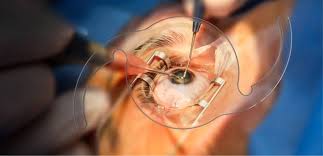
How Cataract Surgery Works
Cataract surgery involves removing the cloudy natural lens and replacing it with an artificial one called an intraocular lens (IOL). It’s one of the most common and safest surgeries worldwide.
Importance of Choosing the Right Lens
Choosing the right lens isn’t just a technicality—it directly affects how you see for the rest of your life. From distance to near, and even night vision, your IOL can make a big difference.
What Are Intraocular Lenses (IOLs)?
Definition and Purpose
An IOL is a small, clear, synthetic lens implanted inside your eye after removing the cataract. It’s meant to restore the focusing power your natural lens once had.
Basic Anatomy of an IOL
Most IOLs are made of flexible plastic or silicone. They’re folded and inserted through a small incision, where they unfold into position.
When Are IOLs Implanted?
They’re placed immediately during cataract surgery—so there’s no “gap” in your vision. It’s a one-time procedure with long-term benefits.
Types of Cataract Lenses (IOLs):
Monofocal IOLs
How They Work
These lenses focus at one fixed distance—usually far. You’ll likely still need reading glasses.
Pros and Cons
Pros: Affordable, widely available, minimal visual disturbances.
Cons: No help for reading or intermediate vision.
Multifocal IOLs
How They Work
Designed with concentric rings that offer multiple focusing powers for near, intermediate, and distance vision.
Ideal Candidate
Best for people who want to ditch glasses entirely—but may come with some glare and halos at night.
Trifocal IOLs
The Latest Innovation
These are like the next-gen version of multifocals, offering clearer transitions between all three distances.
Advantages Over Multifocal
Fewer visual disturbances, better intermediate clarity, and improved night vision.
Toric IOLs
Designed for Astigmatism
If you’ve got astigmatism, this is the lens for you. It corrects the irregular curve in your cornea.
Cost vs. Benefit
They’re more expensive but can eliminate the need for glasses for distance vision entirely.
Extended Depth of Focus (EDOF) IOLs:
Clearer Range of Vision
EDOF lenses offer a continuous range of focus, reducing the sharp focus “zones” of multifocals.
Reduced Glare and Halos
Perfect for people who drive at night often or work on screens.
Light Adjustable Lens (LAL):
Customization Post-Surgery
After implantation, the lens is fine-tuned using UV light to perfect your vision—like having a lens you can “edit.”
Ideal Use Cases
Patients with prior eye surgeries or complex vision issues.
Accommodative IOLs:
Mimicking Natural Eye Movement
They shift inside the eye in response to muscle movements, mimicking how your natural lens works.
Who Should Consider It
Best for people who want a glasses-free lifestyle and do a lot of reading or desk work.
Factors to Consider When Choosing a Cataract Lens:
Your Lifestyle and Vision Goals
Do you drive a lot? Love reading? Travel frequently? Your habits should guide your choice.
Budget and Insurance Coverage
Monofocal lenses are often covered by insurance. Premium lenses like multifocals or toric IOLs might cost more out of pocket.
Existing Eye Conditions
Glaucoma, macular degeneration, and corneal problems might limit your options.
Doctor’s Recommendation
Trust your surgeon—they’ll assess your eye health, lifestyle, and expectations.
Cost Comparison of Different Cataract Lenses:
| Lens Type | Approx. Cost (INR) | Coverage |
|---|---|---|
| Monofocal IOL | ₹0 – ₹25,000 | Usually covered by insurance |
| Multifocal IOL | ₹35,000 – ₹80,000 | Not covered fully |
| Toric IOL | ₹40,000 – ₹90,000 | Partially covered |
| Trifocal IOL | ₹70,000 – ₹1,20,000+ | Not usually covered |
| EDOF IOL | ₹60,000 – ₹1,00,000 | Limited coverage |
| Light Adjustable Lens | ₹1,20,000+ | Not covered |
Risks and Considerations for Each Lens Type:
Visual Disturbances
Some lenses may cause glare, halos, or difficulty adjusting—especially at night.
Night Vision and Halos
Trifocal and multifocal lenses may take time to adjust to, especially in low light.
Post-Surgery Adaptation
It may take days to weeks to adjust to your new lens. Your brain needs time to “learn” the new vision patterns.
Final Thoughts on Picking the Right IOL:
Don’t just go with the default. Think of your IOL like a pair of shoes—it has to fit your lifestyle, not just your eyes. Whether it’s crisp night driving, ditching reading glasses, or just basic clear vision, there’s a lens for everyone.
Conclusion:
Choosing a cataract lens is a personal and important decision. With so many types available—from monofocal to trifocal, and from toric to light-adjustable—you’re no longer limited to “just getting your cataract out.” You’re choosing how you’ll see the world moving forward.
FAQs:
1. What lens is most commonly used in cataract surgery?
The most commonly used lens is the monofocal IOL, especially for standard cataract procedures.
2. Can I upgrade my lens later after surgery?
No, IOLs are permanent. Choose wisely—though in rare cases, a replacement is possible if medically necessary.
3. Which lens is best for night driving?
EDOF lenses or certain trifocal lenses perform better with reduced glare and halos at night.
4. How long do cataract lenses last?
They’re permanent and designed to last a lifetime. No need for replacements in most cases.
5. Is there a lens that works like natural vision?
Accommodative and trifocal lenses aim to mimic natural vision most closely—but nothing’s quite like the real thing.