
Introduction
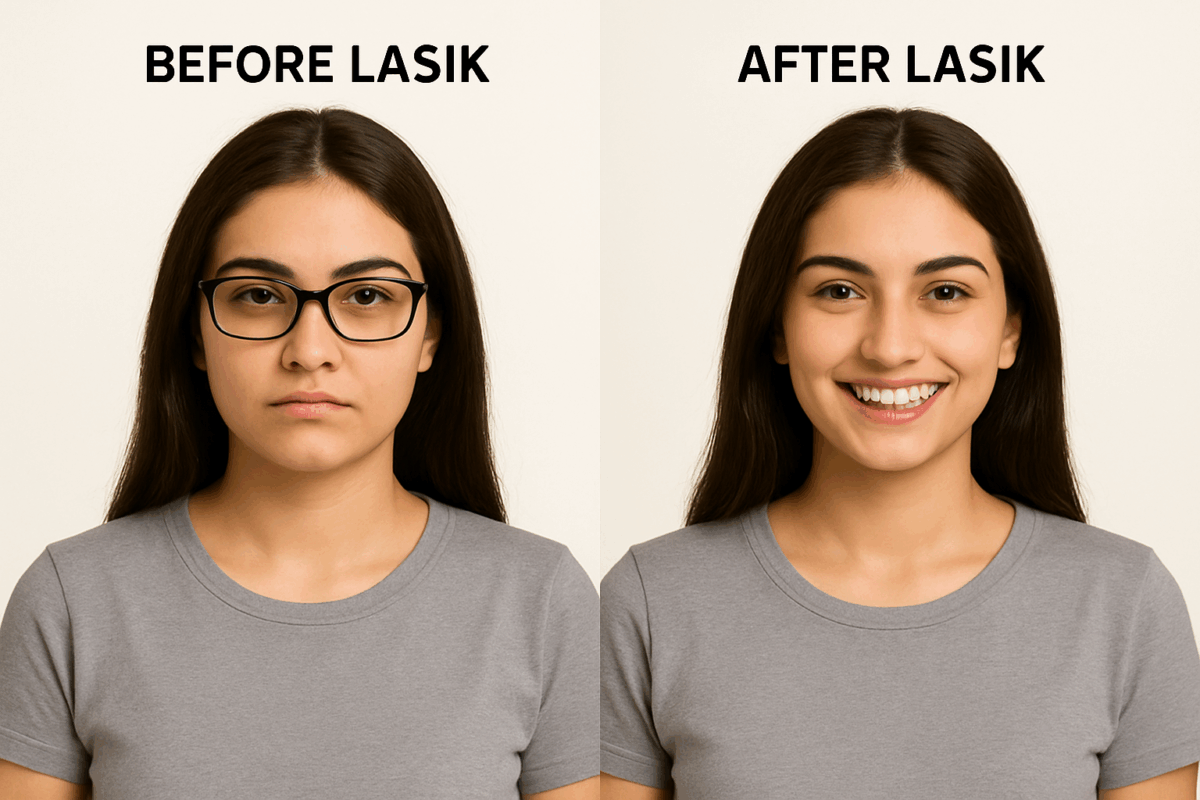
Laser eye surgery has become one of the most popular medical procedures worldwide, offering people the chance to live without glasses or contact lenses. Millions of patients undergo it each year, enjoying sharper vision and a newfound sense of freedom. But one question often lingers in people’s minds before deciding: Does laser eye surgery last a lifetime?
The short answer is that the results are long-lasting and often permanent, but they may not guarantee flawless vision for life. This is because, while the cornea is permanently reshaped, the eyes continue to change naturally with age. In this detailed guide, we’ll explore the science behind the procedure, the longevity of results, the factors that influence them, and what you can realistically expect in the decades after surgery.
Understanding Laser Eye Surgery
What Is Laser Eye Surgery?
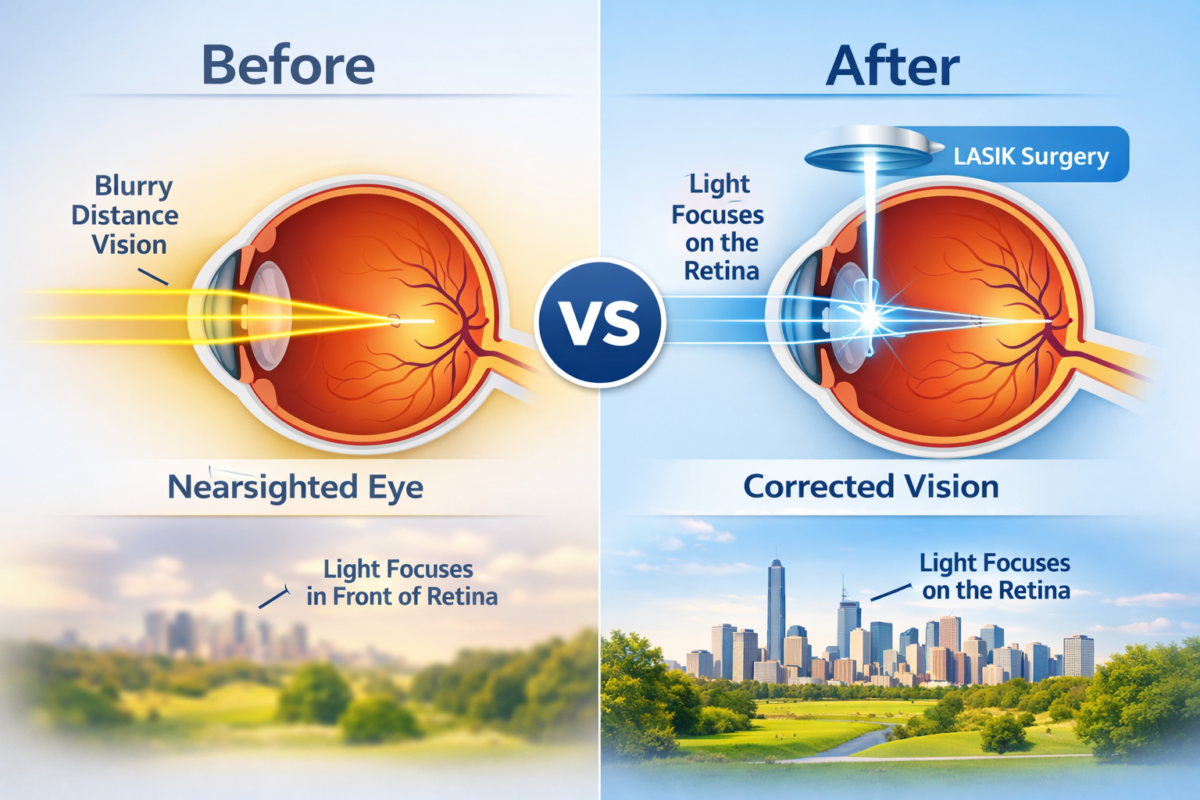
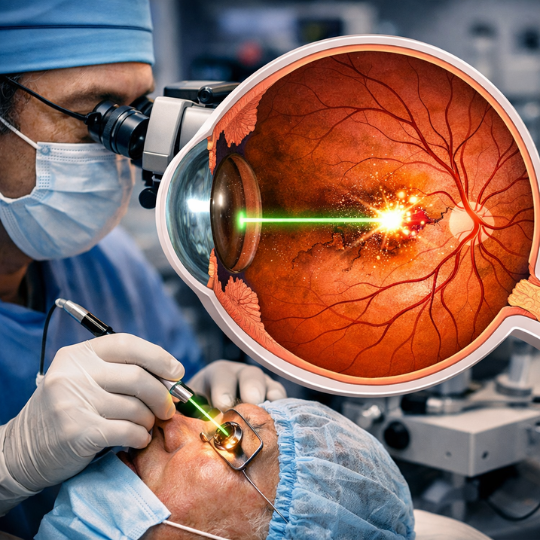
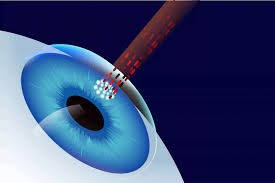
Laser eye surgery refers to a group of medical procedures that reshape the cornea—the clear front surface of the eye—to correct refractive errors. Refractive errors happen when the shape of the eye prevents light from focusing properly on the retina, leading to blurry vision. By reshaping the cornea, laser surgery helps light rays focus correctly, restoring clear sight.
It is most commonly used to correct:
- Myopia (Nearsightedness): Difficulty seeing distant objects.
- Hyperopia (Farsightedness): Difficulty seeing close objects.
- Astigmatism: Irregular curvature of the cornea causing blurry or distorted vision.

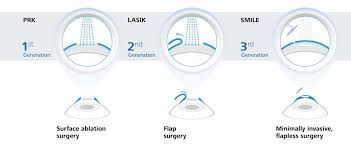
Different Types of Laser Eye Surgery (LASIK, PRK, SMILE)
Several variations of laser eye surgery exist, each using slightly different techniques:
- LASIK (Laser-Assisted In Situ Keratomileusis):
- The most common type.
- Involves creating a thin corneal flap and reshaping the underlying cornea with a laser.
- Quick recovery with minimal discomfort.
- PRK (Photorefractive Keratectomy):
- The surface layer of the cornea is removed, and the cornea is reshaped.
- Slightly longer recovery but suitable for people with thin corneas.
- SMILE (Small Incision Lenticule Extraction):
- A newer method using a small incision to remove corneal tissue.
- Less invasive, with fewer dry-eye issues post-surgery.
How Laser Eye Surgery Works
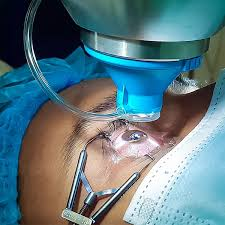
All forms of laser eye surgery use precision lasers to permanently alter the cornea’s curvature. This change corrects refractive errors and provides sharper vision, often eliminating the need for glasses or contacts.
The Promise of Laser Eye Surgery
Success Rates and Longevity of Results
Laser eye surgery has a high success rate—over 99% of patients achieve 20/40 vision or better, and most enjoy 20/20 vision after surgery. These results are typically long-lasting because the reshaping of the cornea is permanent.
Average Vision Correction Duration
For many patients, the improvement lasts decades. Some individuals maintain excellent vision for life, while others may need minor enhancements after 10–20 years due to natural changes in the eye.
Factors That Influence How Long Results Last
Age at the Time of Surgery
- Younger patients may have a higher chance of needing adjustments later as their eyes naturally change with age.
- Patients over 40 may still need reading glasses eventually due to presbyopia (age-related loss of near vision).
Lifestyle and Eye Health
Healthy habits—like avoiding smoking, eating nutrient-rich foods, and protecting your eyes from UV light—can help maintain clear vision longer.
Natural Aging of the Eye (Presbyopia, Cataracts)
Even after successful laser surgery, the eye continues to age. Presbyopia usually develops after age 40, while cataracts can occur in older age, both of which affect vision independently of the surgery.
Can Laser Eye Surgery Wear Off?
Common Misconceptions About “Wearing Off”
Laser eye surgery doesn’t actually “wear off.” The cornea remains permanently reshaped. What changes is your eye health over time, not the surgery itself.
Why Some People Need Enhancements or Retreatment
A small percentage of patients may experience slight regression or changes in prescription over time. In these cases, an enhancement procedure may be performed to fine-tune the correction.
Long-Term Benefits and Limitations
Visual Freedom After Surgery
For most patients, the freedom from glasses and contacts is life-changing. Many enjoy decades of clear vision without needing corrective lenses.
Possible Regression of Vision
While rare, vision regression can occur due to genetics, lifestyle, or underlying eye conditions.
Risks and Complications Over Time
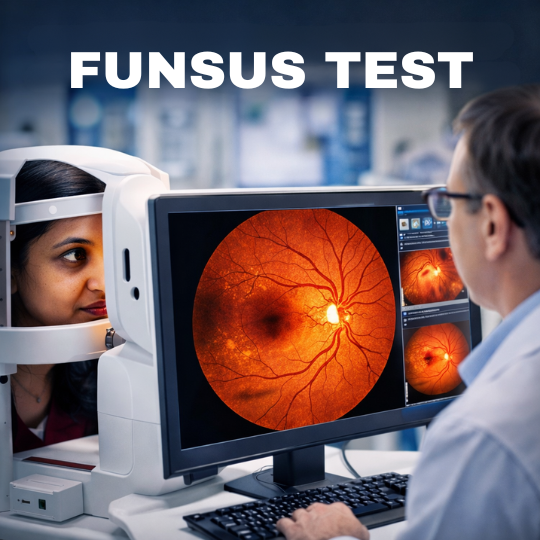
Though generally safe, risks like dry eyes, halos, or glare can sometimes persist long after surgery. Regular check-ups help catch issues early.
Cost vs. Longevity
Laser eye surgery may seem costly upfront, but when compared to decades of glasses or contact lenses, it often saves money in the long run.
| Option | Estimated Cost Over 20 Years |
|---|---|
| Glasses | $6,000–$10,000 |
| Contact Lenses | $9,000–$15,000 |
| Laser Eye Surgery | $4,000–$6,000 |
Most patients find the one-time cost worthwhile for years of visual freedom.
Alternatives and Enhancements
Touch-Up Procedures and Enhancements
Enhancements are minor follow-up procedures available for patients who experience vision changes years after the initial surgery.
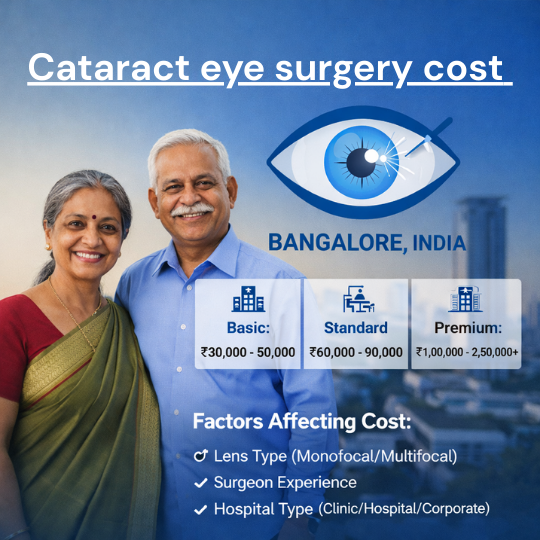
Other Options: Implantable Lenses and Cataract Surgery
For patients not eligible for laser eye surgery or those developing cataracts later in life, implantable lenses or cataract surgery with lens replacement may be better long-term solutions.
Patient Stories and Real-Life Experiences
Case Studies: Lasting Results After 10–20 Years
Many patients report crystal-clear vision even 15–20 years post-surgery without needing additional correction.
When Patients Needed Additional Correction
Others required small touch-ups or reading glasses later in life, particularly if they had surgery at a young age or had stronger prescriptions.
Future of Laser Eye Surgery
Advances in technology are making procedures safer and more durable:
- Wavefront-guided LASIK allows ultra-precise customization.
- SMILE shows promising long-term stability with fewer side effects.
- Corneal inlays and lens implants may extend correction for presbyopia in the future.
Conclusion: Does Laser Eye Surgery Last a Lifetime?
So, does laser eye surgery last a lifetime? The answer is: The reshaping of your cornea is permanent, but your overall vision may still change with age.
For many patients, the benefits last decades, and some enjoy clear vision for life without any further treatment. While conditions like presbyopia or cataracts may appear later, these are unrelated to the original surgery and can be treated separately.
Laser eye surgery remains one of the most transformative medical procedures available today. It doesn’t just improve eyesight—it enhances quality of life, reduces dependence on corrective lenses, and provides long-term freedom.
Frequently Asked Questions (FAQs)
1. Does laser eye surgery guarantee permanent perfect vision?
Not necessarily. While the cornea is permanently reshaped, natural aging can still affect vision.
2. Can my eyesight return to what it was before surgery?
No, but vision may gradually change over time due to aging or other eye conditions.
3. Is laser eye surgery a one-time procedure?
For most, yes. However, a small number of patients may need enhancement surgeries.
4. At what age is laser eye surgery most effective?
Typically, between ages 20–40, when prescriptions are stable and before presbyopia develops.
5. Can I get cataract surgery after having laser eye surgery?
Yes, cataract surgery is still possible and often necessary later in life.
6. How long does recovery from laser eye surgery take?
Most patients recover clear vision within a few days, though full stabilization can take several weeks.