

Introduction:
When you visit your eye surgeon for cataract surgery, one of the biggest decisions you must make is choosing the right intraocular lens (IOL). The most commonly recommended options are monofocal lenses and multifocal lenses.
But what exactly is the difference between them?
Which one gives clearer vision?
Which lens reduces dependency on glasses the most?
This guide explains everything you need to know—in simple, patient-friendly language—so you can make an informed decision.
What Are Monofocal Lenses?
Monofocal lenses are single-focus IOLs. This means the lens gives clear vision at only one distance—usually far vision.

Key Features
- Clear distance vision
- You may still need glasses for near tasks (reading, mobile use, computer)
- Most affordable IOL option
- Minimal side effects
Ideal For
- People who want crisp distance vision
- Patients comfortable using reading glasses
- Those on a budget
- People with eye conditions like glaucoma, retinal issues, or irregular corneas
What Are Multifocal Lenses?
Multifocal lenses are advanced premium IOLs designed to give clear vision at multiple distances—near, intermediate (computer), and far.

Key Features
- Reduced or zero dependence on glasses
- Vision at all distances: reading, mobile use, computer, driving
- Uses concentric rings to split light and create multiple focal points
Ideal For
- People who want to be glasses-free
- Active individuals
- Those who read a lot or use screens frequently
- Patients without major eye diseases
⭐ Monofocal vs Multifocal Lenses: Quick Comparison Chart
| Feature | Monofocal Lens | Multifocal Lens |
|---|---|---|
| Focus Points | One (usually distance) | Multiple (near, intermediate, distance) |
| Glasses Need | Yes, especially for near | Minimal or none |
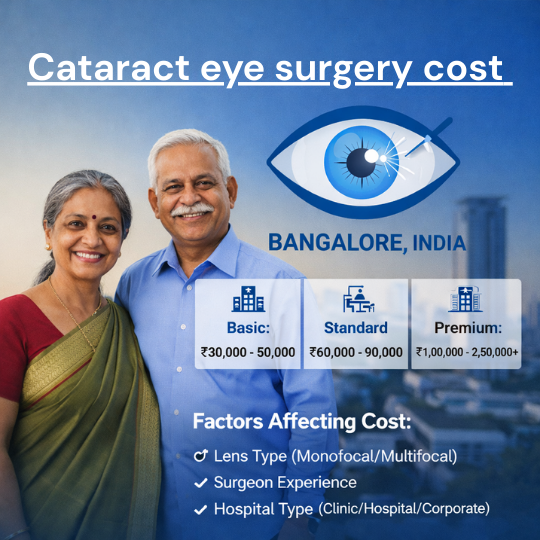
| Cost | More affordable | Premium/higher cost |
| Night Vision | Excellent | Possible halos/glare in some cases |
| Suitable For | Most patients | Patients wanting spectacle-free life |
| Clarity | Very sharp for one distance | Sharp for all distances (may need adaptation) |
Which Gives Better Vision: Monofocal or Multifocal?
There is no “best for everyone”—each lens has advantages.
✔ A monofocal lens gives the sharpest clarity for one distance, often distance.
✔ Multifocal lens gives the best flexibility—reading, computer, and driving without glasses.
Your eye doctor will recommend the ideal option based on:
- Lifestyle
- Eye health
- Budget
- Occupation
- Visual expectations
Benefits of Monofocal Lenses
1. High-Definition Single-Distance Vision
Perfect for driving, watching TV, or outdoor activities.
2. Most Affordable Option
Ideal for patients wanting effective results without extra cost.
3. Minimal Visual Disturbances
Almost no halos or glare—great for night driving.
Benefits of Multifocal Lenses
1. Spectacle-Free Vision
Major advantage—freedom from near and computer glasses.
2. Best for Reading & Mobile Use
Designed to provide excellent near clarity.
3. Ideal for Active Lifestyle
Perfect for people who travel, work on laptops, or multitask.
Are Multifocal Lenses Safe?
Yes. Multifocal IOLs are advanced, FDA-approved lenses.
However, they are not suitable for:
- People with glaucoma
- Significant corneal irregularities
- Retinal issues
- Large pupils
- Severe dry eye
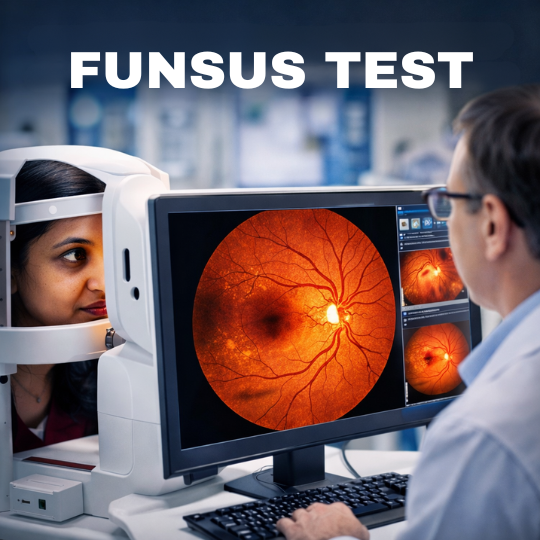
Always undergo detailed preoperative evaluation before choosing.
Which Lens Should You Choose?
Here’s a simple guide:
Choose a monofocal lens if:
- You don’t mind using glasses for reading
- You want the most cost-effective solution
- You need the clearest distance vision
- You have other eye issues
Choose a multifocal lens if:
- You want to avoid glasses completely
- You want clear vision for reading, computer, and far distance
- Your eyes are healthy
- You are okay with a slightly higher cost
Frequently Asked Question:
1. What is the main difference between monofocal and multifocal lenses?
Monofocal lenses give clear vision at one distance, while multifocal lenses provide clarity at near, intermediate, and far distances.
2. Which lens is better for cataract surgery?
Both are good—monofocal for clarity and affordability and multifocal for a glasses-free lifestyle.
3. Do multifocal lenses cause glare or halos?
Some patients experience mild glare initially, but it usually reduces over time.
4. Are multifocal lenses worth the cost?
Yes, if you want freedom from glasses and have healthy eyes.
5. Can I upgrade from monofocal to multifocal later?
Technically possible but not recommended. It’s best to decide before surgery.
Conclusion:
The difference between monofocal and multifocal lenses mainly depends on visual goals.
- Choose monofocal for simplicity, clarity, and affordability.
- Choose multifocal for freedom from glasses and all-distance vision.
Talk to your eye surgeon to evaluate which option matches your lifestyle and eye health.