
Introduction:
Getting laser eye surgery can feel like stepping into a whole new world—literally, with clearer vision! But the big question on many people’s minds is, can I drive after eye laser treatment? If you’re planning your ride home or just wondering how soon you can get back behind the wheel, this guide has you covered.
What is eye laser treatment?
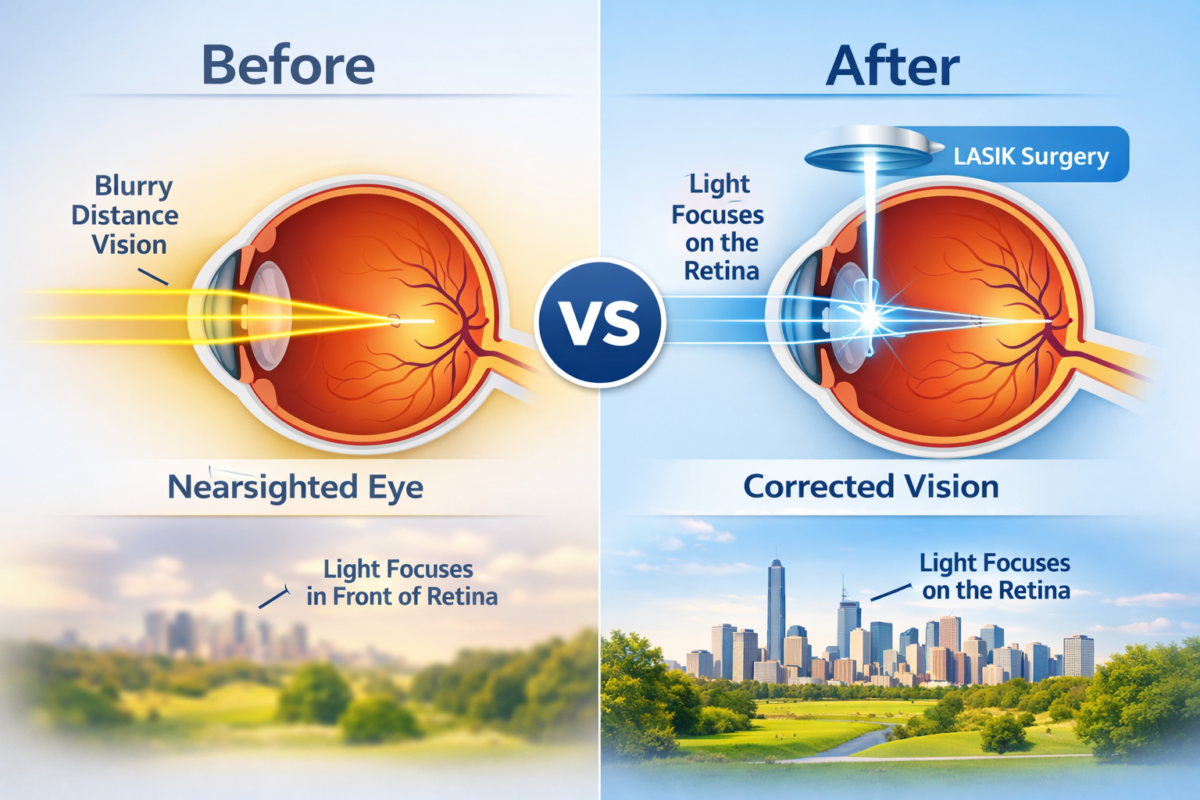
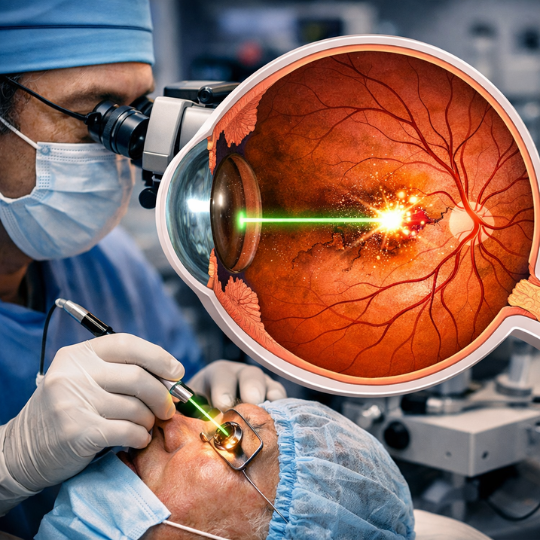
Laser eye surgery is a quick, outpatient procedure that reshapes your cornea to correct refractive errors like
- Myopia (nearsightedness)
- Hyperopia (farsightedness)
- Astigmatism
Common Types of Laser Eye Surgery
- LASIK (Laser-Assisted In Situ Keratomileusis)
The most popular form—quick healing and minimal discomfort. - PRK (Photorefractive Keratectomy)
No flap creation, slower recovery but great for thin corneas. - SMILE (Small Incision Lenticule Extraction)
Minimally invasive with fewer side effects.

What Happens During Eye Laser Surgery?
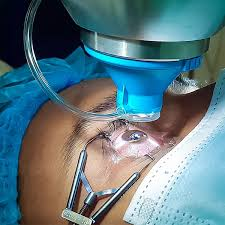
The procedure usually takes about 15–30 minutes for both eyes. It involves
- Numbing drops
- Corneal reshaping with a laser
- Minimal or no pain
Afterward, your vision may feel foggy or teary, but that’s normal.
Immediate Effects Post-Treatment
After your surgery, expect:
- Blurry or hazy vision
- Light sensitivity
- Watery or dry eyes
- A slight burning sensation
Is It Safe to Drive Right After Laser Eye Surgery?
Most surgeons strongly recommend that you don’t drive yourself home after your procedure.
Why?
- Your vision isn’t stable yet.
- Medications may blur vision or make you drowsy.
- Light sensitivity can be intense, especially in sunlight.
Always arrange for someone to drive you home.
How Long Should You Wait Before Driving Again?
Here’s a general guideline:
LASIK
- Most people can resume driving 24 to 48 hours after surgery.
- Many feel ready the very next day after their first post-op check-up.
PRK
- Recovery is slower.
- Expect to wait 5 to 7 days before driving.
SMILE
- Typically, patients can resume driving within 1–2 days, depending on vision clarity.
Eye Drops and Medications—How They Affect Driving
You’ll be prescribed eye drops after the surgery.
- Antibiotic and steroid drops can sometimes cause temporary blur.
- Sedative medications (if given before surgery) can impair coordination for several hours.
Night Driving After Laser Eye Treatment
Driving at night can be tricky in the first few weeks:
- Glare and halos around lights are common.
- Streetlights or headlights may look extra bright or starburst-shaped.
Tip: Avoid night driving until your doctor confirms your night vision has stabilized.
When Will Your Vision Be Stable Again?
Here’s a quick timeline:
| Day | Vision Status |
|---|---|
| Day 1 | Blurry or foggy |
| Day 2–3 | Clearer during the day |
| Week 1 | Light sensitivity reduces |
| Week 2–4 | Vision stabilizes |
| Month 1+ | Glare and halos diminish |
What Your Doctor Will Check Before Giving the Green Light
Your first follow-up appointment (usually 24–48 hours after surgery) includes:
- Visual acuity test: Are you seeing clearly?
- Dry eye assessment: Can affect clarity and comfort.
- Flap check (for LASIK): To make sure it’s healing properly.
Tips to Speed Up Recovery So You Can Drive Sooner
Want to get back on the road quickly? Follow these:
- Rest your eyes for the first 24 hours.
- Avoid screens—phones, TVs, and laptops.
- Use sunglasses outdoors to prevent UV damage.
- Don’t rub your eyes!
Things to Avoid Before You Get Back Behind the Wheel
Until you get clearance:
- No dusty or smoky areas
- No heavy physical activity
- Limit screen time
These can slow healing or strain your eyes.
Can You Drive to the Clinic for Your Follow-Up?
Not recommended.
Your vision might still be unstable, and light sensitivity could affect your reflexes. Bring a friend or family member to drive you.
What if You Drove Too Soon?
Driving before you’re ready is risky:
- Slower reaction time
- Difficulty reading signs
- Increased glare or eye fatigue
If you’ve already driven and feel unsafe, pull over and call someone to assist.
Personal Experiences—What Real Patients Say:
“I could see clearly the next morning after LASIK, but I still waited for my doctor’s go-ahead before driving.” – Rohan, 28
“After PRK, it took a full week before I could comfortably drive, especially at night.” – Meena, 34
“SMILE was super smooth—I was back on the road in two days!” – Ravi, 25
Conclusion:
Driving is something we often take for granted—until we can’t do it safely. After laser eye surgery, your vision needs time to heal, stabilize, and adapt. While LASIK and SMILE might get you back on the road quickly, PRK demands a little more patience. The golden rule? Don’t rush it. Wait for your doctor’s approval. Trust the process and give your eyes the rest they deserve. Safe driving starts with clear vision.
FAQs:
1. Can I drive 24 hours after LASIK?
Yes, many patients can, but only after your doctor confirms it’s safe at your follow-up visit.
2. Is it safe to drive at night after laser surgery?
Not initially. Glare and halos may affect night vision for a few weeks.
3. What are signs that I shouldn’t drive yet?
Blurred vision, light sensitivity, and discomfort are clear signals to wait.
4. Do I need new glasses to drive after surgery?
Most people don’t, but some might need temporary glasses until their vision fully stabilizes.
5. How do I know when it’s safe to resume driving?
Your eye surgeon will tell you during your post-op check-up based on visual clarity and comfort.