
Seeing Clearly Again: Your Ultimate Guide to Cataract Surgery
If the world has started to look like a blurry, faded photograph or you’re struggling with glare while driving at night, you aren’t alone. What Is Cataract Surgery? Cataracts are one of the most common causes of vision loss, but the good news is that they are also one of the most treatable. Cataract surgery is a safe, routine procedure that can restore—and often improve—your vision. Here is everything you need to know about the process, from the initial diagnosis to your recovery.
What Exactly Is a Cataract?
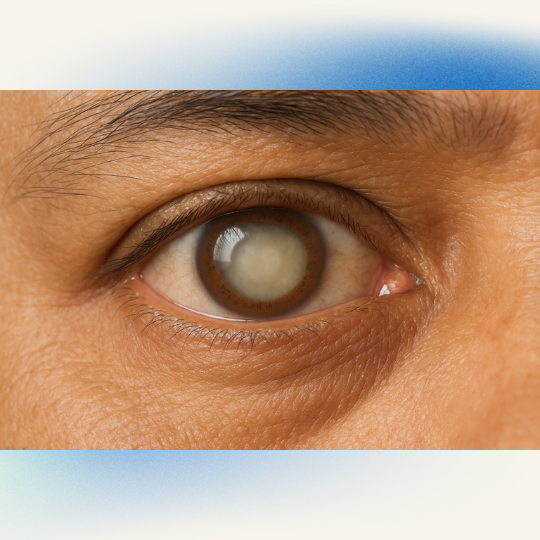
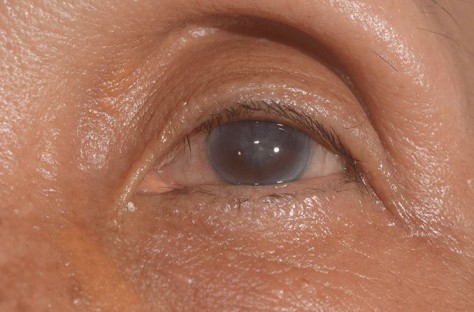
A cataract occurs when the eye’s natural lens, which sits behind the iris, becomes cloudy. Think of it like a window that has become fogged up or “frosted.” This happens because proteins in the lens break down and clump together, usually due to aging, though injury or certain medications can also play a role.
How Does the Surgery Work?
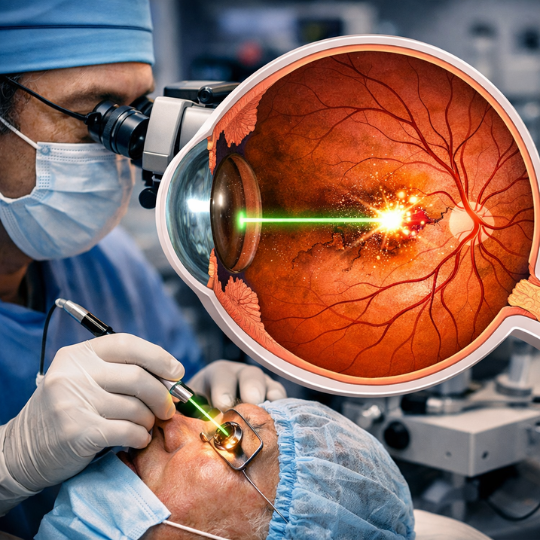
Cataract surgery is a quick, outpatient procedure (usually taking less than 30 minutes) where a surgeon removes the cloudy lens and replaces it with a clear, artificial one called an intraocular lens (IOL).
The most common method used today is phacoemulsification. Here’s the technical breakdown:
- Numbing: The eye is numbed with drops or a local anesthetic.
- The Incision: A tiny micro-incision is made in the cornea.
- Breaking It Up: Using ultrasound waves, the surgeon breaks the cloudy lens into tiny fragments.
- Replacement: The fragments are suctioned out, and the new IOL is folded and inserted into the same “pocket” where your natural lens used to sit.
Choosing the Right Lens (IOL)
One of the most exciting parts of modern cataract surgery is the ability to customize your vision. You and your surgeon will choose a lens based on your lifestyle:
| Lens Type | Best For… |
| Monofocal | Clear vision at one distance (usually far). You may still need reading glasses. |
| Multifocal | Correcting vision for both near and far distances, often eliminating the need for glasses entirely. |
| Toric | Specifically designed for patients with astigmatism. |
| Light Adjustable | Lenses that can be “fine-tuned” with UV light treatments after the surgery is complete. |
What to Expect During Recovery
The recovery period is surprisingly fast for most patients. While everyone heals differently, here is a general timeline:
- The First 24 Hours: Your vision may be blurry or “wavy.” It’s common to feel a slight grittiness or itching.
- The First Week: You’ll use antibiotic and anti-inflammatory eye drops to prevent infection and reduce swelling. Most people return to work within a few days.
- One Month: Your eye should be fully healed. If you need a final prescription for reading glasses, this is usually when it’s finalized.
Pro Tip: Avoid heavy lifting, bending over, or swimming for at least the first week to prevent putting unnecessary pressure on the healing eye.
Is Cataract Surgery Safe?
Cataract surgery is one of the most frequently performed and successful surgical procedures in the world. While every surgery carries some risk (such as infection or inflammation), the complication rate is exceptionally low. Most patients report a significant improvement in their quality of life, color perception, and night vision.
When Should You See a Doctor?
You don’t have to wait until you are “blind” to have surgery. If your vision interference makes it difficult to read, cook, or drive safely, it’s time to schedule a consultation.
To expand this article for better SEO and depth, we can dive into the different technologies used, the signs that it’s time for surgery, and the costs/insurance aspect. Adding a “Frequently Asked Questions” section is also a powerful way to capture “long-tail” search queries.
Beyond the Basics: Advanced Technology and Timing
Laser-Assisted vs. Traditional Surgery
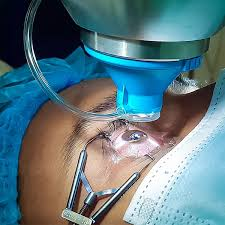
While traditional surgery is highly effective, many clinics now offer femtosecond laser-assisted cataract surgery (FLACS).
- Traditional: The surgeon uses a handheld blade to create incisions.
- Laser-Assisted: A precision laser creates the incisions and softens the cataract. This can lead to even greater accuracy, especially if you are choosing a premium multifocal lens to correct astigmatism or presbyopia.
5 Signs It’s Time for Surgery
Patients often ask, “How cloudy is cloudy enough?” You should consider the procedure if you notice:
- Halos and Glare: Streetlights or oncoming headlights look like “starbursts.”
- Color Fading: Whites look yellow, and bright colors look muddy or dull.
- “Second Sight”: A temporary, paradoxical improvement in near vision that quickly fades back into blurriness.
- Frequent Prescription Changes: Your glasses or contacts stop working every few months.
- Difficulty at Night: Activities like evening walks or driving become anxiety-inducing.
Understanding the Investment: Costs and Insurance
One of the most common searches is “Is cataract surgery covered by insurance?”
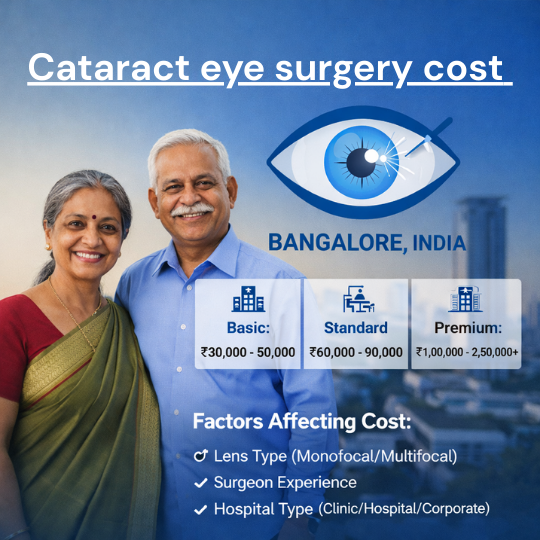
- Standard Surgery: Generally, Medicare and private insurance cover “medically necessary” cataract surgery with a standard monofocal lens. This covers the surgery, the facility fee, and the basic lens.
- Premium Options: If you opt for “lifestyle lenses” (multifocal or toric) or laser-assisted technology, there is typically an out-of-pocket “upgrade” fee. These are often considered elective enhancements rather than medical necessities.
Author Details:

Dr. Sushruth Appajigowda holds a prominent position as a Cornea, Cataract, Glaucoma, and LASIK Surgeon in Bangalore. He serves as the chief Cataract and Refractive surgeon at Vijaya Nethralaya Eye Hospital, Nagarbhavi Bangalore. Renowned as one of the finest LASIK surgeons nationwide, he brings with him over 12+ years of experience across multiple LASIK platforms, including ZEISS, ALCON, SCHWIND, AMO, and Bausch and Lomb. Having successfully conducted over 5000 LASIK procedures, Dr. Sushruth holds the title of a Certified Refractive Surgeon and a Fellow of the All India Collegium Of Ophthalmology. Furthermore, he stands as a distinguished speaker at various National and International Forums, using his expertise to guide you in selecting the most suitable procedure based on your health requirements.
http://vijayanethralaya.com/link-in-bio/
Frequently Asked Questions (FAQ):
Does the cataract grow back? No, a cataract cannot return because the natural lens has been removed. However, some patients develop a “secondary cataract” (posterior capsule opacification), which is a clouding of the membrane holding the new lens. This is easily fixed with a 5-minute painless laser treatment called a YAG capsulotomy.
Will I be awake during the procedure? Yes, most patients are awake but relaxed. You will receive “twilight sedation,” meaning you are conscious but won’t feel pain or anxiety. You generally see light and movement but cannot see the surgical instruments.
Can I have both eyes done at once? Typically, surgeons prefer to wait 1 to 2 weeks between eyes. This ensures the first eye is healing perfectly before proceeding with the second.