
If you have astigmatism and feel frustrated with blurry or distorted vision, you’re not alone. Millions of people experience this common refractive error—and many assume glasses are their only solution. But here’s the good news: toric contact lenses are specifically designed to correct astigmatism while giving you the freedom and flexibility of contact lenses.
In this comprehensive guide, you’ll discover how toric contact lenses work, who they’re best for, their advantages and limitations, and how to choose the right pair. Let’s dive in.
What Are Toric Contact Lenses?
Toric contact lenses are specially designed lenses that correct astigmatism, a condition caused by an irregularly shaped cornea or lens. Unlike standard spherical contact lenses, toric lenses have different powers in different meridians of the lens.
In simple terms, they’re built to match the unique curvature of your eye.
A typical contact lens has one uniform power across its surface. That works well for nearsightedness (myopia) or farsightedness (hyperopia). But astigmatism requires something more complex. Toric lenses correct vision in multiple directions because they have:
- A specific cylindrical power
- A defined axis orientation
- Stabilization features to prevent rotation
Because of this advanced design, toric lenses must sit on your eye in a precise position. If they rotate too much, your vision may become blurry. That’s why modern toric lenses include stabilization technologies to keep them aligned properly throughout the day.

Understanding Astigmatism and Why Toric Lenses Matter
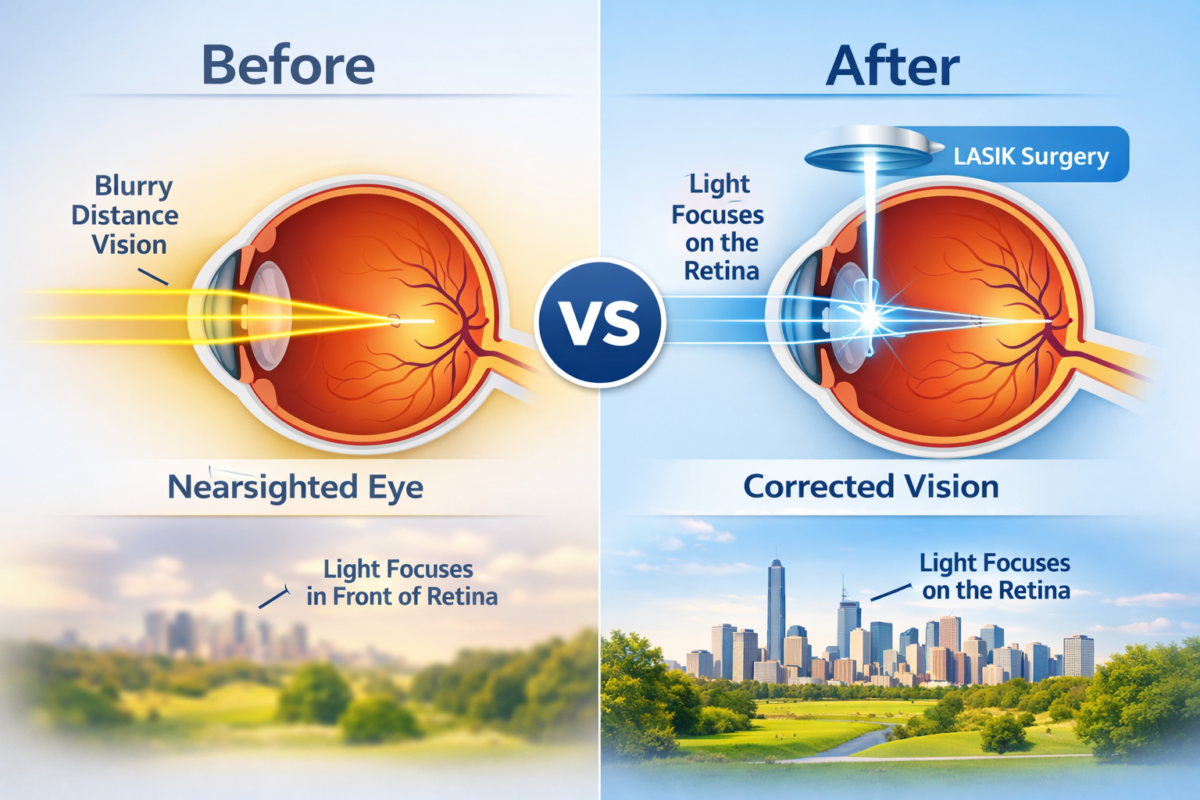
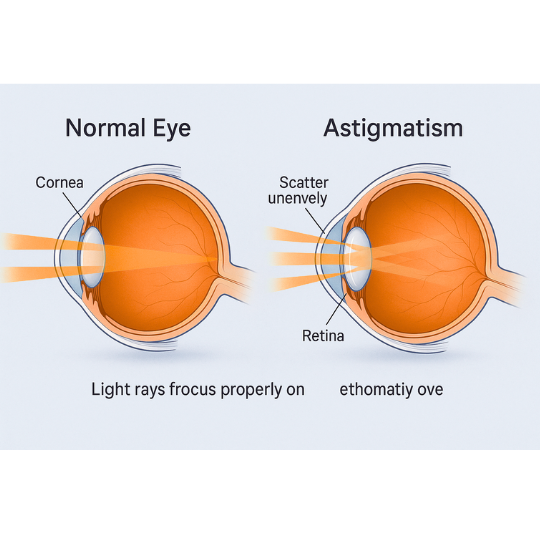
Astigmatism occurs when the cornea is shaped more like a football than a basketball. This uneven curvature causes light to focus on multiple points in the eye rather than a single sharp point on the retina.
The result?
- Blurry vision at all distances
- Eye strain
- Headaches
- Difficulty seeing at night
Standard contact lenses can’t properly address this irregular curvature. That’s where toric lenses come in. They are engineered to correct the specific directional blur caused by astigmatism, delivering sharper, more stable vision.
Without proper correction, everyday tasks like reading, driving, or working on a computer can become tiring. Toric lenses offer a practical solution that combines convenience with precision.
How Toric Contact Lenses Work
Toric contact lenses differ from regular lenses in three major ways:
1. Multiple Optical Powers
Toric lenses contain two powers:
- One to correct nearsightedness or farsightedness
- One to correct astigmatism (cylinder power)
These powers are aligned along specific axes to counteract the irregular curvature of your cornea.
2. Axis Alignment
Your prescription will include an “axis” measurement (from 0 to 180 degrees). This indicates where the cylindrical correction should be positioned on your eye.
3. Stabilization Mechanisms
Because toric lenses must maintain orientation, they include design features such as
- Thin-thick zones
- Prism ballast
- Accelerated stabilization design
These features use your eyelids’ natural pressure to keep the lens from rotating excessively when you blink.
The result is consistent clarity throughout the day.
Types of Toric Contact Lenses
Not all toric lenses are the same. Depending on your lifestyle and vision needs, you may choose from several options.
Soft Toric Contact Lenses
These are the most popular option. Made from flexible materials, they provide comfort and are available in:
- Daily disposable lenses
- Bi-weekly lenses
- Monthly replacement lenses
Soft toric lenses are ideal for most people and offer excellent comfort for all-day wear.
Rigid Gas Permeable (RGP) Toric Lenses
These lenses are firmer and maintain their shape on the eye. They provide exceptionally sharp vision and are often recommended for:
- High levels of astigmatism
- Irregular corneas
- Keratoconus
While they may require an adjustment period, many users appreciate their durability and clarity.
Toric Multifocal Lenses
For individuals with presbyopia (age-related near vision loss), toric multifocal lenses correct:
- Astigmatism
- Distance vision
- Near vision
This eliminates the need for reading glasses in many cases.
Benefits of Toric Contact Lenses
Toric contact lenses offer several advantages over glasses and standard contacts.
1. Clear and Stable Vision
When properly fitted, toric lenses provide crisp vision at all distances.
2. Freedom from Glasses
Whether you’re playing sports, traveling, or attending events, contacts offer flexibility and convenience.
3. Improved Peripheral Vision
Unlike glasses, toric lenses move with your eyes, offering a wider field of vision.
4. Cosmetic Appeal
Many users prefer the natural appearance of contact lenses over spectacles.
5. Options for Active Lifestyles
Daily disposable toric lenses are especially convenient for athletes and busy professionals.
Potential Drawbacks to Consider
While toric lenses are effective, they do have some considerations.
- They can be more expensive than standard lenses
- Proper fitting is essential
- They may require a short adaptation period
- Incorrect alignment can cause temporary blur
Fortunately, modern designs have significantly improved comfort and stability compared to older versions.
How to Choose the Right Toric Contact Lenses
Selecting the right toric lenses involves more than just matching your prescription. An eye care professional will consider:
- Degree of astigmatism
- Corneal shape
- Tear production
- Lifestyle needs
- Budget
A comprehensive eye exam and contact lens fitting are essential. During the fitting process, trial lenses are placed on your eyes to evaluate rotation, comfort, and visual clarity.
Never purchase toric lenses without a valid prescription. Proper fitting ensures both comfort and eye health.
Daily vs. Monthly Toric Lenses: Which Is Better?
The choice depends on your habits and preferences.
Daily Disposable Toric Lenses
- Convenient
- Hygienic
- No cleaning required
- Ideal for occasional wear
Monthly Toric Lenses
- More cost-effective in the long term
- Environmentally friendly (less waste)
- Require cleaning and storage
For busy individuals or those prone to allergies, daily disposables often provide added comfort.
Caring for Toric Contact Lenses
Proper hygiene is crucial for eye health.
Follow these essential steps:
- Wash hands before handling lenses
- Clean and disinfect lenses daily (if reusable)
- Replace lenses according to schedule
- Never sleep in lenses unless approved
- Avoid water exposure (including swimming)
Failure to follow care guidelines increases the risk of eye infections, dryness, and irritation.
Are Toric Contact Lenses Comfortable?
Modern toric lenses are made from advanced silicone hydrogel materials that allow more oxygen to reach the eye. This enhances comfort and reduces dryness.
That said, comfort depends on:
- Proper fit
- Lens material
- Tear quality
- Wearing duration
Most users report adapting within a few days. If discomfort persists, consult your eye care provider.
Cost of Toric Contact Lenses
Toric lenses typically cost more than standard contacts due to their specialized design.
On average:
- Daily toric lenses: Higher per-box cost
- Monthly toric lenses: Lower cost over time
Insurance plans may cover part of the cost, especially if astigmatism significantly impacts vision.
While they may be slightly more expensive, many users find the improved clarity and convenience well worth the investment.
Who Is a Good Candidate for Toric Contact Lenses?
You may be a strong candidate if you:
- Have been diagnosed with astigmatism
- Prefer contact lenses over glasses
- Have healthy eyes
- Maintain good hygiene habits
However, individuals with severe dry eye or certain corneal conditions may require specialized lenses.
A professional consultation is always the best first step.
Conclusion
Toric contact lenses have revolutionized the way people with astigmatism experience the world. What once required thick glasses can now be corrected with thin, comfortable lenses designed specifically for your eyes.
They provide:
- Sharper vision
- Greater freedom
- Enhanced comfort
- Improved lifestyle flexibility
If blurry vision from astigmatism is holding you back, toric contact lenses could be the solution you’ve been searching for. Schedule an eye exam, discuss your options with a professional, and take the first step toward clearer, more confident vision.
Your eyes deserve precision—and toric lenses are built to deliver exactly that.
Author Details:
Dr. Sushruth Appajigowda holds a prominent position as a cornea, cataract, glaucoma, and LASIK surgeon in Bangalore. He serves as the chief cataract and refractive surgeon at Vijaya Nethralaya Eye Hospital, Nagarbhavi, Bangalore. Renowned as one of the finest LASIK surgeons nationwide, he brings with him over 12+ years of experience across multiple LASIK platforms, including ZEISS, ALCON, SCHWIND, AMO, and Bausch and Lomb. Having successfully conducted over 5000 LASIK procedures, Dr. Sushruth holds the title of a Certified Refractive Surgeon and a Fellow of the All India Collegium of Ophthalmology. Furthermore, he stands as a distinguished speaker at various national and international forums, using his expertise to guide you in selecting the most suitable procedure based on your health requirements.

http://vijayanethralaya.com/link-in-bio/
Frequently Asked Questions (FAQs)
1. Can toric contact lenses rotate in the eye?
Yes, but modern stabilization designs minimize rotation. Minor shifts usually correct themselves when you blink.
2. Are toric contact lenses more expensive?
Yes, they typically cost more due to their specialized design.
3. Can I sleep in toric contact lenses?
Only if your lenses are approved for extended wear and your doctor recommends it.
4. Do toric lenses correct both astigmatism and nearsightedness?
Yes, they can correct astigmatism along with myopia or hyperopia.
5. How long does it take to adjust to toric lenses?
Most users adapt within a few days.
6. Are toric lenses available as daily disposables?
Yes, many brands offer daily disposable options for convenience.