
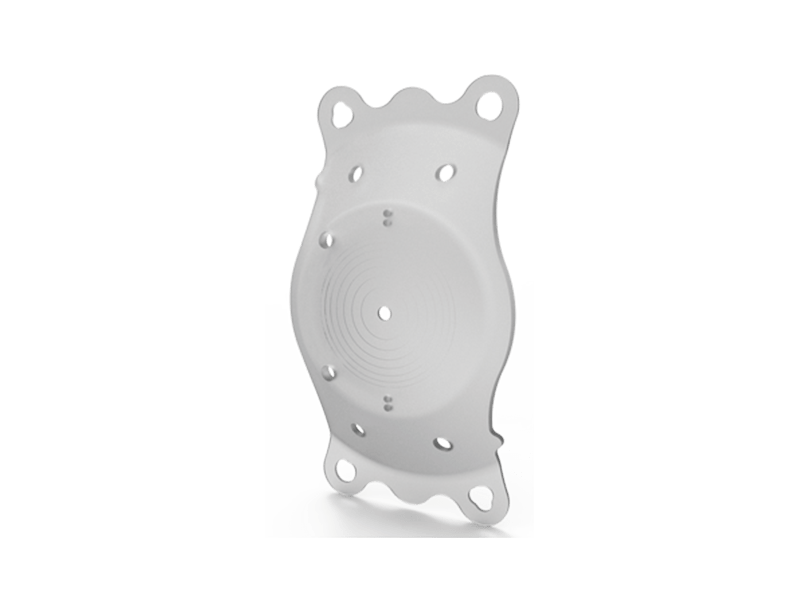
If you have astigmatism, standard vision correction often feels like a “close but not quite” solution. Toric lenses are the specialized engineering answer to that problem. Unlike standard lenses, which are spherical (like a basketball), a toric lens is shaped like a torus (like a donut or a sliced football).
1. The Anatomy of the Challenge: Why You Need a “Toric Lenses”
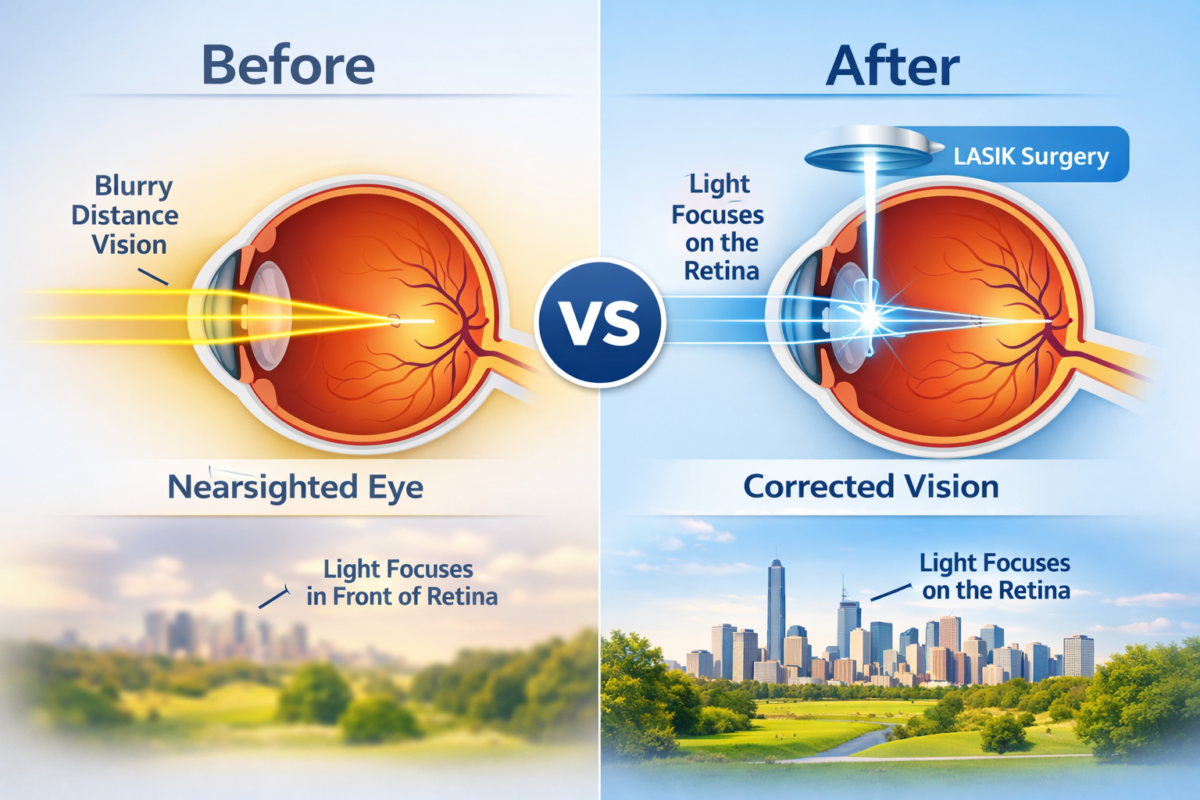
In a typical eye, the cornea is perfectly round. In an eye with astigmatism, the cornea (or the internal lens) has two different curvatures. This creates two different focal points on the retina, causing blurred vision at all distances.

The Physics of Correction:
A toric lens must do two things simultaneously:
- Correct Power: It provides different refractive strengths at different angles (meridians).
- Maintain Orientation: It must stay perfectly still on the eye. If a standard lens rotates 20 degrees, you don’t notice. If a toric lens rotates 20 degrees, your vision becomes instantly blurry.
2. Understanding Your Prescription (The “Cyl” and “Axis”) Toric Lenses:
When you look at a toric lens prescription, you will see three specific numbers that define the lens geometry:
- Sphere (S): Corrects for nearsightedness (-) or farsightedness (+).
- Cylinder (C): The amount of power needed to “flatten” the astigmatism.
- Axis (A): A degree between 1° and 180°. This tells the manufacturer exactly where the cylinder power needs to be placed to align with your eye’s unique shape.
3. How the Lens Defies Gravity (Stabilization Technologies):
Because these lenses cannot spin, manufacturers use “ballast” designs to keep them weighted correctly. Here are the three most common methods used by top brands:
| Method | How it Works | Best For |
| Prism Ballast | The bottom of the lens is slightly thicker and heavier, using gravity to pull it down. | Most standard users. |
| Thin Zones (Accelerated Stabilization) | The lens is thin at the top and bottom so the eyelids “squeeze” it into place during a blink. | Active people/athletes. |
| Peri-Ballast | The weight is distributed on the periphery (edges) rather than the center, improving comfort. | Sensitive eyes. |
4. Types of Toric Solutions:
Depending on your lifestyle and medical needs, there are three main categories of toric technology:
A. Soft Toric Contact Lenses
The most popular choice. They are made of hydrogel or silicone hydrogel.
- Pros: Instant comfort, available in daily or monthly disposables.
- Cons: Can sometimes “drift” or rotate, causing temporary blur.
B. Rigid Gas Permeable (RGP) Lenses
These are “hard” lenses that hold their shape.
- Pros: Often provide the crispest vision possible because the lens itself acts as a new, perfectly round “cornea.”
- Cons: Requires a “break-in” period of several weeks for comfort.
C. Toric Intraocular Lenses (IOLs)
Used during cataract surgery.
- Pros: A permanent surgical implant that can eliminate the need for glasses entirely after surgery.
- Cons: Higher surgical cost than standard IOLs.
5. Troubleshooting: Why Is My Vision Still Blurry?
If you are wearing toric lenses and things aren’t “clicking,” it is usually due to one of these three factors:
- Lens Rotation: If you blink and your vision clears up then blurs again, the lens is likely not stabilizing correctly.
- Dry Eye: Toric lenses are slightly thicker than standard lenses. If your eyes are dry, the lens can “stick” to the eyelid and rotate out of place.
- Vertex Distance: For high prescriptions, the power of a contact lens is slightly different than the power of your glasses. Your doctor must calculate this adjustment.
6. Pro-Tips for Success
- Wait for the “Settle”: After putting a toric lens in, wait 2 to 3 minutes for it to orient itself before judging the clarity.
- Silicon Hydrogel is Key: Because toric lenses are thicker, they can block more oxygen. Always opt for high-oxygen “breathable” materials.
- Avoid “over-wearing” Protein buildup on the lens can change its weight distribution, making it rotate more often. Stick to your replacement schedule (daily/monthly).
Author Details:
Dr. Sushruth Appajigowda holds a prominent position as a cornea, cataract, glaucoma, and LASIK surgeon in Bangalore. He serves as the chief cataract and refractive surgeon at Vijaya Nethralaya Eye Hospital, Nagarbhavi, Bangalore. Renowned as one of the finest LASIK surgeons nationwide, he brings with him over 12+ years of experience across multiple LASIK platforms, including ZEISS, ALCON, SCHWIND, AMO, and Bausch and Lomb. Having successfully conducted over 5000 LASIK procedures, Dr. Sushruth holds the title of a Certified Refractive Surgeon and a Fellow of the All India Collegium of Ophthalmology. Furthermore, he stands as a distinguished speaker at various national and international forums, using his expertise to guide you in selecting the most suitable procedure based on your health requirements.