
Introduction:
Did your doctor recommend laser treatment for a retinal hole? If yes, you might be wondering about the side effects and safety of the procedure. A retinal hole can be a serious eye condition, but thanks to advanced laser technology, it can be treated effectively. However, like any medical procedure, there are potential side effects you should know about. Let’s dive in.
Understanding Retinal Holes
Understanding the Side Effects of Retinal Hole Laser Treatment
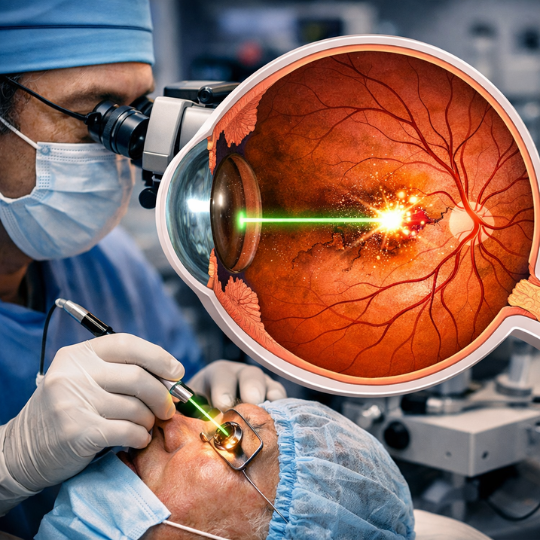
Retinal hole laser treatment, medically known as laser photocoagulation or laser retinopexy, is a common and generally safe procedure to repair a tear or hole in the retina. This treatment is crucial in preventing retinal detachment, a serious condition that can lead to significant vision loss. While the success rate of the procedure is high, patients should be aware of the potential side effects, which can range from mild and temporary to, in rare cases, more severe and long-lasting.
Side effects can be broadly categorized into immediate and common, less common, and rare but serious complications.
Immediate and Common Side Effects
These side effects are typically experienced shortly after the procedure and usually resolve on their own within a few hours to a few days:
- Pain or Discomfort: It is common to experience a sensation of sharp, stabbing, or aching pain during the laser application. Following the procedure, a mild headache or a scratchy, foreign body sensation in the eye is also common.
- Blurred Vision: Vision in the treated eye will likely be blurry for several hours and sometimes up to a day after the treatment. This is a result of the bright laser light and the dilating eye drops used during the procedure.
- Light Sensitivity (Photophobia): The eye may be sensitive to light for a short period. Wearing sunglasses can provide comfort.
- Redness and Watering: The treated eye may appear red and tearful for a few days.
- Floaters: Some individuals may notice a temporary increase in floaters, which are small specks or lines drifting in their field of vision. These usually diminish over a few days.
Less Common Side Effects
These side effects occur less frequently but are generally not a cause for major concern:
- Small Scotoma (Blind Spot): A small, permanent gray or dark spot may be noticeable in the peripheral (side) vision. This corresponds to the area where the laser created a scar to seal the retinal hole. Most patients do not find this to be a significant issue.
- Mild Vision Loss: A slight decrease in the overall clarity of vision can occur in some cases.
- Difficulty with Focusing: Patients may experience a temporary challenge in focusing their vision.
Rare but Serious Side Effects
While uncommon, some potential complications require immediate medical attention. These include:
- Accidental Macular Laser: In extremely rare instances, the laser may inadvertently affect the macula, the central part of the retina responsible for sharp, detailed vision. This can lead to a significant loss of central vision.
- Bleeding in the Eye (Vitreous Hemorrhage): Bleeding inside the eye is a rare complication that can cause sudden and significant vision loss.
- Increased Intraocular Pressure: A temporary or, in very rare cases, a sustained increase in eye pressure can occur. This may require medication to manage.
- Choroidal Detachment: This involves the accumulation of fluid under the choroid, a layer of blood vessels beneath the retina.
- Macular Pucker (Epiretinal Membrane): The formation of a thin layer of scar tissue over the macula can develop as a long-term complication, causing distorted or wavy central vision.
- Cystoid Macular Edema: Swelling in the macula can lead to blurred or distorted central vision.
- Progression to Retinal Detachment: Although the purpose of the laser treatment is to prevent retinal detachment, it is not always 100% effective, and the condition may still progress.
- Severe Inflammation (Panuveitis-like Reaction): A very rare but serious inflammatory reaction can occur throughout the eye.
Long-Term Considerations
In the long term, some patients may experience:
- Changes in Peripheral Vision: If a large area of the retina was treated, there might be a subtle but permanent reduction in the field of peripheral vision.
- Reduced Night Vision: Extensive laser treatment can, in some cases, lead to a permanent decrease in the ability to see in low-light conditions.
- Changes in Color Vision: This is a rare, but possible long-term effect.
Causes of Retinal Holes
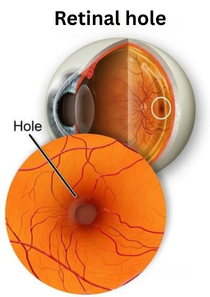
A retinal hole happens when the retina, the thin layer at the back of your eye, develops a small tear or opening. Common causes include:
- Age-related thinning of the retina
- High myopia (severe nearsightedness)
- Eye injuries
- Family history of retinal diseases
Symptoms of Retinal Holes
- Sudden appearance of floaters
- Flashes of light
- Blurred or distorted vision
- Dark shadow in your peripheral vision
Risks if Untreated
Ignoring a retinal hole can lead to retinal detachment, a vision-threatening condition requiring urgent surgery.
What is Retinal Hole Laser Treatment?
Laser photocoagulation is the standard treatment for retinal holes. The eye doctor uses a focused laser beam to seal the hole by creating small burns around it, forming scar tissue that “welds” the retina in place.
- Types of lasers used: Argon and diode lasers
- Duration: 10–20 minutes
- Recovery: Most patients can resume normal activities within a day or two
Benefits of Laser Treatment for Retinal Holes
- Prevents retinal detachment
- Preserves vision
- Minimally invasive
- Quick recovery with minimal downtime

Common Side Effects of Retinal Hole Laser Treatment
Most patients experience only mild and temporary effects, such as:
- Blurred vision: Usually lasts for a few hours to a day
- Mild discomfort: Some patients feel a slight stinging or burning sensation
- Sensitivity to light: Sunglasses may help for a few days
- Headaches: Caused by eye strain or light exposure during treatment
Less Common but Possible Side Effects
Sometimes, patients may face side effects like:
- Inflammation: Redness or irritation in the eye
- Retinal swelling: Rare but can affect vision
- Floaters: May appear or increase after treatment
- Glare and halos: Some notice difficulty with bright lights at night
Serious but Rare Complications
In rare cases, side effects can be severe:
- Damage to healthy retina if the laser accidentally hits the wrong spot
- Secondary retinal tears near the treated area
- Retinal detachment despite treatment
- Permanent vision loss in extremely rare scenarios
How Long Do Side Effects Last?
- Short-term: Blurriness, mild discomfort, and sensitivity usually improve within a few days
- Long-term: Floaters or glare may take weeks to settle down
Who is at Higher Risk of Side Effects?
- People with high myopia
- Older adults with thinner retina
- Patients with diabetes or hypertension
- Those with a history of retinal surgery
Aftercare and Recovery Tips
- Take prescribed eye drops to reduce inflammation
- Avoid rubbing your eyes
- Limit screen time for 24–48 hours
- Attend all follow-up visits for monitoring
How to Reduce Side Effects
- Wear sunglasses outdoors
- Eat eye-healthy foods like spinach, carrots, and nuts
- Stay hydrated
- Follow your doctor’s aftercare instructions strictly
When to Call Your Doctor
Seek urgent medical help if you notice:
- Sudden loss of vision
- Sharp or persistent eye pain
- Increase in floaters or flashes
- Redness with pus or discharge
Alternative Treatments for Retinal Holes
- Observation: Very small holes may not need immediate treatment
- Cryotherapy: Uses freezing instead of laser to seal the hole
- Vitrectomy: Surgery for complicated cases with retinal detachment
Myths vs Facts about Retinal Hole Laser Treatment
- Myth: Laser treatment always causes blindness
- Fact: It’s one of the safest treatments to prevent blindness
- Fact: It’s one of the safest treatments to prevent blindness
- Myth: The procedure is very painful
- Fact: Most patients only feel mild discomfort
- Fact: Most patients only feel mild discomfort
- Myth: Once treated, holes never recur
- Fact: New holes can develop, so regular check-ups are essential
- Fact: New holes can develop, so regular check-ups are essential
Conclusion:
Retinal hole laser treatment is generally safe and effective and prevents serious complications like retinal detachment. While mild side effects like blurred vision, light sensitivity, and floaters are common, serious risks are rare. By following proper aftercare and attending regular check-ups, you can protect your vision and enjoy long-term eye health.
FAQs:
1. Is retinal hole laser treatment painful?
No, most patients only feel mild discomfort or pressure during the procedure.
2. How long does it take to recover after laser treatment?
Most people recover within a few days and can resume normal activities quickly.
3. Can retinal holes come back after treatment?
Yes, new holes may develop, so follow-up visits are important.
4. Are floaters normal after retinal laser treatment?
Yes, some floaters may appear, but they usually improve over time.
5. Can laser treatment fail?
In rare cases, retinal detachment can still occur, requiring further surgery.