

Myopia, commonly known as nearsightedness, is no longer just a minor inconvenience requiring glasses. In 2026, it is recognized as a progressive condition that, if left untreated, can lead to serious eye health risks. Whether you are a parent looking for myopia control for your child or an adult seeking permanent myopia correction, this guide covers the latest FDA-approved myopia treatment treatments and clinical breakthroughs.
What is myopia? Understanding the “Myopia Epidemic”
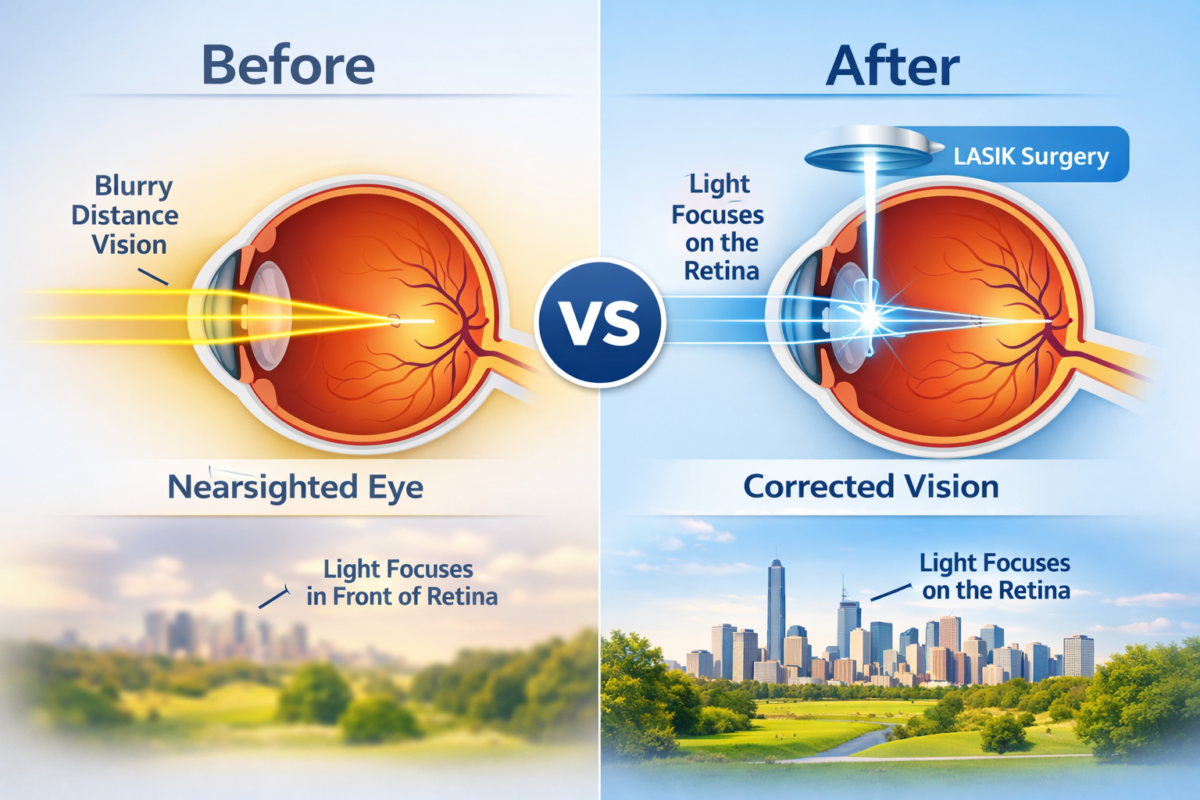
Myopia occurs when the eyeball grows too long (increased axial length) or the cornea becomes too curved. This causes light to focus in front of the retina instead of directly on it, making distant objects appear blurry.

Why Myopia Treatment Matters Now:
While traditional glasses help you see, they do not stop the eye from growing. Modern myopia management aims to slow down this growth to prevent high-risk complications later in life, such as:
- Retinal Detachment
- Glaucoma
- Myopic Macular Degeneration
- Early-onset Cataracts
1. Myopia Control for Children (Slowing Progression)
For patients under 20, the goal is “control”—slowing the worsening of the prescription.
A. Orthokeratology (Ortho-K)
Often called “braces for the eyes,” Ortho-K involves wearing specially designed rigid gas-permeable lenses overnight.
- How it works: The lenses gently reshape the cornea while you sleep.
- Benefit: You see clearly all day without glasses or daytime contacts. It is one of the most effective methods for slowing axial elongation.
B. Low-Dose Atropine Eye Drops
A once-a-day eye drop (typically 0.01% to 0.05% concentration) used at bedtime.
- Latest 2026 Data: Clinical trials (like the LAMP study) show that low-dose atropine can reduce progression by up to 60% with minimal side effects like light sensitivity.
C. Myopia Management Spectacle Lenses
New lens technologies, such as DIMS (Defocus Incorporated Multiple Segments) or HAL (Highly Aspherical Lenslets), use “peripheral defocus” to signal the eye to stop growing. These look like regular glasses but offer advanced medical benefits.
2. Permanent Myopia Treatment for Adults
If your prescription has stabilized (usually after age 21), you may be a candidate for surgical correction.
| Procedure | Best For… | Key Advantage |
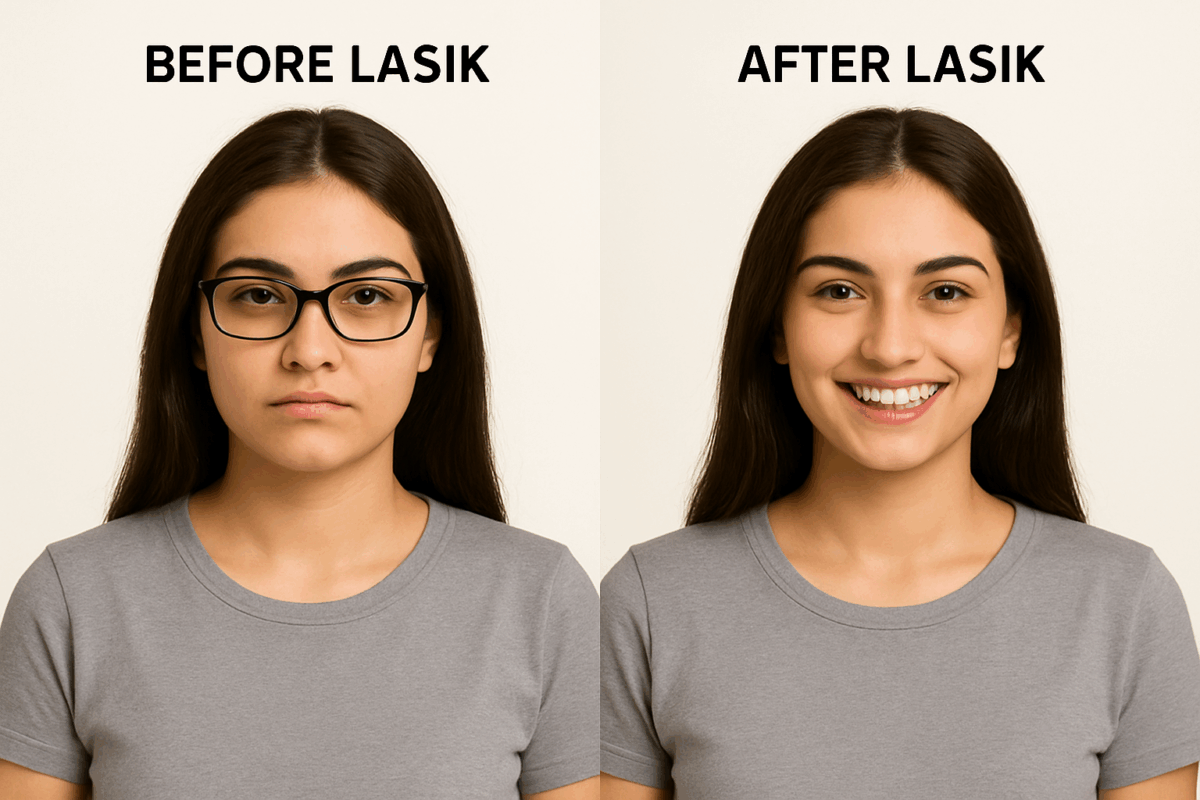
| LASIK | Mild to moderate myopia | Fast recovery (24 hours) |
| SMILE | High myopia & dry eyes | Minimally invasive; no flap complications |
| ICL (EVO Visian) | Very high myopia | Reversible; “permanent contact lens” inside the eye |
| PRK | Thin corneas | No corneal flap created |
3. Lifestyle Changes: The 20-20-20-2 Rule
Scientific consensus in 2026 emphasizes environmental factors. We recommend the 20-20-20-2 Rule:
- 20 minutes: Every 20 minutes of near work…
- 20 seconds: Look at something…
- 20 feet away.
- 2 hours: Spend at least 2 hours outdoors daily in natural light.
Frequently Asked Questions (FAQ)
Can myopia be cured?
There is no “cure” that reverts the eye to its original length, but treatments like LASIK or ICL can permanently correct your vision, while Ortho-K can halt progression in children.
Is myopia treatment covered by insurance?
Most vision plans cover standard exams and glasses. However, advanced myopia management (like Ortho-K or MiSight lenses) is often considered a specialty service. Check with your provider about HSA/FSA eligibility.
At what age should myopia treatment start?
As early as possible. Children as young as 5 or 6 are now starting myopia control to prevent high prescriptions in their teens.