
If you’ve ever squinted to read a road sign or felt that familiar headache after trying to decipher the whiteboard at school, you aren’t alone. Myopia, commonly known as nearsightedness, is a global phenomenon, predicted to affect nearly 50% of the world’s population by 2050. But here is the good news: the technology used to correct it has never been better.
Gone are the days when “thick coke-bottle glasses” were your only option. In 2025, myopia management has evolved from simple correction to active control, blending cutting-edge optical physics with stylish aesthetics.
Whether you are a parent worried about your child’s worsening vision or an adult looking for thinner, lighter lenses, this comprehensive guide covers everything you need to know.
What Is Myopia (Nearsightedness)?
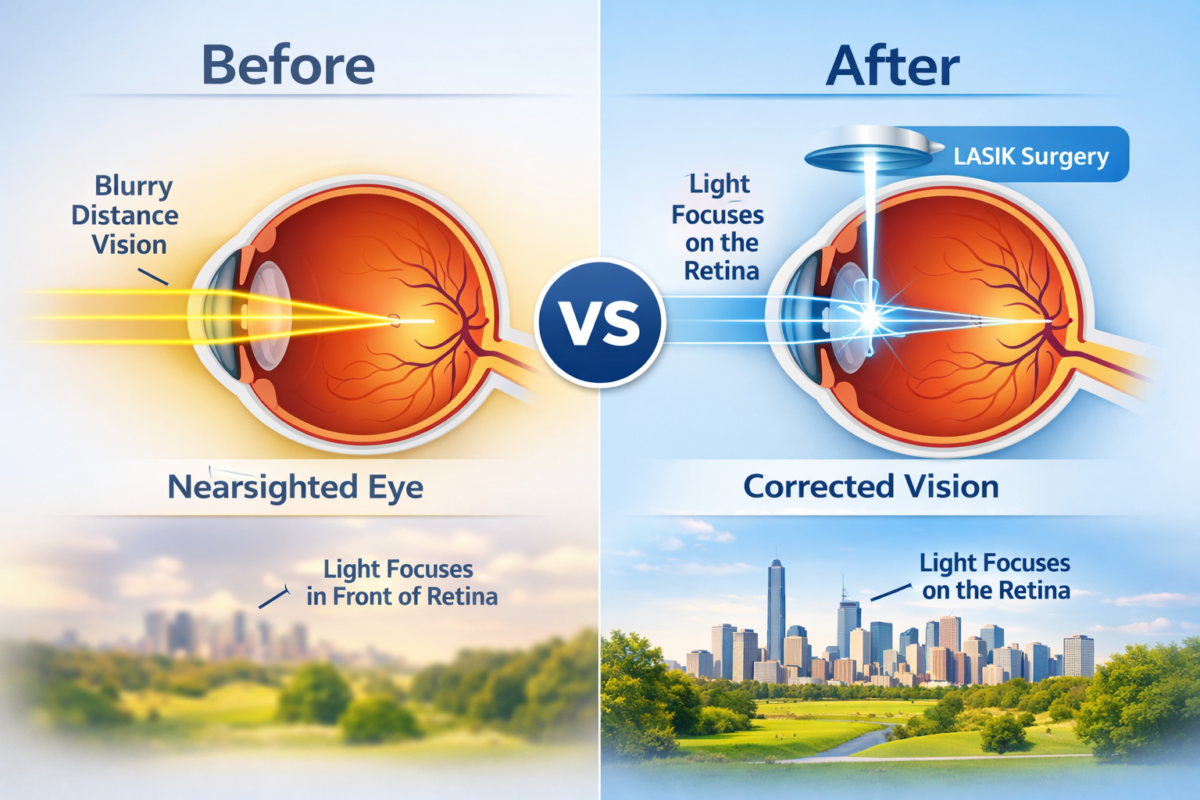
At its core, myopia is a refractive error where distant objects appear blurry while close objects remain clear.
The Physics of Blurry Vision
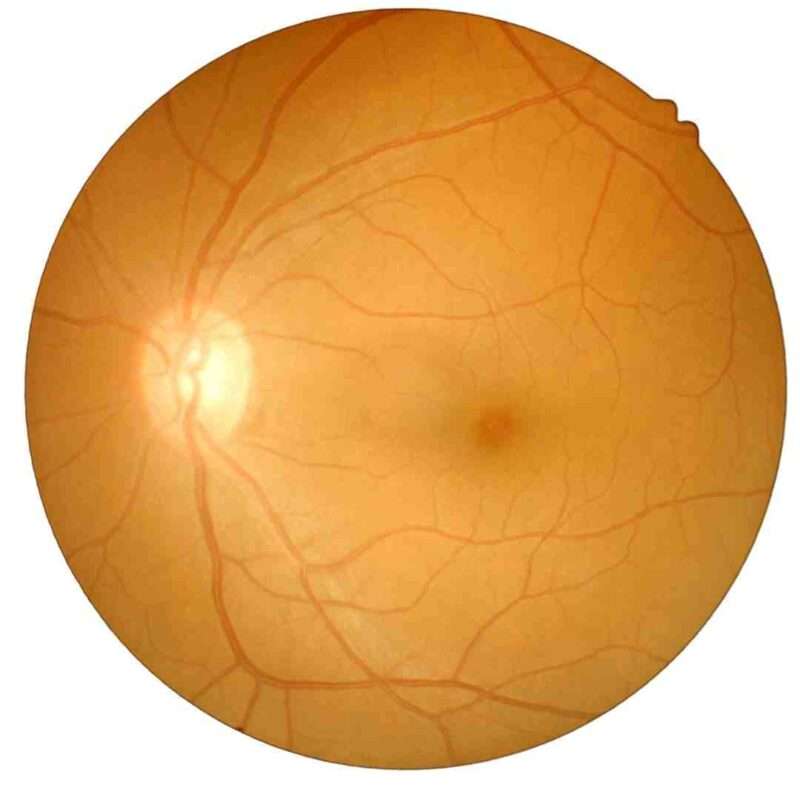
In a perfectly shaped eye, light enters through the cornea and focuses directly on the retina (the light-sensitive layer at the back of the eye). In a myopic eye, the eyeball is typically too long from front to back, or the cornea is too curved.
This structural mismatch causes light to focus in front of the retina instead of on it. By the time the light actually reaches the retina, it has spread out again, creating a blurry image.
Why Is It Increasing?
While genetics play a role, modern lifestyle factors are accelerating the “myopia boom”:
- Reduced Outdoor Time: Lack of exposure to natural sunlight (which releases dopamine to regulate eye growth).
- Near-Work Strain: Excessive time spent on screens, books, and tablets.
How Do Myopia Glasses Work?
Glasses for nearsightedness use concave lenses (lenses that are thinner in the center and thicker at the edges). You can identify these on a prescription by the minus sign (-) before the number (e.g., -2.50 D).
These lenses diverge (spread out) the light before it enters your eye. This “pushes” the focal point further back so that it lands precisely onto the retina, restoring sharp distance vision.

The 2025 Lens Guide: Types of Lenses for Myopia
Choosing the right lens is more important than choosing the frame. The market in 2025 offers specialized solutions depending on your age and the severity of your prescription.
1. Single Vision Lenses (The Standard Choice)
These are the most common lenses for myopia. They have the same optical power across the entire lens surface.
- Best for: Adults with stable prescriptions and children with mild, non-progressive myopia.
- Pros: Affordable, easy to adapt to.
- Cons: They only correct vision; they do not stop the eyes from getting worse (growing longer) in children.
2. Myopia Control Lenses (The Game Changer for Kids)
If you are a parent, read this section carefully. In 2025, standard single-vision glasses are no longer the “gold standard” for growing children. We now have “Myopia Control” lenses designed to slow down the elongation of the eyeball.
- D.I.M.S. Technology (e.g., Hoya MiYOSMART): These lenses have a clear central zone for sharp vision, surrounded by hundreds of tiny “defocus” segments. This peripheral blur sends a signal to the eye to stop growing.
- H.A.L.T. Technology (e.g., Essilor Stellest): Uses a constellation of aspherical lenslets to create a volume of signal that slows eye growth.
- Efficacy: Clinical studies show these lenses can slow myopia progression by 60% on average.
3. High-Index Lenses (For Strong Prescriptions)
For prescriptions stronger than -4.00, standard plastic lenses can look thick and distort the appearance of your eyes (making them look smaller). High-index plastic bends light more efficiently, allowing the lens to be thinner and lighter.
| Material | Refractive Index | Best For Prescription | Thickness Reduction |
| CR-39 Plastic | 1.50 | 0.00 to -2.00 | Standard |
| Polycarbonate | 1.59 | -2.00 to -4.00 | ~20% Thinner |
| High Index | 1.67 | -4.00 to -6.00 | ~30% Thinner |
| Ultra High Index | 1.74 | -6.00 and above | ~50% Thinner |
4. Progressive Lenses (For Age 40+)
If you have myopia and are developing presbyopia (difficulty reading up close due to age), progressive lenses offer a seamless transition. The top of the lens corrects your distance vision (myopia), while the bottom assists with reading, with no visible line in between.

Essential Lens Coatings
To get the most out of your myopia glasses, certain coatings are non-negotiable in a modern digital world.
- Anti-Reflective (AR) Coating: Crucial for myopia lenses. Because concave lenses are flatter, they reflect more light. AR coating eliminates glare, improves night driving safety, and makes the lenses invisible so people can see your eyes.
- Blue Light Filters: If you spend 8+ hours on digital devices, this helps reduce visual fatigue.
- Photochromic (Transition) Lenses: These darken automatically in sunlight. A great option for light-sensitive myopic eyes, offering 100% UV protection.
How to Choose Frames for High Myopia
If you have a strong prescription (e.g., -5.00 or higher), your frame choice dictates the final look of your glasses.
1. Watch the Size
The smaller, the better.
With minus lenses, the edges are the thickest part. A wide frame requires a larger lens blank, which means the thickest, outermost edge of the lens will be visible. A smaller, narrower frame cuts off that thick outer edge, keeping the lens profile slim.
2. Shape Matters
- Best Shapes: Round or Oval. The curves help disguise edge thickness.
- Avoid rectangular frames with sharp corners, as the lens will be thickest at those corners.
3. Avoid Rimless Styles
Rimless glasses expose the entire edge of the lens. For high myopia, full-rim frames (especially acetate/plastic ones) are superior because the frame rim itself hides the thickness of the lens edge.
4. Proper Centration
Ensure your eyes sit in the center of the lens opening.
- Pro Tip: Use the equation (Lens Width + Bridge Width – Your Pupillary Distance) / 2. If the result is less than 5 mm, the frame is a great fit for your prescription.
7 Signs You or Your Child Need Myopia Glasses
Myopia often creeps up slowly. Watch for these red flags:
- The “Squint“: Squinting temporarily changes the eye shape to improve focus. It’s the #1 sign of uncorrected vision.
- Sitting Too Close: Moving closer to the TV or holding a phone inches from the face.
- Headaches: Usually located in the front of the head, caused by eye strain.
- Night Vision Issues: Blurry vision becomes more obvious in low light (e.g., driving at night).
- School Struggles: A drop in grades because a child can’t read the board.
- Excessive Blinking/Rubbing: Signs of physical eye fatigue.
- “Macro” Vision: You have to take your glasses off to read tiny text (common in high myopia).
Expert Eye Care in Bangalore: Vijaya Nethralaya
Choosing the right glasses starts with an accurate diagnosis. If you are in Bangalore, specifically near Vijayanagar or Nagarbhavi, professional care is just around the corner.
Vijaya Nethralaya Super Speciality Eye Hospital is a premier destination for comprehensive eye care. Founded by Dr. Appaji Gowda, a veteran in ophthalmology, the hospital is renowned for blending compassion with advanced technology.
Why Choose Vijaya Nethralaya?
- Advanced Myopia Clinic: They offer the latest in myopia control management for children, including counseling on the advanced lens types mentioned above (like Stellest and Miyosmart technologies) and low-dose atropine therapy.
- State-of-the-Art Diagnostics: Accurate measurement of “Axial Length” (the length of the eye)—the most critical metric for tracking myopia progression in 2025.
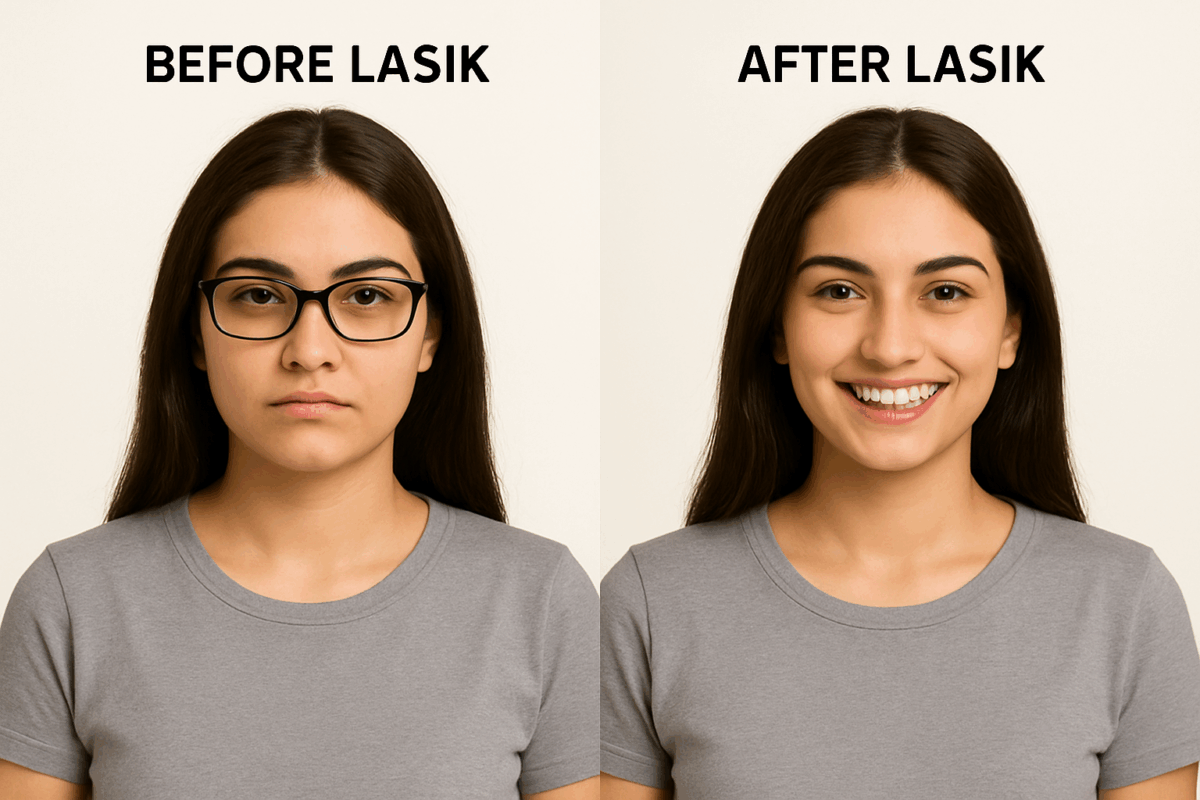
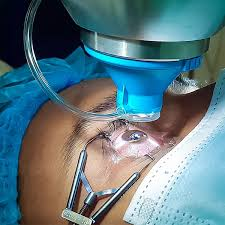
- Surgical Solutions: For adults looking to get rid of glasses, they specialize in LASIK, PRK, and ICL (Implantable Collamer Lens) surgeries.
- Convenience: Located conveniently at Nagarbhavi 2nd Stage, it is easily accessible for residents of Vijayanagar, Chandra Layout, and Magadi Road.
Conclusion
Myopia glasses have come a long way. They are no longer just a “crutch” for your eyes but a sophisticated medical device capable of managing eye health and enhancing your style. Whether you need myopia control lenses to protect your child’s future vision or sleek high-index lenses for your own professional look, the options in 2025 are limitless.
Frequently Asked Questions (FAQs)
1. Can wearing glasses make my myopia worse?
No. This is a myth. Under-correcting myopia (not wearing glasses or wearing a weaker prescription) actually accelerates myopia progression in children. Wearing the correct prescription ensures clear vision and reduces eye strain.
2. At what age does myopia stop increasing?
Typically, myopia stabilizes around age 20-21 when the eye stops growing. However, in our modern digital era, some adults experience “adult-onset progression” due to intense visual stress.
3. What is the difference between “high index” and “polycarbonate”?
Polycarbonate is impact-resistant and great for kids’ safety. High index is strictly for aesthetics—it makes the lens thinner and lighter. If you have a high prescription (-4.00 or more), high index is better for looks; for sports/safety, polycarbonate is better.
4. Are contact lenses better than glasses for myopia?
Contact lenses offer a wider field of view and don’t fog up. However, glasses are safer in terms of infection risk. For myopia control in kids, specific “orthokeratology” (Ortho-K) contact lenses worn at night are also a highly effective 2025 treatment option.
5. How do I read my prescription?
Look for the box labeled “Sphere” (SPH).
- A minus sign (-) indicates myopia (e.g., -2.00).
- A plus sign (+) indicates hyperopia (farsightedness).
- The further the number is from zero, the stronger the prescription.