
Introduction to Myopia in Children
Imagine your child squinting at the whiteboard even from the front row. Sounds familiar? You’re not alone. Myopia control for children or nearsightedness, is skyrocketing among children today—and it’s not just a minor inconvenience. It’s a serious eye condition that can affect their learning, lifestyle, and long-term eye health.
Causes of Myopia in Children
Genetic Factors
If one or both parents are myopic, chances are the child will be too. Genetics play a big role, but they’re only part of the story.
Environmental Triggers
Kids today spend more time indoors than ever before. Less outdoor play and more close-up activities like reading or screen use contribute heavily.
Increased Screen Time & Near Work
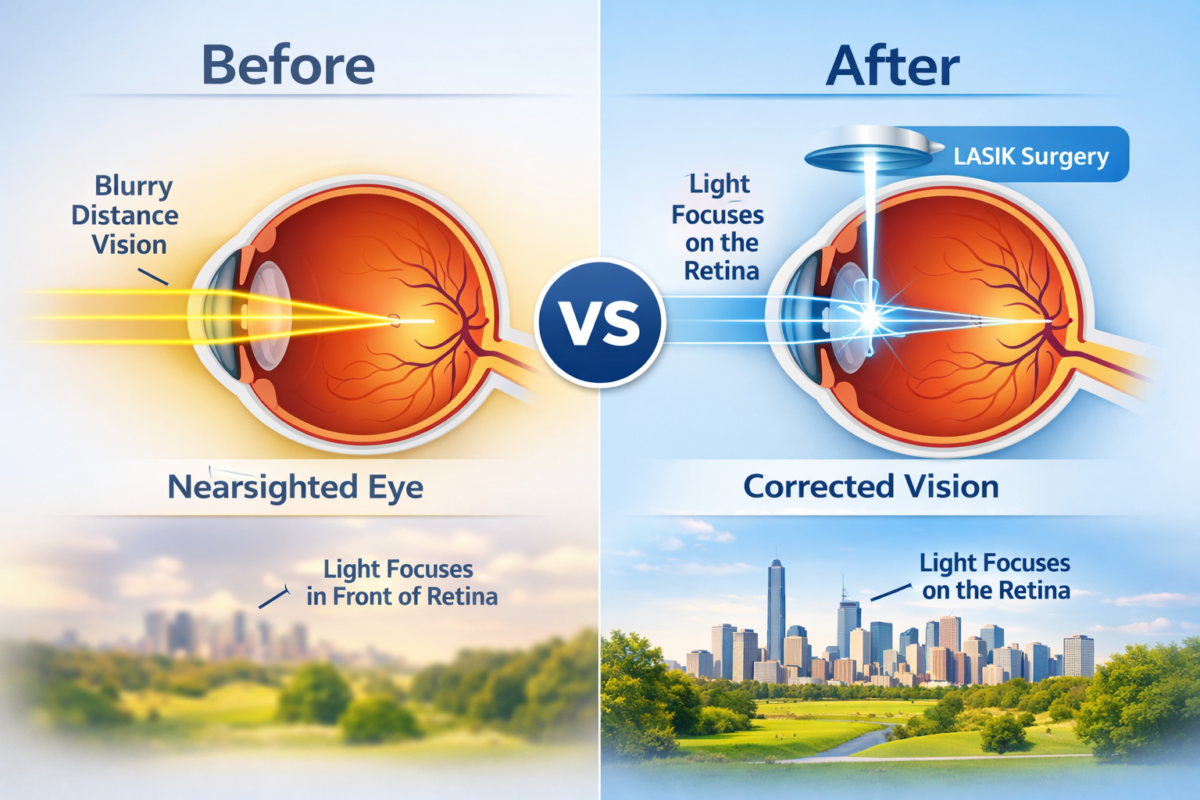
All that time on tablets and phones? It’s pushing young eyes to work harder up close, causing their eyeballs to elongate—the root cause of myopia.

Signs and Symptoms of Myopia in Kids
- Blurry vision when looking at distant objects
- Complaints of frequent headaches or eye strain
- Squinting, especially when watching TV or in class
- Sitting too close to screens or holding books too close
- Falling grades due to vision problems

The Impact of Myopia on a Child’s Life
Poor vision can lead to poor performance—academically, socially, and emotionally. Kids may lose confidence, feel left out in sports, or struggle in the classroom.
Long-term? Severe myopia can lead to retinal detachment, glaucoma, or macular degeneration later in life.
Diagnosing Myopia in Children
Importance of Regular Eye Exams
Don’t wait for your child to complain. Eye exams every 6–12 months help detect myopia early.
Tests and Tools Used
- Visual acuity tests
- Retinoscopy
- Autorefraction
- Corneal topography (for advanced cases)
Myopia Control vs Myopia Correction
Correcting myopia = glasses or lenses that help your child see.
Controlling myopia = treatments that slow down or even halt the progression.
Why control? Because the goal is to protect long-term eye health, not just vision clarity.
Top Myopia Control Options for Children
Atropine Eye Drops
- Low-dose atropine drops (0.01%) have proven effective
- Slows eye elongation
- Minimal side effects when monitored properly
Orthokeratology (Ortho-K) Lenses
- Worn overnight to reshape the cornea
- Provides clear vision during the day
- Great for active kids who hate glasses
Special Myopia Control Glasses
- Designed with peripheral defocus zones
- DIMS and H.A.L.T. lenses are popular choices
- Comfortable and easy for daily use
Multifocal Contact Lenses
- These distribute focus across distances
- Show excellent results in reducing progression
- Requires regular hygiene and fitting follow-ups

Lifestyle Changes to Support Myopia Control
Importance of Outdoor Time
Studies show that 2 hours daily outdoors can significantly lower the risk of myopia progression.
Reducing Screen Exposure
Follow the 20-20-20 rule: Every 20 minutes, look at something 20 feet away for 20 seconds.
Good Reading Habits
- Maintain proper lighting
- Keep books at arm’s length
- Avoid reading while lying down
Parental Role in Managing Myopia
Parents are the first line of defense. Here’s how you can help:
- Set screen time limits
- Schedule routine eye exams
- Encourage outdoor play
- Talk to an eye specialist about control options
Age-Specific Myopia Management Tips
Toddlers (0–4 yrs)
- Encourage daylight exposure
- Minimize screen time
- Watch for early signs
School-aged Kids (5–12 yrs)
- Annual eye checks
- Support myopia control treatments
- Introduce eye-friendly habits
Teens (13–18 yrs)
- Discuss contact lenses or Ortho-K
- Promote eye health awareness
- Address self-esteem issues around glasses
Nutritional Support for Eye Health
A healthy diet = healthy eyes.
Eye-Boosting Nutrients
- Vitamin A (carrots, spinach)
- Omega-3s (flaxseed, walnuts, fish)
- Lutein and Zeaxanthin (eggs, corn, green veggies)
Emerging Technologies in Myopia Control
- AI-based prediction tools for early detection
- Smart lenses and glasses under development
- Mobile apps to monitor screen time and recommend breaks
Cost and Accessibility of Myopia Control Treatments
- Atropine drops: ₹800–₹2000/month
- Ortho-K lenses: ₹20,000–₹40,000/year
- Myopia control glasses: ₹10,000–₹25,000
- Insurance coverage varies—always check!
Myths and Facts About Myopia in Children
- Myth: Glasses make eyesight worse
Fact: Glasses don’t cause progression—uncorrected vision might! - Myth: Only genetics matter
Fact: Lifestyle is equally important - Myth: Kids will “outgrow” myopia
Fact: It usually worsens without treatment
Conclusion:
Myopia in children isn’t something to ignore or just “fix” with glasses. It’s a growing condition that can impact their future, both academically and medically. By recognizing the signs early and choosing the right control methods, parents can give their children the gift of clear, lasting vision.
FAQs:
1. At what age should my child start myopia control?
As early as possible—ideally when diagnosed with early-stage myopia, often around age 6–7.
2. Is Ortho-K safe for kids?
Yes, when fitted and monitored by a professional. Many children find it more comfortable than daily glasses.
3. Can nutrition alone control myopia?
While nutrition supports overall eye health, it’s not enough alone. Combine with treatments for real control.
4. How often should my child’s eyes be checked?
Every 6 months for children diagnosed with myopia or at high risk.
5. Can myopia be cured permanently?
There’s no permanent “cure,” but progression can be slowed or stabilized with proper control methods.