
Introduction to Lazy Eye (Amblyopia)
What Is Lazy Eye? Understanding Amblyopia
Lazy eye, medically known as amblyopia, is a vision disorder where one eye fails to develop proper vision, even with prescription glasses. It typically begins in childhood when the brain starts favoring one eye over the other, causing the weaker eye to lag in visual development. Over time, this leads to reduced depth perception and blurry or double vision.
Common Causes of Lazy Eye in Children and Adults
Amblyopia can result from several underlying eye conditions, such as:
- Strabismus (misaligned eyes)
- Refractive errors (uneven focus between both eyes)
- Cataracts (cloudy lens in one eye)
- Visual deprivation (poor visual stimulation due to an obstruction)
Early Signs and Symptoms You Shouldn’t Ignore
Recognizing lazy eye early can make a world of difference. Symptoms may include:
- Squinting or closing one eye frequently
- Poor depth perception
- Difficulty tracking moving objects
- Eyes not working together
In India, pediatric eye screenings in schools are becoming more common, helping to detect amblyopia before it becomes permanent.
Importance of Early Diagnosis and Timely Treatment
How Eye Exams Detect Lazy Eye
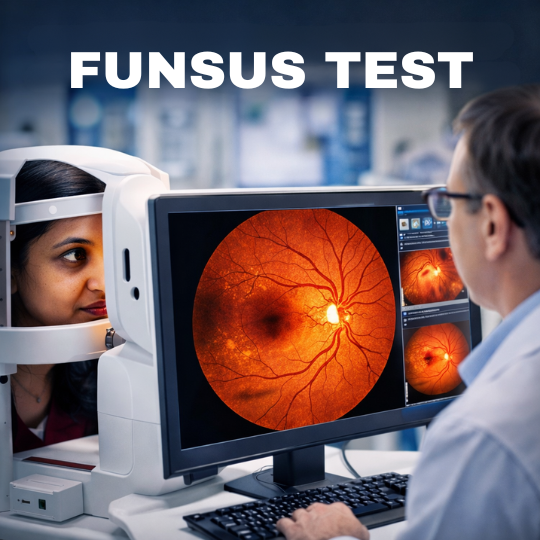
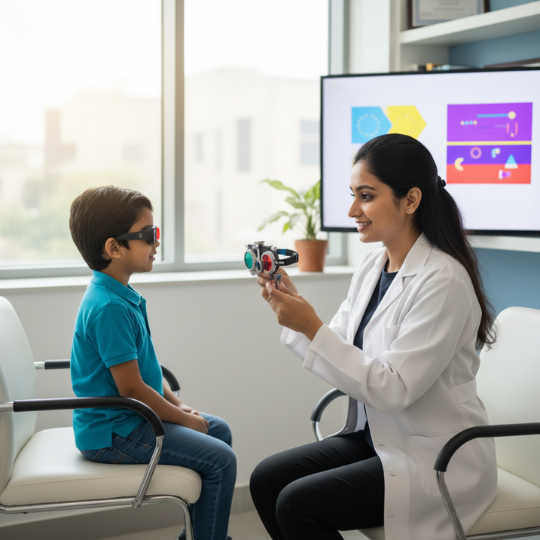
Comprehensive eye exams include visual acuity tests, refraction assessments, and binocular vision tests. These help ophthalmologists determine if one eye is underperforming.
The Role of Vision Screening Programs in India
Many NGOs and government initiatives are promoting early vision screening across rural and urban India. Programs such as the National Programme for Control of Blindness and Visual Impairment (NPCBVI) are pivotal in diagnosing lazy eye at an early age.
Lazy Eye Treatment Options in India
India offers world-class and affordable treatment options for amblyopia. Here are the most effective ones:
1. Corrective Eyeglasses and Contact Lenses
When the root cause is a refractive error, doctors prescribe glasses or contact lenses to correct focusing differences. Children typically adapt well, and regular follow-ups ensure proper eye alignment and usage.
2. Eye Patching Therapy (Occlusion Therapy)
Eye patching is one of the oldest and most effective treatments. The stronger eye is covered, compelling the weaker eye to work harder. In India, this therapy is widely available and affordable.
3. Atropine Eye Drops for Vision Improvement
Atropine drops blur vision in the stronger eye, encouraging the brain to rely on the weaker eye. This treatment is especially popular for children who resist wearing patches.
4. Vision Therapy and Eye Exercises
Vision therapy is a personalized program combining eye exercises, puzzles, and interactive tasks. Many eye clinics in India now offer computer-based visual therapy, which enhances coordination between the eyes and the brain.
5. Digital and Virtual Reality–Based Treatments
Cutting-edge technologies like VR headsets and digital eye training games are gaining popularity in metro cities such as Mumbai, Delhi, and Bengaluru. These treatments are safe, engaging, and effective for children.
6. Surgical Interventions for Lazy Eye (Strabismus Surgery)
In cases where misalignment is the primary issue, strabismus surgery helps realign the eye muscles. The surgery is minimally invasive and has a high success rate when performed by experienced ophthalmic surgeons.
Cost of Lazy Eye Treatment in India
| Treatment Type | Average Cost (INR) | Details |
|---|---|---|
| Eyeglasses / Contacts | ₹2,000 – ₹10,000 | Prescription lenses for correction |
| Eye Patching | ₹1,000 – ₹3,000 | Includes patches and follow-ups |
| Atropine Drops | ₹300 – ₹800 per month | Ongoing usage required |
| Vision Therapy | ₹5,000 – ₹25,000 | Depends on duration |
| VR Therapy | ₹20,000 – ₹40,000 | Available in advanced clinics |
| Strabismus Surgery | ₹30,000 – ₹1,00,000 | One-time surgical cost |
Source: Estimated costs from leading Indian eye hospitals.
Best Eye Hospitals and Clinics for Lazy Eye in India
Top Hospitals Offering Amblyopia Treatments
- Vijayanethralaya Super Speciality Eye Hospital– Excellence in Amblyopia and Pediatric Eye Care
- AIIMS, Delhi – Comprehensive eye care with affordable treatment
- LV Prasad Eye Institute, Hyderabad – Internationally recognized for pediatric ophthalmology
- Aravind Eye Hospital, Madurai – Low-cost, high-quality treatment for all income groups
- Sankara Nethralaya, Chennai – Advanced vision therapy and surgery facilities
Advanced Technology Used in Indian Eye Care Centers
Hospitals use 3D vision therapy systems, VR-based visual correction, and robot-assisted eye surgery, making India a preferred destination for both domestic and international patients.
Pediatric vs. Adult Lazy Eye Treatment Approaches
Why Early Childhood Treatment Yields Better Results
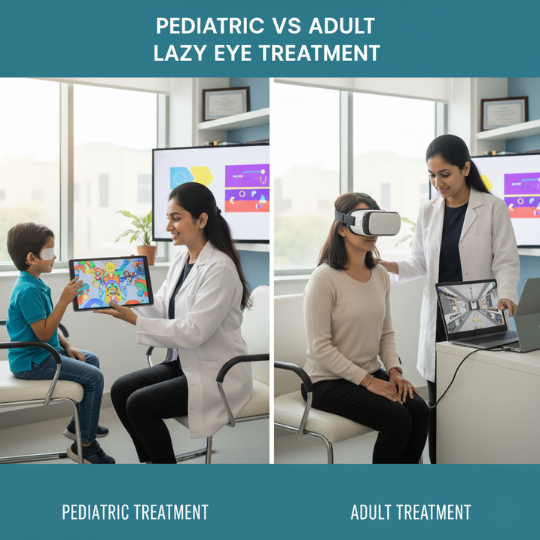
Children’s brains are more adaptable, allowing for faster recovery with patching or therapy. The earlier the intervention (preferably before age 7), the better the long-term outcome.
Managing Lazy Eye in Adults: Is It Too Late?
Although results are slower, adults can still benefit from therapy using advanced neuroplasticity-based methods, including digital vision training and optical correction.
Lifestyle Changes and Home Remedies That Support Recovery
Eye Exercises You Can Do at Home
- Pencil push-ups
- Focusing on near and far objects
- Reading with one eye covered
Nutritional Support for Better Eye Health
Include foods rich in:
- Omega-3 fatty acids (fish, flaxseed)
- Vitamin A (carrots, spinach)
- Lutein & Zeaxanthin (green vegetables)
Insurance Coverage and Government Schemes for Eye Care in India
Ayushman Bharat and Other Public Health Programs
Under Ayushman Bharat, eligible patients can get free or subsidized eye treatments, including surgeries and therapies.
Private Insurance Plans Covering Eye Treatments
Many insurers like Star Health and HDFC Ergo offer partial reimbursement for eye surgeries and treatments, depending on the policy terms.
Patient Success Stories and Testimonials
Real-Life Recovery Experiences from Indian Patients
Children treated at Aravind Eye Hospital showed an average 70% improvement in vision after 6 months of consistent therapy. Parents often report increased academic performance and confidence.
What to Expect During and After Treatment
Post-treatment, regular check-ups are essential. Most patients regain significant vision in the weaker eye within 6–12 months, depending on consistency.
Conclusion: The Future of Amblyopia Treatment in India
The future of lazy eye treatment in India looks promising, with digital innovation and government support driving accessibility and affordability. From traditional patch therapy to VR-based interventions, Indian ophthalmology has evolved to offer effective, patient-centered solutions for all age groups.
If detected early and treated consistently, amblyopia doesn’t have to be a lifelong condition. With India’s expanding eye care infrastructure, clearer vision is now within everyone’s reach.
FAQs on Lazy Eye Treatment Option in India
1. Can lazy eye be completely cured in India?
Yes, especially if diagnosed early. Indian hospitals offer world-class treatment comparable to global standards.
2. Is surgery necessary for lazy eye?
Not always. Surgery is recommended only when muscle misalignment is the main cause.
3. What is the success rate of lazy eye treatments in India?
Success rates range from 70% to 90%, depending on the age and treatment type.
4. Are there digital or online lazy eye therapy programs in India?
Yes, many clinics offer VR and digital vision therapy that can be done at home.
5. Is lazy eye treatment covered under health insurance?
Most insurance plans cover surgeries; other therapies may need out-of-pocket payment.
6. How long does it take to see improvement?
Children usually see results within 3 to 6 months, while adults may take longer.