
Introduction to Lasik Surgery for Astigmatism
LASIK surgery for astigmatism has changed the way people obtain clear vision without glasses. Astigmatism is a common type of refractive error that results from an irregularly shaped cornea or lens, which causes blurred or distorted vision at all distances. While glasses or contact lenses may provide some relief, they do not solve the problem at its root. This is where laser vision correction comes to the rescue. As of now, LASIK surgery for astigmatism is a highly safe, accurate, and effective option that changes the corneal shape with the help of a sophisticated laser. The top eye care facilities, like Vijayanethralaya Super Speciality Eye Hospital, have advanced diagnostic instruments and customized laser platforms to provide the patients with excellent visual results and quick recovery.
Understanding Astigmatism: Causes and Symptoms
Astigmatism occurs when the cornea or lens curves irregularly. Instead of forming a perfect sphere, it takes on an oval or rugby-ball shape. This uneven curvature prevents incoming light from focusing properly on the retina.
Typical Causes of Astigmatism
Hereditary traits Eye damage or surgery Development of the eye diseases such as keratoconus Uneven recovery after corneal injury
Symptoms You May Experience
Blurred or distorted vision Eye strain and headaches Difficulty seeing at night, squinting to focus When these symptoms disrupt everyday life, LASIK surgery for astigmatism serves as a dependable long-term solution.
What Is LASIK Surgery, and How Does It Work?
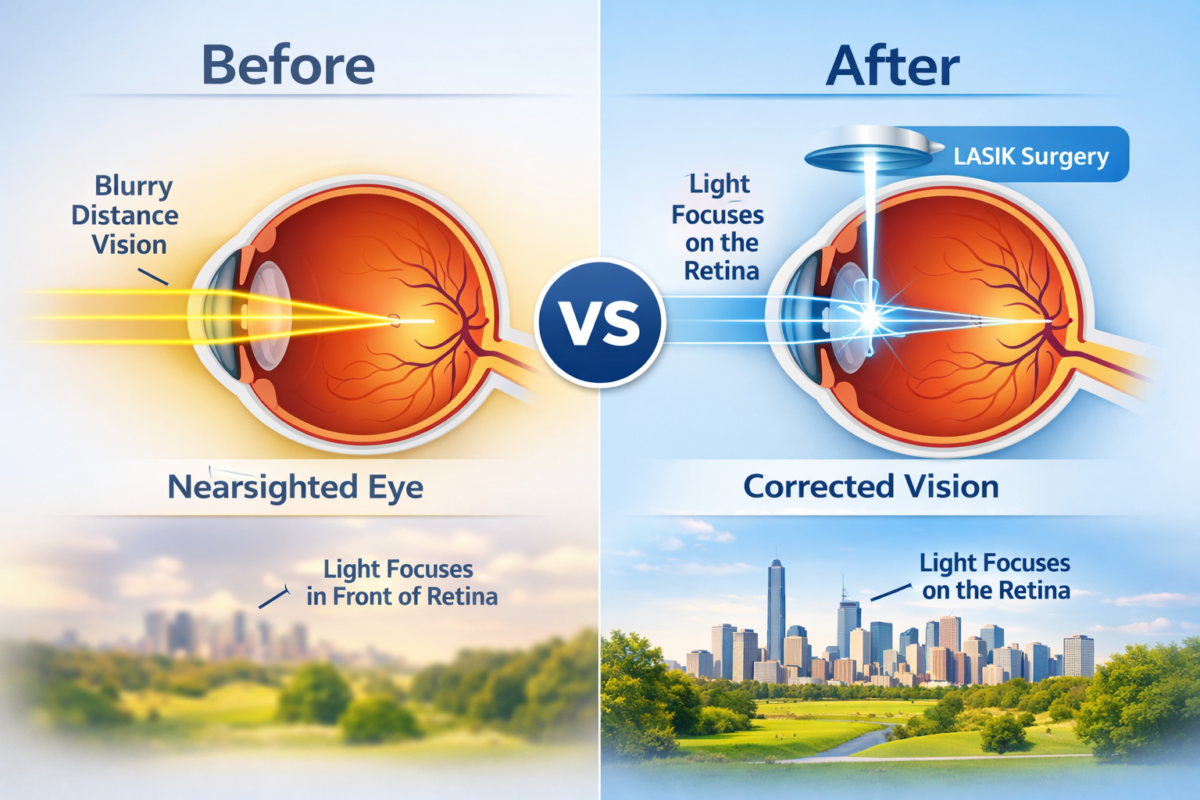
LASIK (Laser-Assisted In Situ Keratomileusis) is a refractive surgery that changes the shape of the cornea so that light can enter the eye properly.
How the Procedure Works
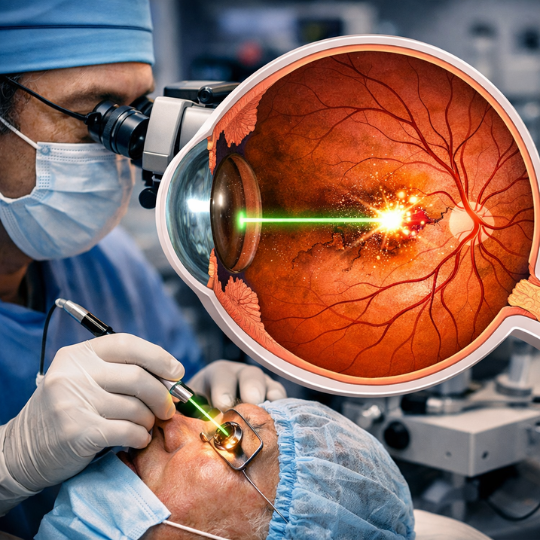
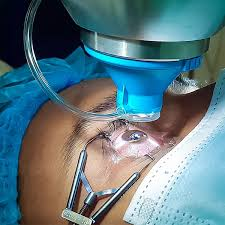
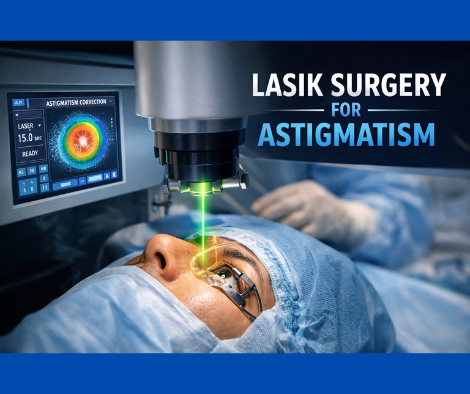
Surgeons use a femtosecond laser to create a thin corneal flap. An excimer laser then reshapes the corneal tissue. The surgeon naturally repositions the flap without using stitches. For astigmatism, the laser corrects the uneven curvature so light can focus sharply on the retina. Doctors usually complete LASIK surgery for astigmatism within 5–10 minutes for both eyes.
Types of Lasik Surgery for Astigmatism
An advanced eye hospital will provide you with the option of various laser methods depending on the anatomy of your eyes and the degree of your condition:
Conventional LASIK is suitable for mild to moderate astigmatism with stable corneas.
Wavefront-guided LASIK depends on detailed eye mapping to achieve the most accurate correction possible.
Topography, Guided LASIK is the best choice for the irregularity of the cornea and for the higher levels of astigmatism.
Who Is a Perfect Candidate for LASIK Astigmatism Surgery?
It is possible that you qualify to undergo such a procedure if:
You are at least 18 years old Your vision has been stable for a year at least. Your corneas are healthy and sufficiently thick You do not have any eye infections or severe dry eyes Patients with some medical conditions might have to follow different treatment routes, which a doctor can figure out during the consultation.
Advantages of Lasik Surgery for Astigmatism
A LASIK procedure to cure astigmatism has the following benefits:
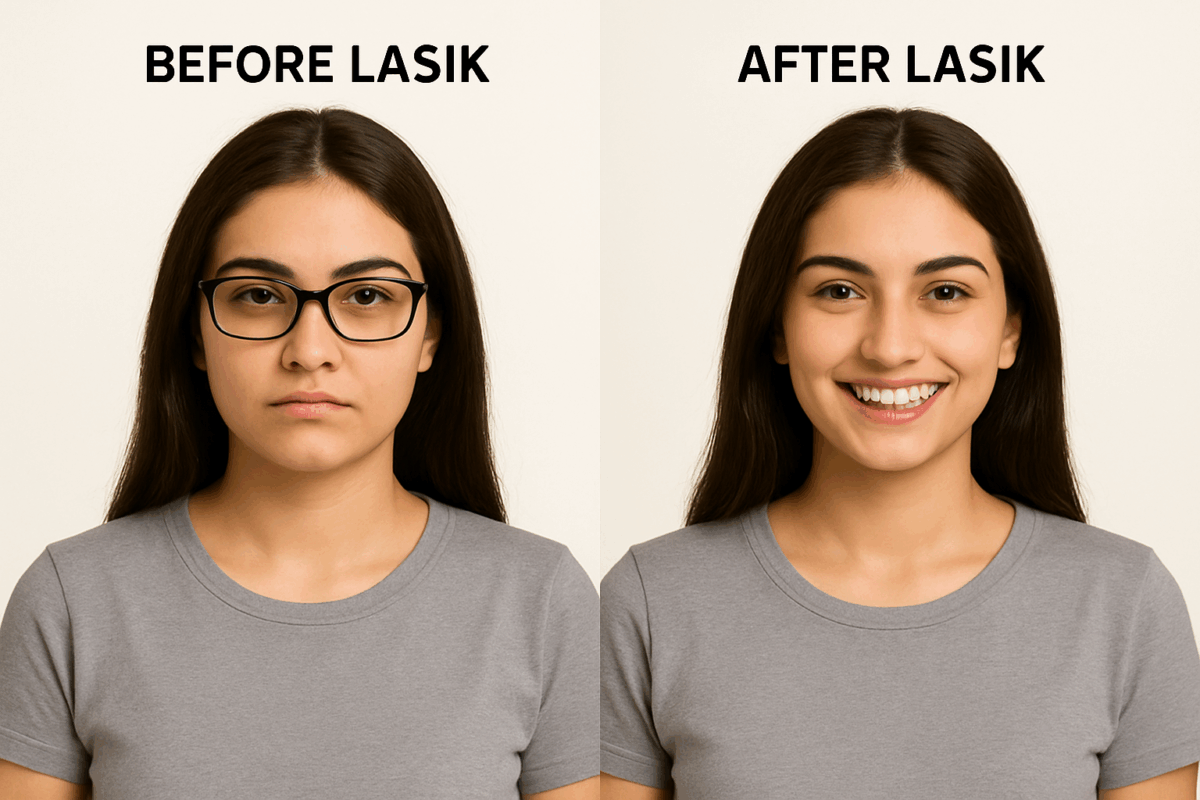
Vision as clear as without the use of glasses or contacts The intervention is fast, and the recovery happens quickly as well There is only little pain involved in the experience. The surgery success and satisfaction rates are very high. The medical results will last for a long time. Today, around the world, LASIK is one of the most common refractive surgeries, and this is because the majority of patients achieve an improvement in their vision within less than 24 hours.
There Are Few Steps in a Typical Lasik Operation
The more you know about the operation, the less you are likely to be nervous about it.
Preoperative evaluation: Eye scans and measurements in great detail
Preparation: Eye drops that numb the cornea are put
Laser adjustment: The correction takes less than one minute for each eye
Patients rest briefly after the procedure, and doctors discharge them within a very short time. Most patients report that LASIK surgery for astigmatism causes no pain, and surgeons perform the procedure on an outpatient basis.
Recovery is fast but needs proper attention:
Do not rub your eyes Apply the eye drops as prescribed regularly Protect your eyes with the eye shields when sleeping. Do not swim or apply makeup on your eyes for some weeks. Most of the people get back to their work within 1-2 days. Though Lasik surgery for astigmatism is very safe, it is a surgical procedure, and so,
It may have some minor risks.
These include temporary dry eyes Glare or halos at night Mild light sensitivity Under, and over, correction (very rare). The risk involved can be minimized by selecting an experienced surgeon and a well-known hospital.
Why Choose Vijayanethralaya Super Speciality Eye Hospital?
Vijayanethralaya Super Speciality Eye Hospital is a leader in providing the best quality care with the latest eye care technology. The hospital prioritizes complete patient satisfaction and delivers a unique combination of advanced laser technology, highly qualified ophthalmologists, and personalized patient care.
Key Advantages State-of-the-art diagnostic and laser platforms Tailored treatment planning and strict safety and hygiene measures Complete pre- and post-operative care. Patients trust the hospital and feel satisfied because it delivers reliable results and provides compassionate care.
Cost of LASIK Surgery for Astigmatism in Bangalore
The cost depends on:
- Technology used
- Degree of astigmatism
- Surgeon experience
- Diagnostic facilities
Approximate Price Range
- Standard LASIK: ₹25,000–₹40,000 per eye
- Blade-Free LASIK: ₹45,000 – ₹70,000 per eye
- Contoura Vision: ₹75,000 – ₹100,000 per eye
Many hospitals offer EMI options.
Can Astigmatism Come Back After LASIK?
In most cases, astigmatism correction is permanent. However:
- Natural aging changes may occur
- Rare cases may need enhancement surgery
Regular follow-ups help maintain long-term results.
Conclusion:
Is LASIK Surgery for Astigmatism Right for You? LASIK surgery for astigmatism has been shown to be a reliable, safe, and effective method of attaining clear, natural vision. It has very few side effects, a rapidly healing process, and its benefits are maintained for a long time. So, it keeps the quality of life of a very large number of people on the rise. Patients who go to a well-known center like Vijayanethralaya Super Speciality Eye Hospital are assured of world-class care, cutting-edge technology, and customized treatment plans. If you are tired of depending on glasses or contact lenses, it is quite possible that this up-to-date vision correction surgery is the answer that will solve your problem forever.
Frequently Asked Questions (FAQs)
1. Is LASIK surgery for astigmatism permanent? Yes, the correction will last for a very long time, and it is only natural that age-related changes will still take place.
2. Is the procedure painful? No, anesthetic eye drops are used to numb the eye during laser surgery.
3. How long does recovery take? Most patients would be able to see clearly within 2448 hours.
4. Can astigmatism return after LASIK? It is very unlikely that the condition will regress, in particular with current laser technology.
5. Is LASIK safe for high astigmatism? Yes, with advanced techniques, it is possible to treat moderate to high levels of astigmatism safely.
6. How do I know if I’m eligible? Eligibility for the procedure can only be determined after a thorough eye examination at Vijayanethralaya Super Speciality Eye Hospital.