

Introduction:
What is LASIK?
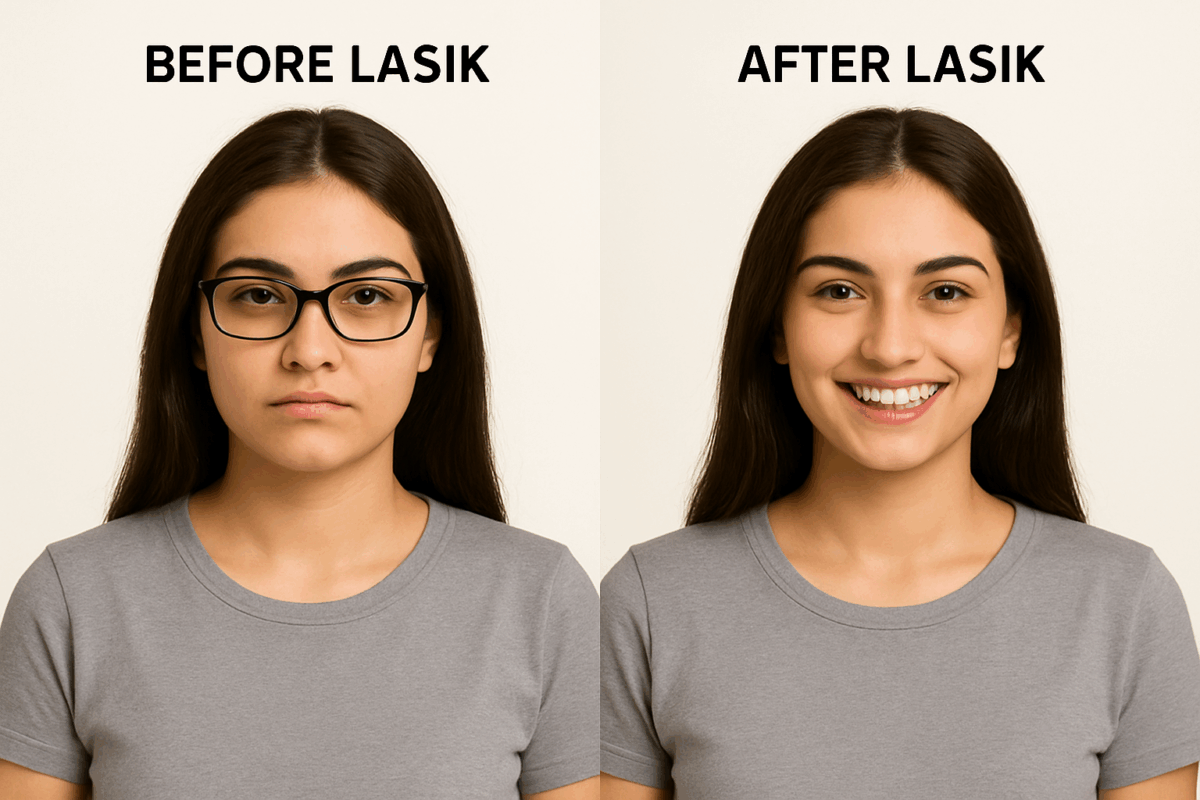
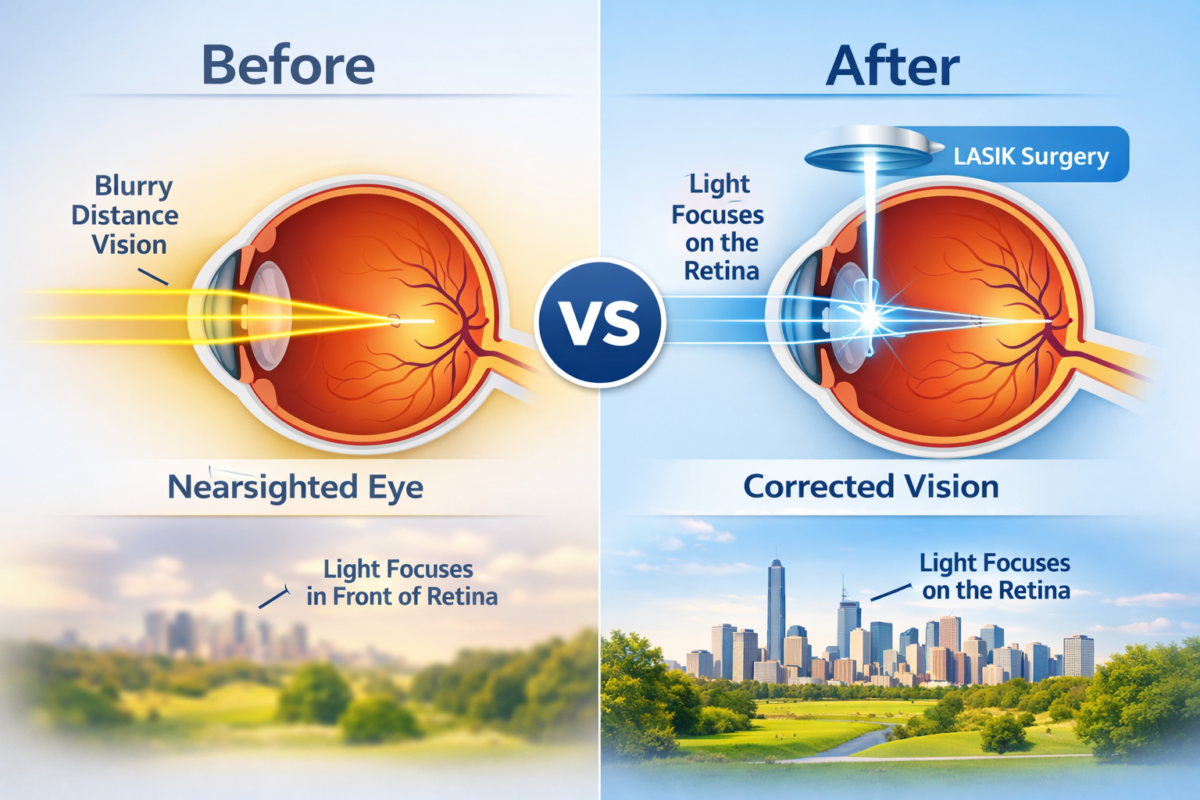
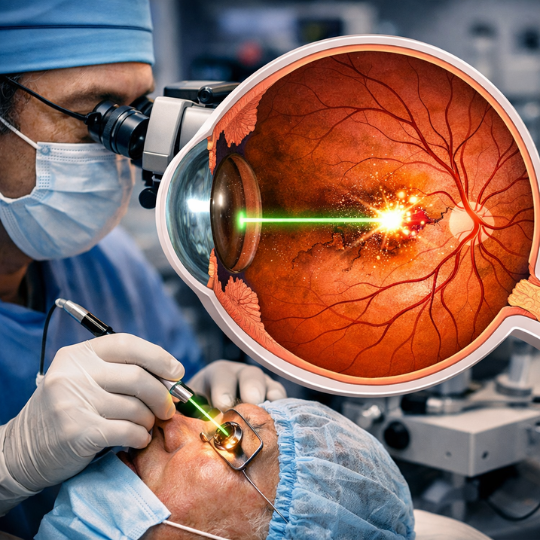
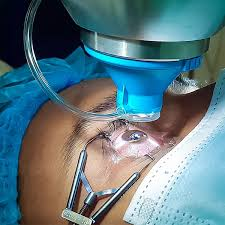
LASIK (Laser-Assisted In Situ Keratomileusis) is a popular laser eye surgery that reshapes the cornea to correct vision problems like nearsightedness (myopia), farsightedness (hyperopia), and astigmatism. It’s a quick outpatient procedure, often lasting less than 15 minutes per eye.
Millions of people undergo LASIK every year to live a glasses-free life—but many are unaware of what the healing process looks like. So before you schedule your appointment, let’s look at what you might experience—week by week.
Side Effects After LASIK: A Week-by-Week Breakdown
First 24 Hours After LASIK
This is when your eyes are most sensitive. Here’s what usually happens:
- Blurry or foggy vision: Normal, and often clears up within a few hours.
- Mild discomfort: Feels like sand in your eyes or dryness.
- Light sensitivity: Even indoor light might feel too bright.
- Watery or teary eyes: A common healing response.
Care tips:
- Sleep with protective eye shields.
- Avoid screens.
- Don’t rub your eyes under any condition.
- Use prescribed antibiotic and lubricating drops.
🧠 Pro tip: Many people take a nap immediately after surgery to speed up recovery.
Week 1: Adjusting Vision & Managing Initial Symptoms
This is the “fragile” phase of healing. While your vision is getting clearer, symptoms like
- Dry eyes
- Itchy or gritty feeling
- Glare and halos at night
- Fluctuating clarity in vision
…are all normal. These effects usually come and go during this first week.
Precautions to take:
- No eye makeup or cream near your eyes.
- Avoid swimming, hot tubs, or dusty environments.
- Wear UV-protective sunglasses when outside.
By the end of Week 1, most people notice a significant improvement in their vision—many reaching 20/20 or better.
Weeks 2 to 4: Getting Comfortable With Your New Vision
By now, your daily routine feels easier:
- Visual clarity stabilizes: You’ll notice consistent sharpness.
- Dryness improves: Artificial tears become less frequent.
- Night vision adjusts: Halos and starbursts reduce, especially in low-light areas.
For some, minor dryness or light sensitivity may persist, especially when staring at digital screens.
Helpful habits:
- Practice the 20-20-20 rule (every 20 minutes, look 20 feet away for 20 seconds).
- Stay hydrated and reduce caffeine (it dries out the eyes).
- Continue eye drops if recommended.
Months 2 to 3: Side Effects Fade for Most Patients
At this stage:
- Nighttime driving becomes easier
- Eyes feel more natural and less dry
- Your final vision result becomes clearer
Less than 10% of patients may still feel mild symptoms like dryness or nighttime glare, but for most, these are now minimal.
This is also when your doctor may do your final “vision check” to confirm success.
After 6 Months: Fully Recovered for Most People
By now, all temporary side effects should be gone. Your vision is sharp and stable.
However, if you’re still experiencing
- Persistent dry eye
- Visual disturbances
- Fluctuating vision
…it’s time for a detailed consultation. These issues can often be fixed with special treatments or enhancement procedures.
Common LASIK Side Effects Explained in Detail
Dry Eyes
Why it happens: LASIK affects the corneal nerves, which are connected to your tear glands.
Symptoms:
- Stinging or burning
- Redness
- Feeling like something is in your eye
Timeline:
- Starts: Within 24 hours
- Worst: During Week 1
- Fades: Within 1–3 months for most people
Tips to reduce:
- Use preservative-free artificial tears regularly.
- Avoid air-conditioning and dry rooms.
- Blink frequently during screen time.
Blurry or Fluctuating Vision
Why it happens: Your eyes are still healing and adjusting.
When to expect:
- Mostly in the first week.
- For some, it lingers up to 3 weeks.
If blurriness continues past 1 month, get re-evaluated.
Halos and Glares
You might see glowing rings around lights at night. These are most noticeable while driving in low-light areas.
Causes:
- Swelling of the cornea during healing.
- Temporary mismatches between corneal shape and light refraction.
Improvement:
- Most people see reduction within 1–3 months.
- Night vision filters/glasses can help during this period.
Light Sensitivity
Some patients feel like their eyes are “too bright,” especially in sunlight or indoor fluorescent lights.
Management:
- Wear polarized sunglasses outdoors.
- Reduce screen brightness and increase font size on devices.
Itching, Redness, and Discomfort
Mild irritation is common. Your body’s healing mechanism is working.
Do NOT rub your eyes!
This can dislodge the healing corneal flap and lead to complications.
Rare But Serious LASIK Side Effects
Regression of Vision
In 5–10% of cases, vision slightly worsens after a few years.
Fix: LASIK enhancement surgery or switching to glasses for minor corrections.
Chronic Dry Eye
A small percentage of patients experience dryness that lasts more than 6 months.
Treatments include:
- Punctal plugs
- PRP drops
- Lifestyle modifications
Flap Complications
If the flap created during LASIK doesn’t heal properly, you might feel discomfort, vision distortion, or even pain.
Prevent by:
- Not touching or rubbing eyes
- Using protective eye shields when sleeping
- Following all post-op instructions
Infections or Inflammation
Very rare (less than 1%) but serious. Can lead to vision loss if not treated quickly.
Watch for:
- Sudden pain
- Eye discharge
- Rapid vision loss
Who’s More at Risk for Side Effects?
- People over 40: Due to aging eyes and dry eye risks.
- Pregnant or breastfeeding women: Hormonal changes affect tear production.
- People with autoimmune diseases: Healing may be slower or more complicated.
- Smokers: Healing is slower; infection risk is higher.
How to Reduce LASIK Side Effects
Before Surgery
- Choose a reputable, experienced surgeon.
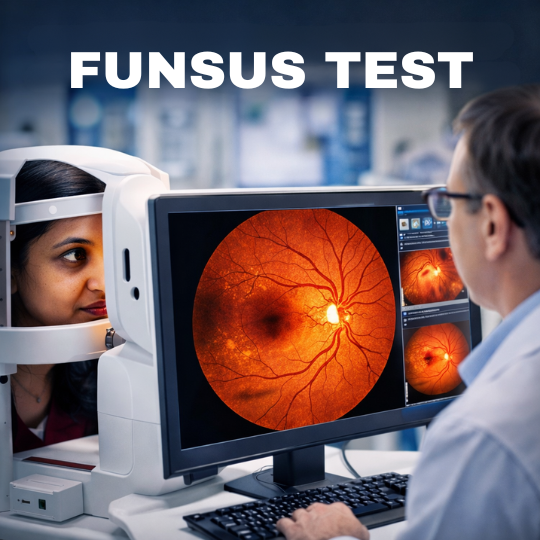
- Get a complete eye health screening.
- Share all medications and health history.
After Surgery
- Rest for at least 6 hours post-op.
- Use every prescribed drop correctly.
- Avoid makeup, contact sports, or dirty environments.
Lifestyle Tips
- Use a humidifier, especially at night.
- Limit caffeine.
- Stay off screens during recovery days.
- Don’t sleep with your face pressed against a pillow.
LASIK vs SMILE vs PRK: Which Is Better for Side Effects?
| Surgery Type | Dry Eye Risk | Night Glare | Flap Involved | Recovery Time |
|---|---|---|---|---|
| LASIK | Moderate | Common in early weeks | Yes | Fast |
| SMILE | Lower | Less common | No | Fast |
| PRK | Slightly higher | Less glare | No (surface reshaped) | Slower |
If dry eye is a major concern, SMILE might be a better option for you.
Is LASIK Still Worth It Despite the Side Effects?
Realistic Expectations
LASIK isn’t a miracle. But for many, it’s life-changing—if you’re prepared for the possibility of side effects.
Cost vs. Long-Term Vision Benefits
When people think about LASIK, one of the first questions that pops up is, “Is it worth the money?” Let’s break it down.
Upfront Cost of LASIK
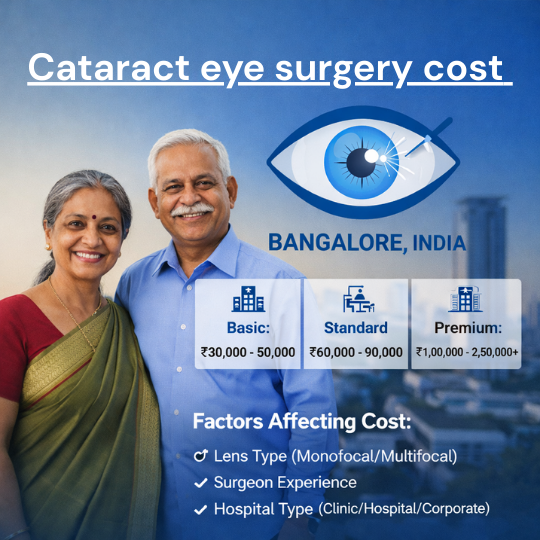
LASIK isn’t cheap. In India, the price ranges from ₹35,000 to ₹100,000 per eye, depending on the technology, surgeon’s experience, and hospital. That might feel like a big expense all at once, especially when compared to a pair of glasses or contact lenses.
But here’s the bigger picture…
Long-Term Savings
If you’ve been wearing glasses or contacts for years, you know how the costs add up:
- New spectacles every 1–2 years
- Prescription sunglasses
- Monthly or daily disposable contact lenses
- Contact lens solutions and accessories
- Eye checkups
All this can cost ₹10,000–₹25,000 annually, sometimes more. Over 10 years, that’s ₹1,00,000–₹2,50,000—more than the cost of LASIK.
Quality of Life Improvement
Sure, saving money is great—but the real win? Freedom.
- No more foggy glasses in the rain or while cooking
- No struggling with contacts during travel or emergencies
- Waking up and seeing clearly without searching for glasses
- Playing sports, swimming, and working out without limitations
These aren’t just conveniences—they’re lifestyle upgrades that many find priceless.
LASIK is a One-Time Investment
Unlike glasses or lenses that are recurring expenses, LASIK is a one-time procedure with results that can last for decades (sometimes for life). You might need an enhancement later in life, but many patients enjoy stable vision for years without additional costs.
When Should You Call the Doctor?
- Eye pain that doesn’t improve
- Sudden vision loss or blurriness
- Redness with discharge
- Light flashes or floaters
Final Thoughts: Is LASIK Worth the Side Effects?
In most cases, absolutely yes. Over 95% of LASIK patients report satisfaction with their results. Side effects are often mild and temporary. But the key is being informed, prepared, and proactive.
❓FAQs
1. Can side effects be completely avoided?
Not entirely, but with good aftercare, you can minimize them significantly.
2. When is the best time to get LASIK?
When your eye prescription has been stable for at least a year and you’re not pregnant or breastfeeding.
3. Will I ever need glasses again?
Possibly for reading after age 40 due to natural eye aging (presbyopia).
4. Is LASIK covered by insurance?
Typically no—it’s considered elective surgery. But many clinics offer EMI or zero-cost financing.
5. Can I exercise after LASIK?
Avoid heavy exercise and sweat in your eyes for the first week. Resume light workouts after 7 days with care.