
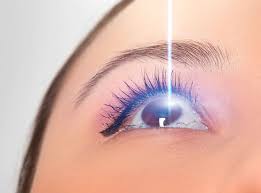
Laser Eye Treatment: Everything You Need to Know Before You Decide
Imagine waking up in the morning and seeing your alarm clock clearly without fumbling for your glasses. No more contact lenses drying out your eyes. No more foggy lenses when you step into a warm room. That’s the promise of laser eye treatment—a modern medical solution that has transformed millions of lives worldwide. Laser eye treatment, also known as laser vision correction, is designed to correct refractive errors like nearsightedness (myopia), farsightedness (hyperopia), and astigmatism.
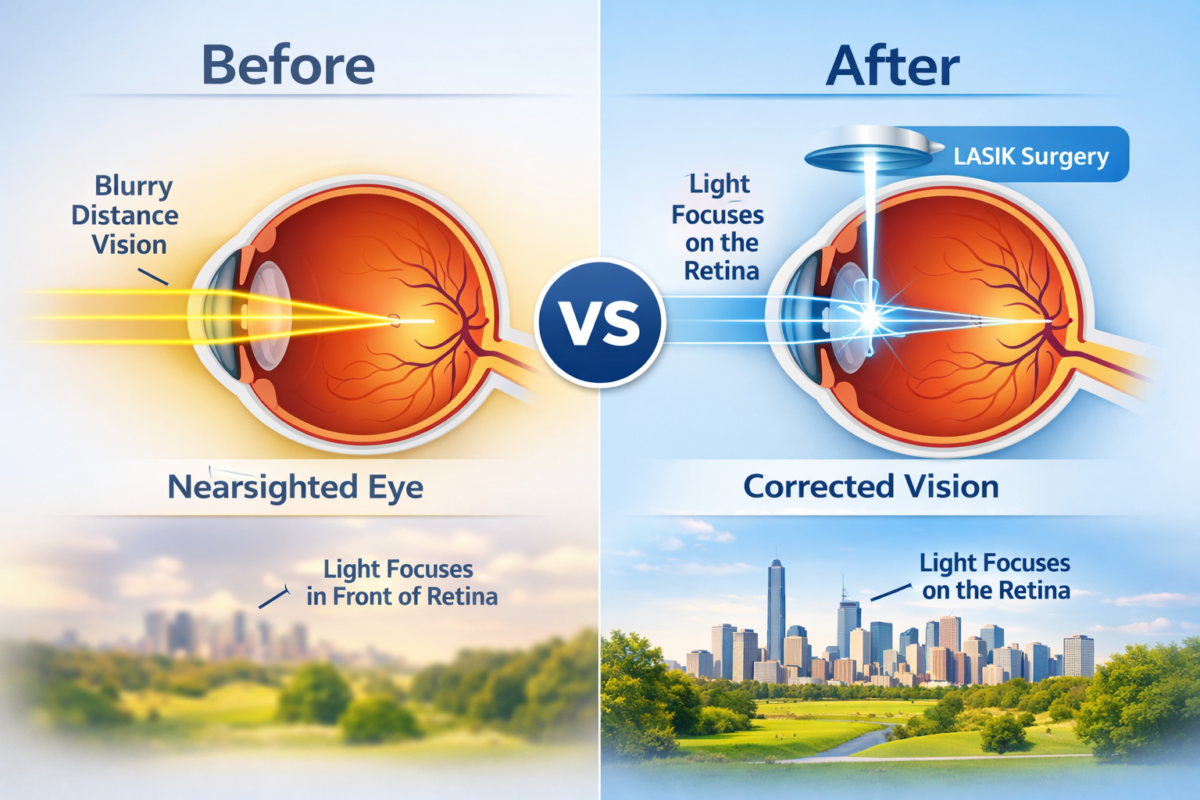
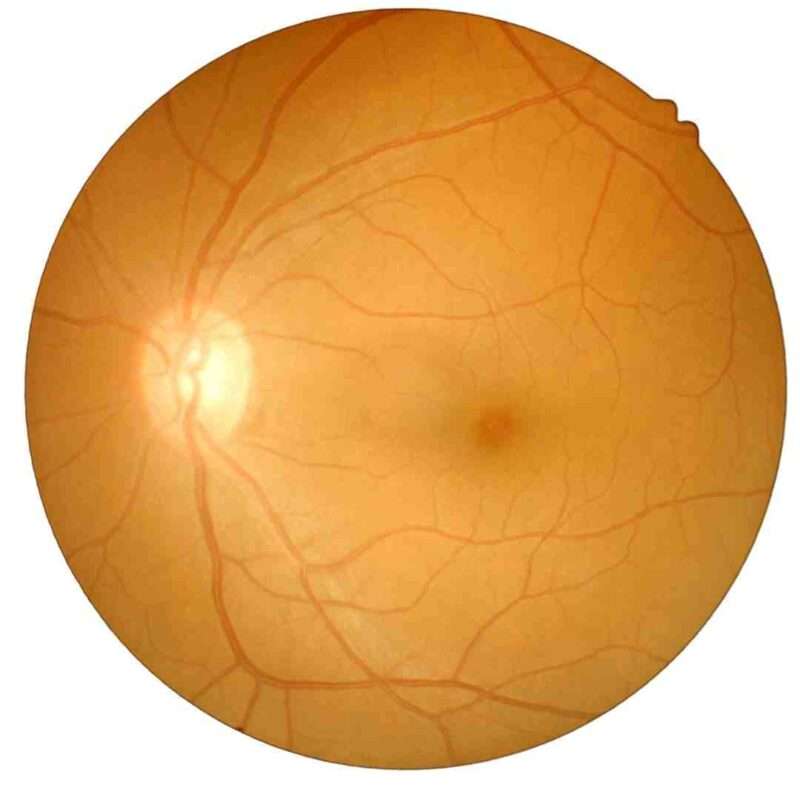
It reshapes the cornea, the clear front part of your eye, so light entering your eye focuses on the retina. When that focus is accurate, vision becomes crisp and sharp. But here’s the thing: while laser eye surgery sounds almost magical, it’s still a medical procedure. And like any medical decision, it requires knowledge, preparation, and realistic expectations. Is it safe? Does it hurt? How long does it last? And most importantly—is it right for you? In this comprehensive guide, we’ll walk through every detail—from how laser eye treatment works to recovery, risks, costs, and long-term outcomes. By the end, you’ll have a clear understanding of whether this life-changing procedure aligns with your needs and lifestyle. Let’s dive in.
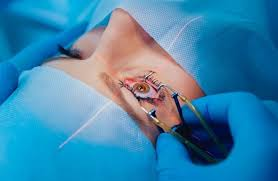
What Is Laser Eye Treatment?
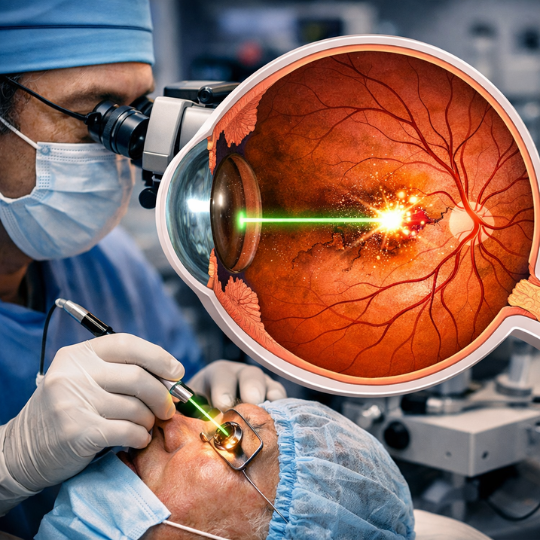
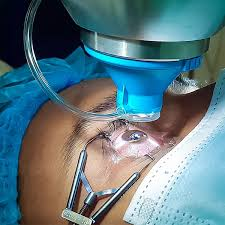
Laser eye treatment is a precise surgery. It reshapes the cornea, so light focuses on the retina. This reduces blurry vision. Like adjusting a camera lens, it corrects how your eye bends light. The procedure usually takes under 15 minutes per eye. It is done while you are awake. Numbing drops are used. It reshapes tiny layers of the cornea. It works with your natural eye structure, which is why it has become so popular.
What makes laser eye treatment particularly impressive is its precision. Modern lasers can track even the smallest eye movements, adjusting in real-time during surgery. The accuracy is measured in microns—far thinner than a human hair. This is not a one-size-fits-all solution. We tailor eye measurements for each patient using advanced mapping technology. We design a treatment plan made specifically for your eyes.
In short, laser eye treatment is about reshaping, refocusing, and restoring clarity.
The Science Behind Laser Vision Correction
At its core, laser eye treatment corrects refractive errors. These errors occur when light doesn’t bend correctly as it enters your eye.
There are three main types:
- Myopia (Nearsightedness): You see close objects clearly, but distant objects appear blurry.
- Hyperopia (Farsightedness): You see distant objects clearly but struggle with close-up tasks.
- Astigmatism: Vision is distorted at all distances due to an irregularly shaped cornea.
The cornea is responsible for most of your eye’s focusing power. When it’s too steep, too flat, or uneven, vision problems occur.Laser technology works by:
- Removing microscopic amounts of corneal tissue.
- Changing its curvature.
- Allowing light to focus directly on the retina.
The excimer laser, often used in LASIK and PRK, uses ultraviolet light to remove tissue with high precision. It does not produce heat or damage nearby tissue.
It’s almost like sculpting. The laser reshapes the cornea layer by layer, based on a digital map of your eye. The process is painless because numbing drops block nerve signals.
The result? Sharper, clearer vision—often within hours or days.
Types of Laser Eye Treatment
Not all laser eye surgeries are the same. There are three primary types, and each has its own benefits and considerations.
LASIK (Laser-Assisted In Situ Keratomileusis)
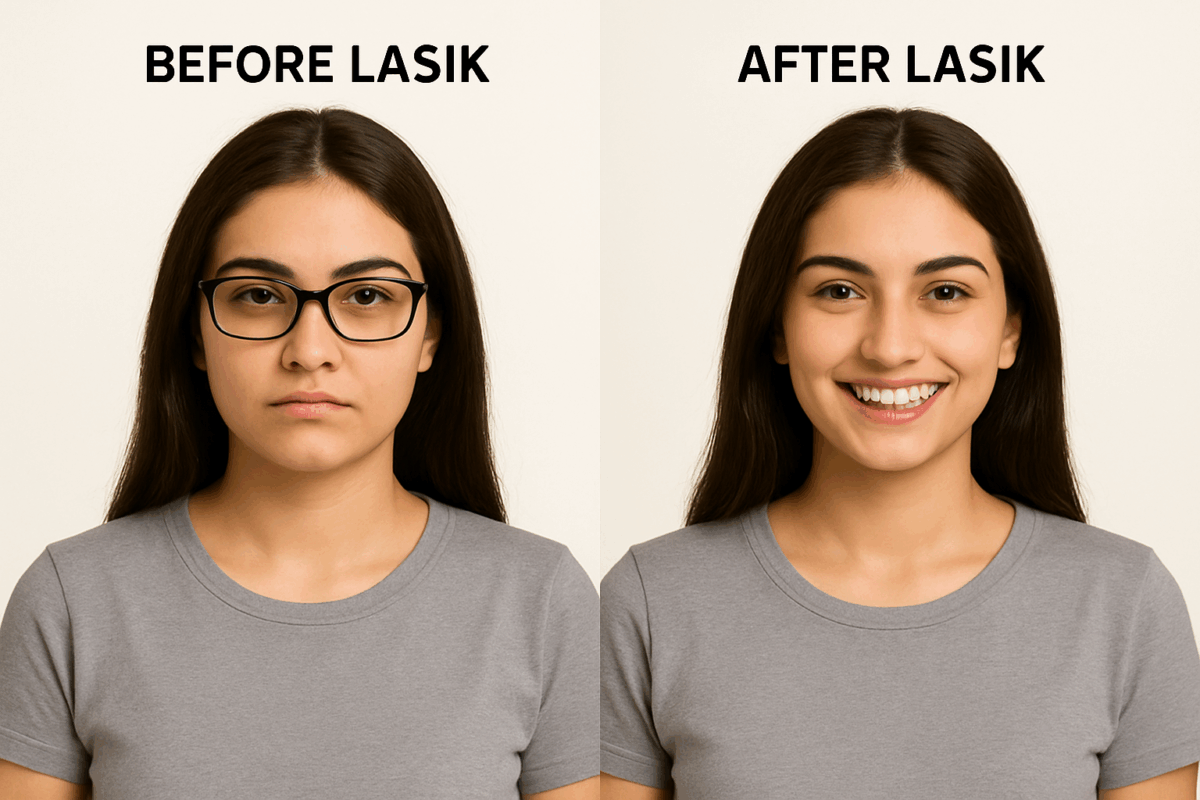
LASIK is the most well-known and widely performed laser eye surgery. It involves creating a thin flap on the cornea. A laser reshapes the tissue under it. Then the flap is put back in place.
Why do people love LASIK?
- Quick procedure (10–15 minutes)
- Minimal discomfort
- Rapid recovery
- Noticeable vision improvement within 24 hours
The flap acts like a natural bandage, helping the eye heal faster. Most patients return to normal activities within a day or two.
However, LASIK may not be suitable for people with thin corneas or certain medical conditions.
PRK (Photorefractive Keratectomy)
PRK was developed before LASIK and remains a reliable option. Instead of creating a flap, the surgeon removes the outer layer of the cornea entirely before reshaping it.
This method is ideal for:
- People with thin corneas
- Individuals at risk of eye trauma (e.g., athletes, military personnel)
Compared to LASIK, patients typically take several days to a week to recover, but they achieve equally effective long-term results.
SMILE (Small Incision Lenticule Extraction)
SMILE is a newer, minimally invasive technique. Instead of creating a flap, a small piece of corneal tissue (called a lenticule) is removed through a tiny incision.
Benefits include:
- Smaller incision
- Less dryness post-surgery
- Faster nerve recovery
SMILE is primarily used to treat myopia and mild astigmatism.
Key Differences Between LASIK, PRK, and SMILE
| Feature | LASIK | PRK | SMILE |
|---|---|---|---|
| Flap Created | Yes | No | No |
| Recovery Speed | Fast | Moderate | Fast |
| Ideal for Thin Corneas | No | Yes | Sometimes |
| Post-Surgery Discomfort | Minimal | Moderate | Minimal |
Each procedure has its place. The right choice depends on your eye structure, lifestyle, and surgeon’s recommendation.
Author Details:
Dr. Sushruth Appajigowda holds a prominent position as a cornea, cataract, glaucoma, and LASIK surgeon in Bangalore. He serves as the chief cataract and refractive surgeon at Vijaya Nethralaya Eye Hospital, Nagarbhavi, Bangalore. Renowned as one of the finest LASIK surgeons nationwide, he brings with him over 12+ years of experience across multiple LASIK platforms, including ZEISS, ALCON, SCHWIND, AMO, and Bausch and Lomb. Having successfully conducted over 5000 LASIK procedures, Dr. Sushruth holds the title of a Certified Refractive Surgeon and a Fellow of the All India Collegium of Ophthalmology. Furthermore, he stands as a distinguished speaker at various national and international forums, using his expertise to guide you in selecting the most suitable procedure based on your health requirements.