
Introduction
Diabetes is more than just a blood sugar problem—it affects almost every organ in the body, including the eyes. High blood sugar levels over time can damage delicate blood vessels, nerves, and tissues in the eye, leading to serious vision problems and even blindness if not managed properly. Understanding these complications is the first step toward prevention and early treatment.
How Diabetes Affects the Eyes
When blood sugar levels stay high for long periods, it can:
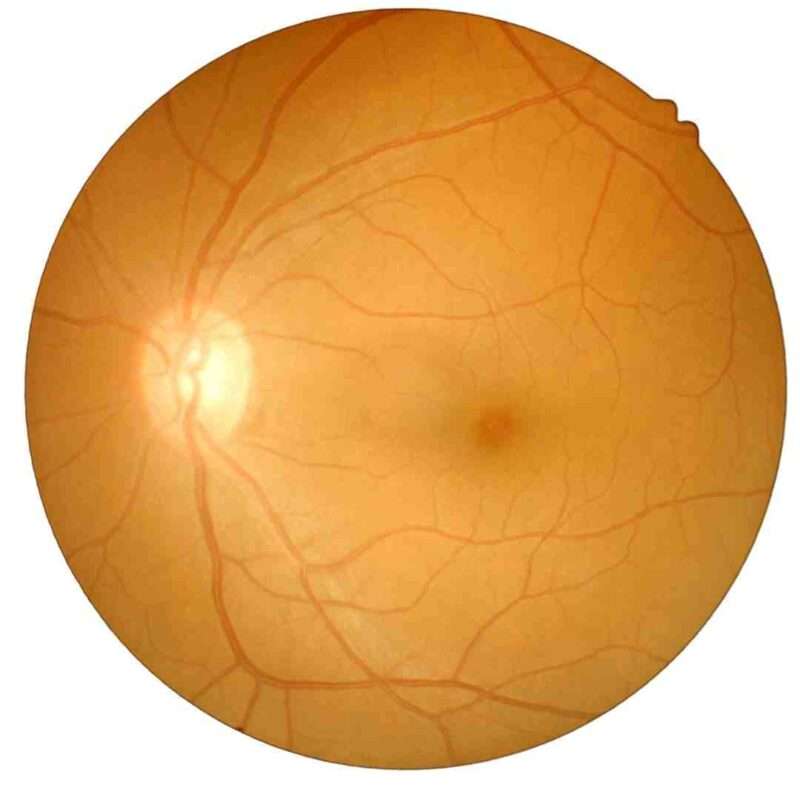
- Damage the tiny blood vessels in the retina (the light-sensitive tissue at the back of the eye).
- Increase fluid buildup, causing swelling and blurry vision.
- Raise the risk of cataracts and glaucoma.
Over time, these issues can combine to threaten vision.

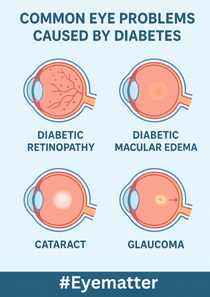
Common Eye Problems Caused by Diabetes
1. Diabetic Retinopathy
- The most common diabetes-related eye disease.
- Occurs when high blood sugar damages the tiny blood vessels in the retina.
- Early signs include floaters, blurry vision, or difficulty seeing at night.
- Advanced stages may cause bleeding inside the eye and even retinal detachment.
👉 Regular eye check-ups can detect retinopathy early, often before major vision loss occurs.
2. Diabetic Macular Edema (DME)
- A complication of retinopathy.
- The macula (responsible for sharp central vision) swells due to fluid leakage.
- Leads to distorted, wavy, or blurred vision.
- If untreated, it can severely affect the ability to read, drive, or recognize faces.
3. Cataracts
- Clouding of the eye’s natural lens.
- Diabetics are more likely to develop cataracts at a younger age.
- Symptoms: blurry or cloudy vision, sensitivity to light, and faded colors.
- Cataract surgery can restore vision effectively.
4. Glaucoma
- A group of eye diseases that damage the optic nerve, often due to increased eye pressure.
- People with diabetes are at double the risk of developing glaucoma.
- Early symptoms are usually silent, but gradual vision loss occurs over time.
- Regular eye exams can detect glaucoma early, preventing blindness.
5. Dry Eye Syndrome
- Diabetes can reduce tear production and affect eye surface nerves.
- Leads to burning, redness, irritation, and discomfort.
- If untreated, it can worsen eye infections or corneal damage.
Warning Signs You Shouldn’t Ignore
See an eye doctor immediately if you notice:
- Blurred or fluctuating vision
- Dark spots or floaters
- Difficulty seeing at night
- Loss of central or side vision
- Eye pain, redness, or sudden vision loss
How to Protect Your Eyes with Diabetes
✅ Control Blood Sugar – Stable glucose levels reduce the risk of eye damage.
✅ Manage Blood Pressure & Cholesterol – Helps keep blood vessels healthy.
✅ Quit Smoking – Smoking speeds up vision loss.
✅ Annual Dilated Eye Exam – Detects early changes before symptoms appear.
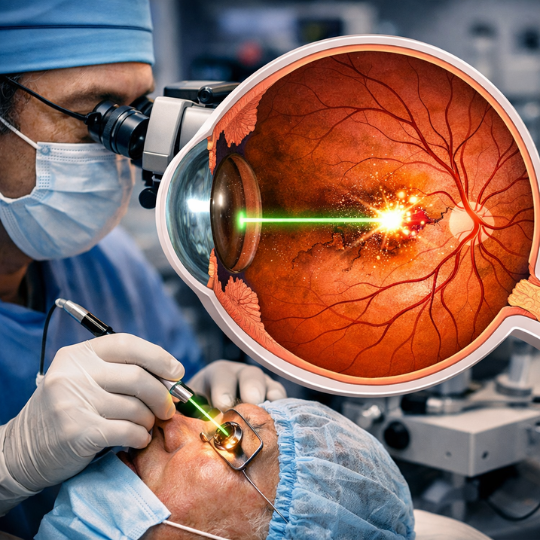
✅ Follow Treatment Plans – Laser therapy, injections, or surgery may be needed depending on the condition.
Conclusion
Diabetes can quietly damage the eyes long before symptoms appear. The good news is that most diabetes-related eye diseases are preventable or treatable when caught early. With proper blood sugar control, healthy lifestyle choices, and regular eye check-ups, you can protect your vision and enjoy a clear view of life for years to come.