

Introduction:
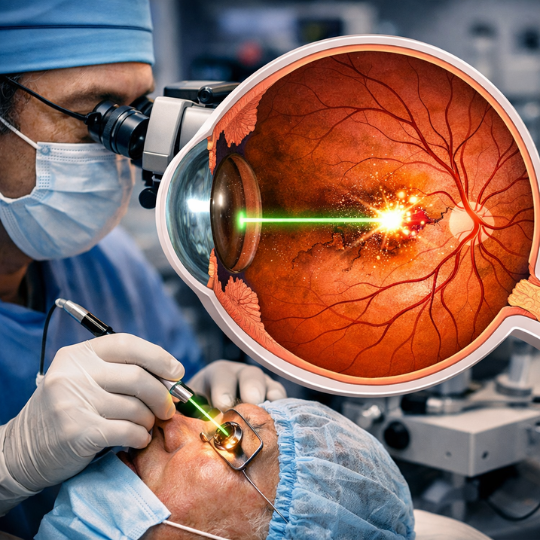
The days of fumbling for glasses on the nightstand or dealing with the persistent itch of contact lenses are increasingly becoming a thing of the past. Corrective eye surgery, also known as refractive surgery, has undergone a technological revolution. In 2026, these procedures are more precise, safer, and accessible to more people than ever before.
1. What is Corrective Eye Surgery?
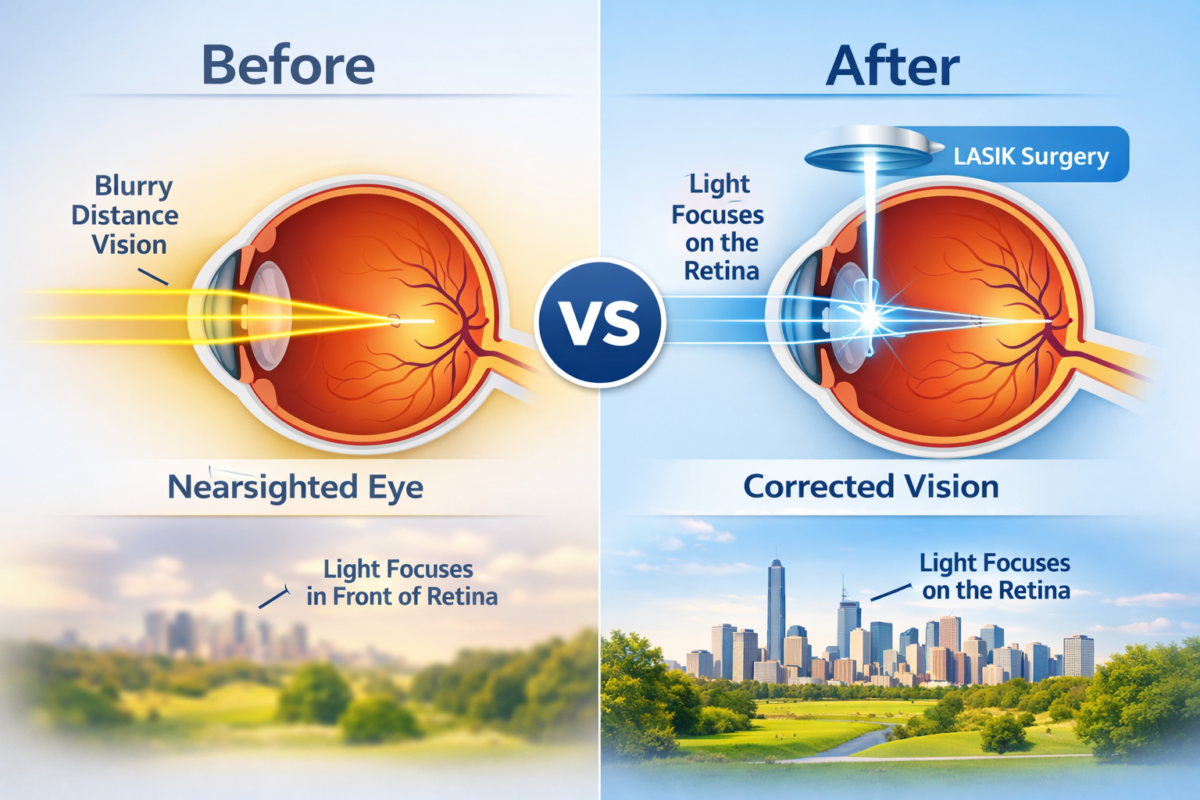
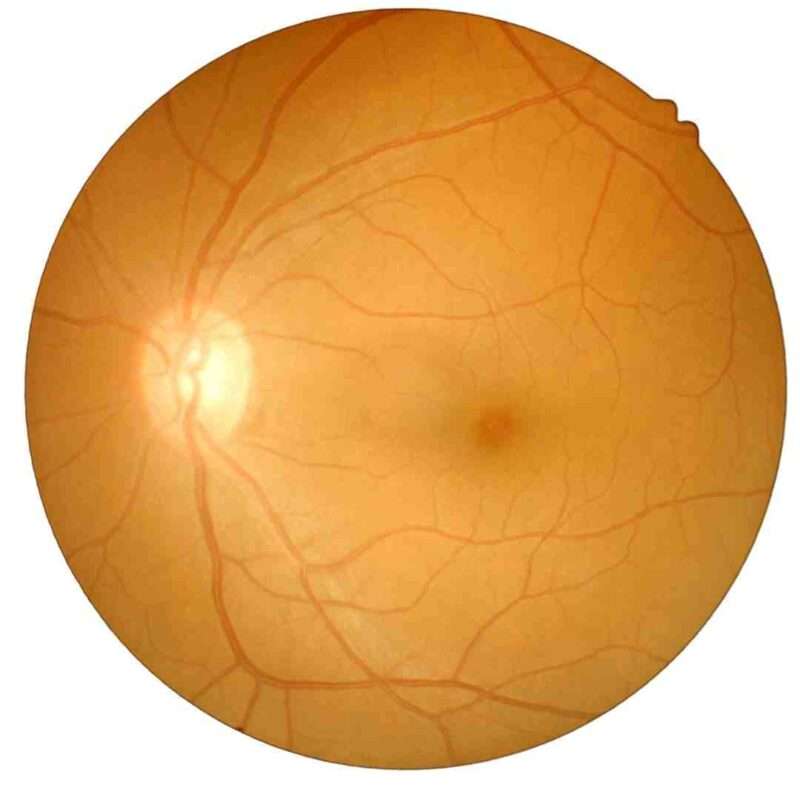
Corrective eye surgery is a group of procedures designed to fix “refractive errors”—issues with how your eye focuses light. When the shape of your eye, cornea, or lens isn’t perfect, light doesn’t land directly on the retina, resulting in blurred vision.
The surgery works by either reshaping the cornea (the clear front window of the eye) or implanting/replacing the lens to ensure light focuses exactly where it should.

Common Conditions Treated:
- Myopia (Nearsightedness): Difficulty seeing things far away.
- Hyperopia (Farsightedness): Difficulty seeing things up close.
- Astigmatism: Distorted vision at all distances due to an irregular corneal shape.
- Presbyopia: Age-related loss of near-focusing ability (often requiring reading glasses).
2. Top Procedures in 2025
While LASIK remains the most “famous” name, it is now part of a trio of elite laser treatments, alongside lens-based alternatives.
LASIK (Laser-Assisted In Situ Keratomileusis)
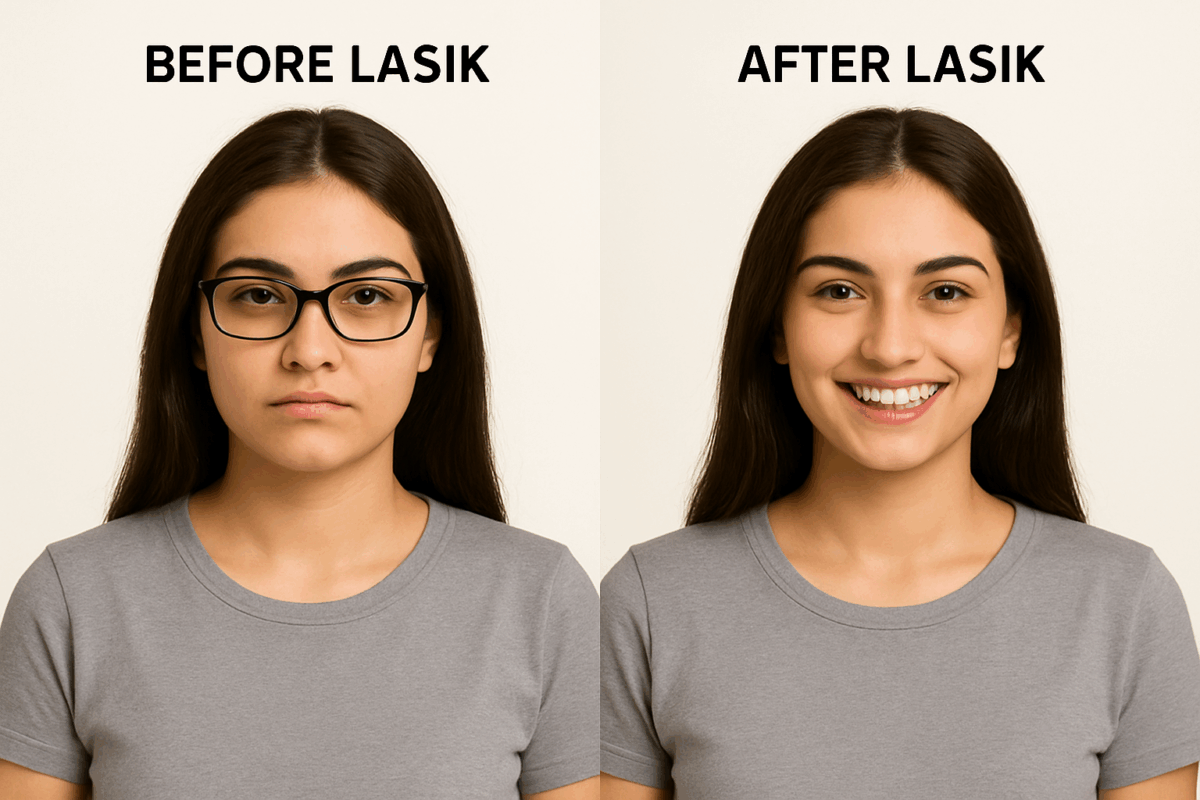
The gold standard for speed and comfort. A surgeon creates a thin “flap” on the cornea, uses a laser to reshape the tissue underneath, and then smooths the flap back down.
- Best for: Most prescriptions; people wanting the fastest recovery (often 24 hours).
SMILE (Small Incision Lenticule Extraction)
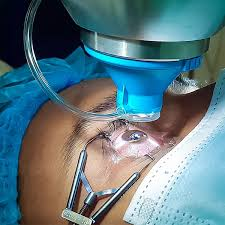
The “minimally invasive” choice. Instead of a flap, a tiny laser creates a small disc of tissue (lenticule) inside the cornea, which is removed through a microscopic incision.
- Best for: Patients with dry eyes or those in contact sports (no flap means no risk of flap injury).
PRK (Photorefractive Keratectomy)
The original laser surgery. The surgeon removes the very top layer of the cornea (the epithelium) and then reshapes the surface. The layer grows back naturally over a few days.
- Best for: People with thin corneas who aren’t eligible for LASIK.
EVO ICL (Implantable Collamer Lens)
Instead of changing the eye’s shape, a tiny, biocompatible lens is inserted inside the eye, behind the iris.
- Best for: Extreme nearsightedness or patients who want a “reversible” option.
3. Benefits and Risks
The Pros
- Visual Freedom: Over 90% of patients achieve 20/20 vision or better.
- Cost Savings: While the upfront cost is high, you save thousands over a lifetime on frames, lenses, and solutions.
- Safety: Modern lasers use AI and 7D eye-tracking to adjust to microscopic eye movements in real-time.
The Cons & Risks
- Dry Eyes: A common temporary side effect while nerves heal.
- Night Vision Issues: Some may see “halos” or glare around lights at night initially.
- Under/Over-Correction: Rarely, the eye may heal in a way that requires a minor “touch-up” procedure.
4. Are You a Candidate?
Not everyone is a fit for surgery. Typically, you are a good candidate if:
- You are 21 or older (to ensure your prescription has stabilized).
- Your prescription hasn’t changed significantly in 12 months.
- Your eyes are generally healthy (no active infections or severe glaucoma).
- You are not currently pregnant or nursing (hormones can temporarily change your vision).
5. Recovery: What to Expect
Most modern procedures are outpatient and take less than 15 minutes per eye.
- Day 1: Vision is usually “functional” but might feel like looking through a foggy window. You’ll need someone to drive you home.
- Week 1: You’ll use medicated drops to prevent infection and keep the eyes lubricated. Most people return to work within 48 hours.
- Month 1: Vision stabilizes completely. You’ll likely have a final check-up to confirm your new 20/20 status.