

Astigmatism treatment has transformed dramatically over the years. If you’ve ever noticed blurry or distorted vision at all distances, headaches after reading, or difficulty seeing clearly at night, you may be dealing with astigmatism. The good news? Astigmatism treatment is not only effective but also widely accessible today.
In this comprehensive guide, we’ll explore everything you need to know about astigmatism treatment—from basic corrective lenses to advanced surgical procedures—explained in a professional yet easy-to-understand way.
What is it? Understanding the Condition
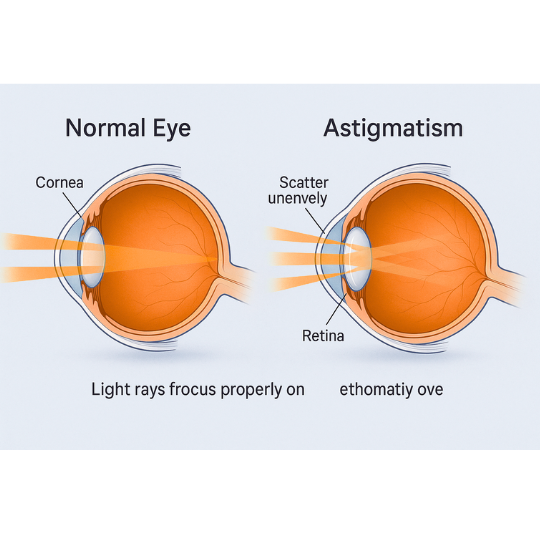
Astigmatism is a common refractive error of the eye. It occurs when the cornea (the clear front surface of the eye) or the lens inside the eye has an irregular shape. Instead of being perfectly round like a basketball, it’s shaped more like a football.
Because of this uneven curvature:
- Light entering the eye doesn’t focus properly.
- Images appear blurred or stretched.
- Vision can be distorted both near and far.
Astigmatism can occur alone or alongside nearsightedness (myopia) or farsightedness (hyperopia). It affects both children and adults, and in most cases, it is manageable with proper treatment.
Common Symptoms That Signal You Need Astigmatism Treatment
Many people live with mild astigmatism without realizing it. However, moderate to severe cases often produce noticeable symptoms:
- Blurred or distorted vision
- Eye strain
- Frequent headaches
- Squinting to see clearly
- Difficulty with night vision
- Double vision in severe cases
If these symptoms sound familiar, an eye exam with an optometrist or ophthalmologist can confirm the diagnosis.
What Causes Astigmatism?
Astigmatism is usually present from birth, but it can also develop due to:
- Genetics (family history)
- Eye injury
- Eye surgery
- Corneal conditions such as keratoconus
Reading in dim light or sitting too close to the TV does not cause it—those are common myths in most cases.
Astigmatism Treatment Options Explained
Let’s dive into the most effective astigmatism treatment solutions available today.
1. Eyeglasses: The Simplest Astigmatism Treatment
Eyeglasses are often the first line of astigmatism treatment. Special cylindrical lenses compensate for the uneven curvature of the cornea.
How It Works:
- Lenses bend light properly.
- Vision becomes clear and focused.
- Headaches and eye strain are reduced.
Benefits:
- Non-invasive
- Affordable
- Safe for all ages
For children and individuals with mild to moderate astigmatism, glasses remain a reliable solution.
2. Contact Lenses for Astigmatism
Eye care professionals prescribe specially designed toric contact lenses to correct the uneven corneal curvature that causes astigmatism.
Types of Contact Lenses:
- Soft toric lenses
- Rigid gas permeable (RGP) lenses
- Hybrid lenses
- Scleral lenses (for severe cases)
Why Choose Contacts?
- Wider field of vision
- No frames blocking peripheral view
- Ideal for sports and active lifestyles
Proper fitting by an eye specialist is crucial for comfort and effectiveness.
3. Orthokeratology (Ortho-K): Overnight Vision Correction
Orthokeratology involves wearing specially designed rigid lenses overnight. These lenses gently reshape the cornea while you sleep.
What Happens?
- The cornea reshapes temporarily.
- You wake up with clearer vision.
- No need for glasses during the day.
This method is often used in children and young adults and may help slow myopia progression.
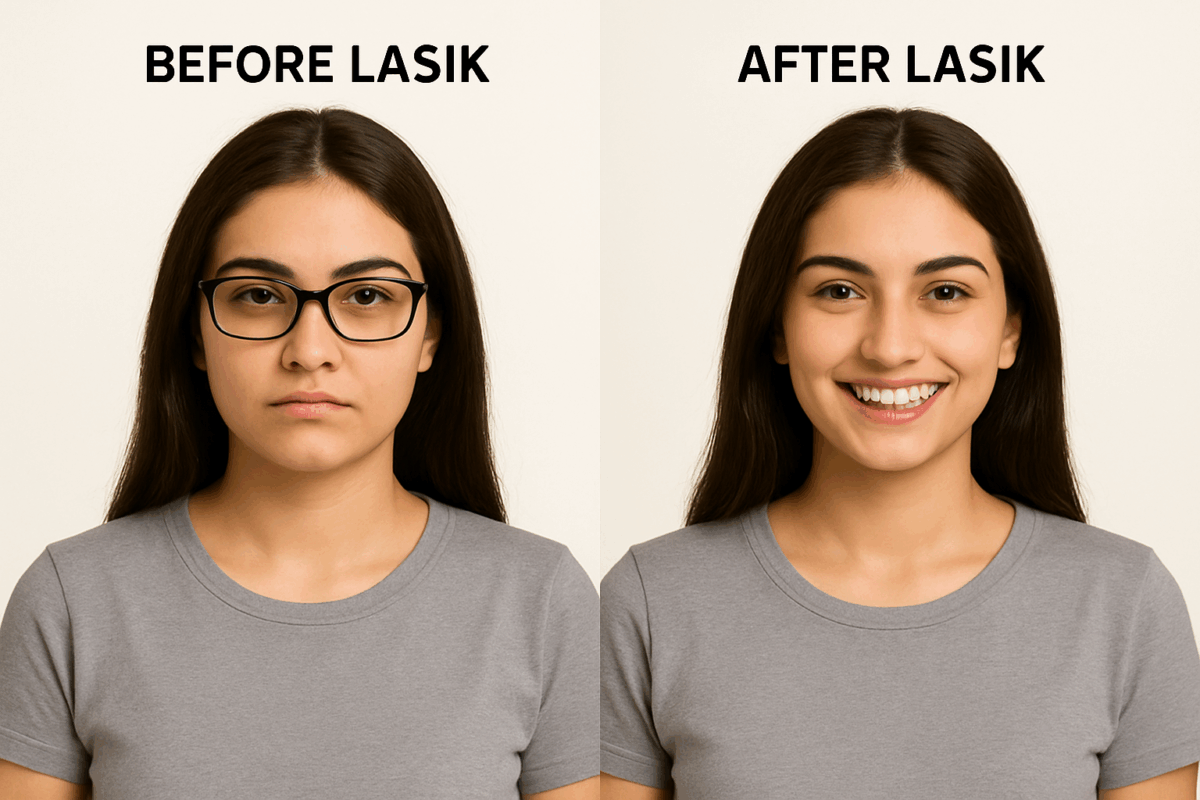
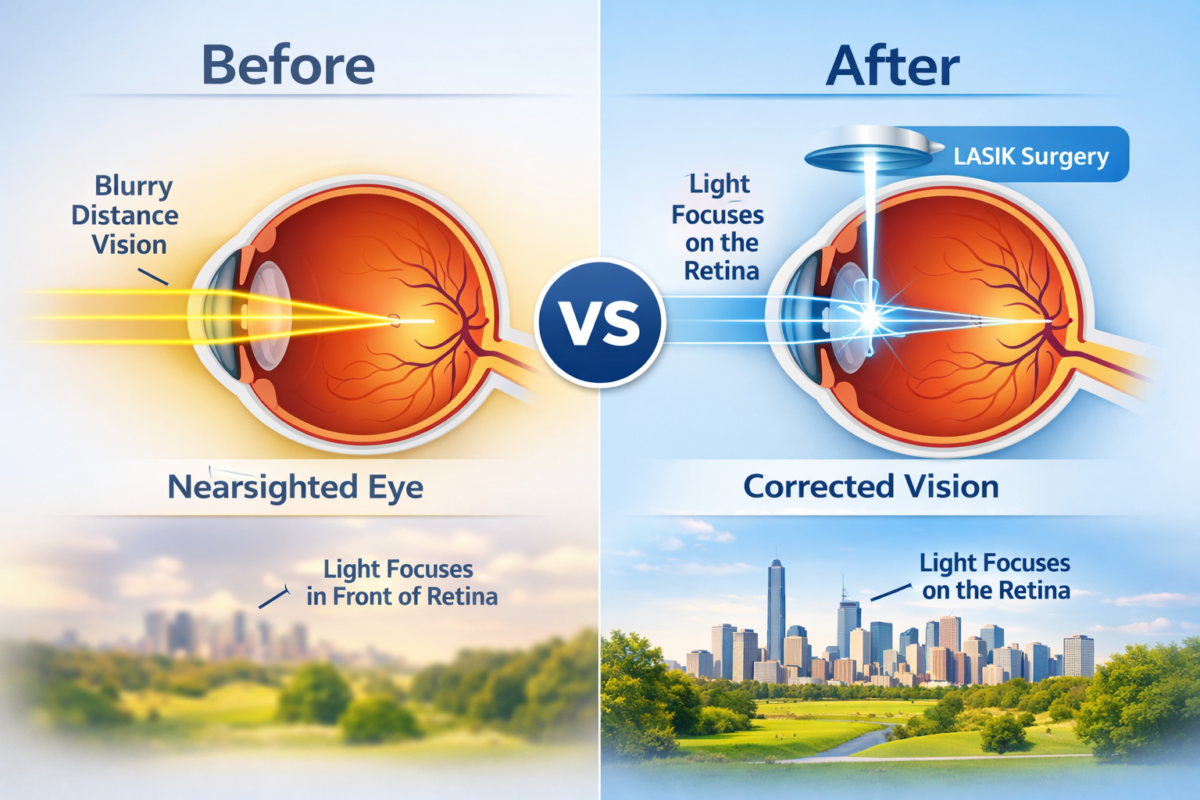
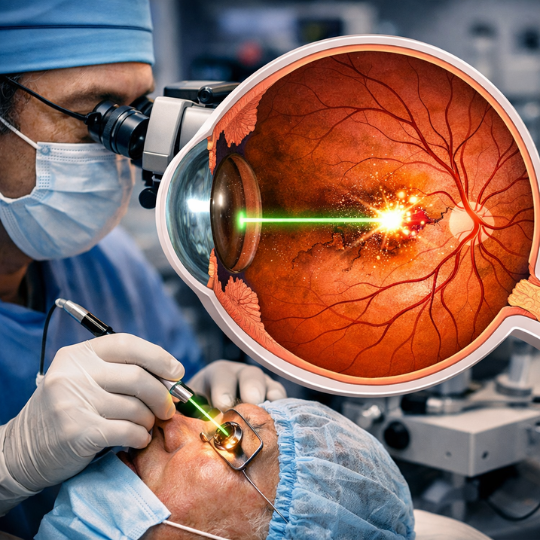
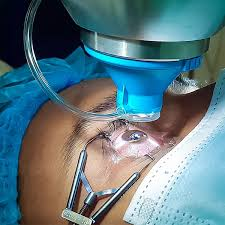
4. LASIK Surgery: A Permanent Astigmatism Treatment
LASIK (Laser-Assisted In Situ Keratomileusis) is one of the most popular surgical solutions.
Procedure Overview:
- A laser reshapes the cornea.
- Light focuses properly on the retina.
- Vision improves significantly.
Advantages:
- Quick procedure (usually under 30 minutes)
- Minimal discomfort
- Fast recovery
Most patients notice improved vision within 24–48 hours.
5. PRK (Photorefractive Keratectomy)
Doctors recommend PRK as another laser-based astigmatism treatment, especially when LASIK isn’t suitable.
Key Differences from LASIK:
- No corneal flap is created.
- Surface cells are removed before reshaping.
- Slightly longer recovery time.
PRK can be ideal for patients with thinner corneas.
6. Implantable Lenses (ICL)
For patients with high astigmatism who may not qualify for LASIK, implantable contact lenses can be an option.
How It Works:
- A synthetic lens is inserted inside the eye.
- The natural lens remains intact.
- Vision improves without corneal reshaping.
This is considered a long-term corrective solution.
7. Astigmatic Keratotomy (AK)
This surgical procedure involves making small incisions in the cornea to alter its shape.
Although doctors use advanced laser techniques more commonly today, they may still recommend it in specific cases.

Choosing the Right Astigmatism Treatment
Selecting the best astigmatism treatment depends on:
- Age
- Severity of astigmatism
- Corneal thickness
- Lifestyle needs
- Overall eye health
- Budget
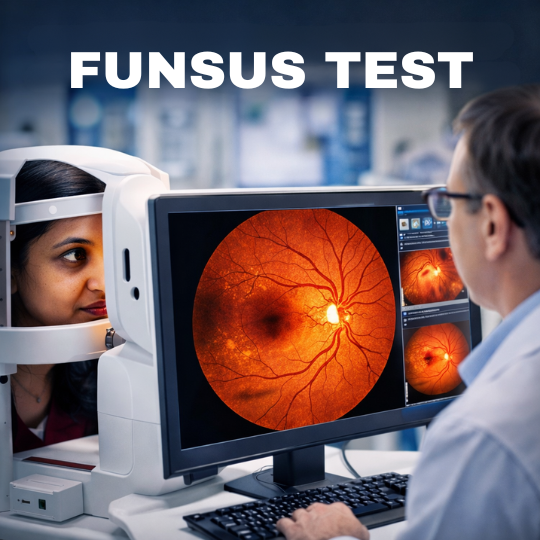
An eye specialist performs comprehensive tests, including corneal mapping and refraction assessments, to determine the ideal solution.
Is Astigmatism Treatment Safe?
Yes, most treatments are extremely safe when performed by qualified professionals.
Non-surgical methods like glasses and contacts carry minimal risk. When doctors carefully screen patients, surgical options such as LASIK and PRK achieve high success rates and maintain strong safety records.
As with any medical procedure, discussing potential risks and benefits with your doctor is essential.
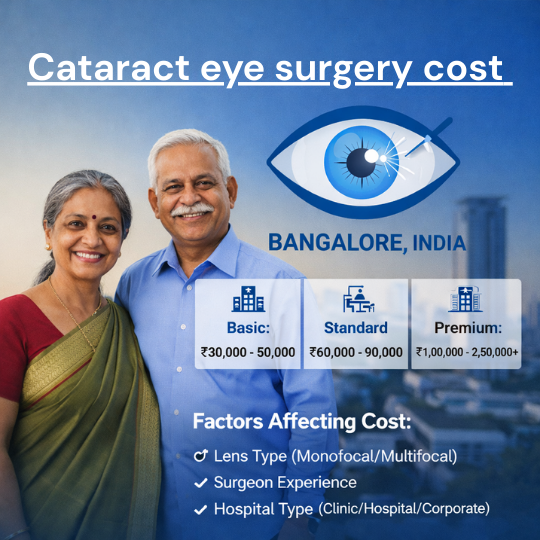
Cost Comparison of Astigmatism Treatments
| Treatment Option | Type | Estimated Cost (USA) | Estimated Cost (India) | Longevity | Best For |
|---|---|---|---|---|---|
| Eyeglasses | Non-Surgical | $100–$500 | ₹1,500 – ₹8,000 | 1–2 years (lens update) | Mild to moderate astigmatism |
| Toric Contact Lenses (Monthly) | Non-Surgical | $300–$700 per year | ₹6,000 – ₹18,000 per year | Ongoing | Active lifestyle users |
| Rigid Gas Permeable (RGP) Lenses | Non-Surgical | $800–$1,500 per year | ₹10,000 – ₹25,000 per year | 1–2 years | Moderate to high astigmatism |
| Orthokeratology (Ortho-K) | Non-Surgical (Overnight reshaping) | $1,000–$4,000 | ₹35,000 – ₹90,000 | 1–2 years (lens replacement) | Children & young adults |
| LASIK Surgery | Surgical | $2,000–$3,500 per eye | ₹25,000 – ₹100,000 per eye | Permanent (long-term) | Adults with stable vision |
| PRK Surgery | Surgical | $1,800–$3,000 per eye | ₹30,000 – ₹80,000 per eye | Permanent | Thin cornea patients |
| Implantable Collamer Lens (ICL) | Surgical | $4,000–$6,000 per eye | ₹80,000–₹150,000 per eye | Long-term | High astigmatism cases |
| Astigmatic Keratotomy (AK) | Surgical | $1,500–$3,000 per eye | ₹40,000–₹90,000 per eye | Long-term | Selected cases |
Can Astigmatism Be Prevented?
Astigmatism itself usually cannot be prevented, especially if it is genetic. However, you can:
- Schedule regular eye exams.
- Protect your eyes from injury.
- Avoid rubbing your eyes excessively.
- Manage underlying conditions like keratoconus.
Early detection ensures timely treatment and better outcomes.
Living Comfortably After Astigmatism Treatment
Most patients report:
- Clearer vision
- Reduced headaches
- Improved night driving
- Better productivity at work or school
- Enhanced quality of life
It’s often described as “seeing the world in HD” for the first time.
Author Details:
Dr. Sushruth Appajigowda holds a prominent position as a cornea, cataract, glaucoma, and LASIK surgeon in Bangalore. He serves as the chief cataract and refractive surgeon at Vijaya Nethralaya Eye Hospital, Nagarbhavi, Bangalore. Renowned as one of the finest LASIK surgeons nationwide, he brings with him over 12+ years of experience across multiple LASIK platforms, including ZEISS, ALCON, SCHWIND, AMO, and Bausch and Lomb. Having successfully conducted over 5000 LASIK procedures, Dr. Sushruth holds the title of a Certified Refractive Surgeon and a Fellow of the All India Collegium of Ophthalmology. Furthermore, he stands as a distinguished speaker at various national and international forums, using his expertise to guide you in selecting the most suitable procedure based on your health requirements.

http://vijayanethralaya.com/link-in-bio/
Frequently Asked Questions (FAQs)
1. Is astigmatism treatment permanent?
Glasses and contacts provide temporary correction. Surgical options like LASIK offer long-term or permanent correction in many cases.
2. Can children undergo astigmatism treatment?
Yes. Glasses are commonly prescribed. Surgery is usually reserved for adults.
3. Is LASIK painful?
No. Numbing drops are used, and most patients report only mild discomfort.
4. How long does recovery take after surgery?
LASIK recovery is typically 1–2 days. PRK may take a few weeks for full clarity.
5. Can astigmatism worsen over time?
It can change slightly, especially in children and young adults. Regular eye exams help monitor progression.
6. Are contact lenses better than glasses for astigmatism?
It depends on personal preference and lifestyle. Both are effective when properly prescribed.