

Introduction
Are you tired of wearing glasses or struggling with contact lenses every day? If you’ve been searching for “SMILE laser eye surgery near me,” you’re probably looking for a permanent solution to clear vision. SMILE (Small Incision Lenticule Extraction) is a modern, bladeless, and minimally invasive vision correction procedure that’s gaining popularity worldwide. Let’s dive deep into everything you need to know before booking your appointment.
Understanding SMILE Eye Surgery
SMILE is different from traditional LASIK or PRK. Instead of creating a flap in the cornea, it uses a femtosecond laser to create a small lenticule (a disc-shaped piece of tissue), which is removed through a tiny incision. This reshapes the cornea, correcting your vision with high precision.
Think of it as LASIK’s younger, more advanced cousin—safer, faster, and more comfortable.
Who is the Right Candidate for SMILE Surgery?
Not everyone is eligible, so here’s a quick checklist:
- Age: 18–40 years is ideal.
- Power Range: Best for people with myopia (-1 to -10 D) and astigmatism (up to -5 D).
- Eye Health: Corneas must be healthy and thick enough.
- General Health: No uncontrolled diabetes, autoimmune diseases, or eye infections.
Benefits of SMILE Laser Eye Surgery
So why are so many people searching for “SMILE laser surgery near me” instead of just sticking with LASIK or PRK? The answer lies in its benefits.
- Minimally Invasive – SMILE requires only a tiny incision, which means less disturbance to the eye’s surface compared to LASIK.
- Quick Recovery – Most people notice improved vision within 24 hours, and many return to work the very next day.
- Reduced Dry Eye Symptoms – Since fewer corneal nerves are cut, patients often experience less dryness after surgery.
- High Precision – The femtosecond laser used in SMILE is incredibly accurate, ensuring excellent results even for people with higher prescriptions.
- Stable Results – Studies show that SMILE patients enjoy long-lasting vision correction, with minimal regression over time.
Imagine never having to fumble for glasses in the morning or deal with the irritation of contacts after a long day. That’s the freedom SMILE offers. Many patients describe the surgery as one of the best decisions they’ve ever made, not just for convenience but for overall quality of life.
Another major benefit is safety. Because SMILE doesn’t involve creating a large corneal flap like LASIK does, the eye remains structurally stronger. This makes it a better option for people with thinner corneas or those at risk of eye injuries due to sports or physical jobs.

Who is the Right Candidate for SMILE Surgery?
Not everyone is eligible for SMILE, which is why a thorough consultation is essential before you decide. Generally, the best candidates for SMILE are:
- Age Group: Between 18 and 40 years old. Younger patients may still have changing prescriptions, and older patients might face age-related eye issues.
- Prescription Strength: SMILE is FDA-approved for people with nearsightedness (up to -10.00 diopters) and astigmatism (up to -3.00 diopters).
- Stable Vision: Your prescription should be stable for at least one year before surgery.
- Overall Eye Health: Healthy corneas and no major eye conditions like glaucoma, keratoconus, or severe dry eye.
Who should avoid SMILE? People with extremely thin corneas, active eye infections, or certain autoimmune diseases may not be ideal candidates. Also, if you’re pregnant or breastfeeding, most doctors recommend waiting due to hormonal changes that can temporarily affect vision.
Think of it this way: SMILE is like tailoring a suit—it works best when it fits you perfectly. That’s why a professional evaluation is crucial to determine if this procedure is truly the right fit for your eyes.
Step-by-Step Procedure of SMILE Surgery
- Pre-Surgery Consultation – Eye measurements, corneal scans, and health checks.
- During Surgery – The femtosecond laser creates a lenticule, which is removed via a small incision.
- After Surgery – Quick recovery, with vision improving within a few days.
How to Find the Best SMILE Laser Surgery Near Me
When you type “SMILE laser eye surgery near me” into Google, you’ll likely see dozens of clinics popping up. But how do you know which one is truly the best option? Here’s a checklist to help you narrow down your search.
What to Look For in a Clinic
- Board-Certified Surgeons – Always check if the surgeon is board-certified in ophthalmology and has specific training in SMILE procedures.
- Experience Level – Ask how many SMILE surgeries they’ve performed. The more experience, the better.
- Technology – Ensure the clinic uses the latest femtosecond laser systems approved by the FDA or relevant health authority.
- Comprehensive Care – Look for clinics that include pre-op evaluations, surgery, and post-op follow-ups in one package.
Questions to Ask Your Eye Surgeon
- How many SMILE procedures have you personally performed?
- What is your complication rate?
- What kind of results can I realistically expect?
- Do you also perform LASIK and PRK, or do you only recommend SMILE?
- What’s included in the cost of surgery?
Red Flags to Avoid
- Clinics advertising extremely low prices that seem “too good to be true.”
- Surgeons who rush consultations or avoid answering questions.
- Lack of online reviews or many negative patient experiences.
Ultimately, the right surgeon should make you feel comfortable, informed, and confident. Remember, you’re trusting them with your eyesight—don’t settle for anything less than excellence.
Technology Used in SMILE Eye Surgery
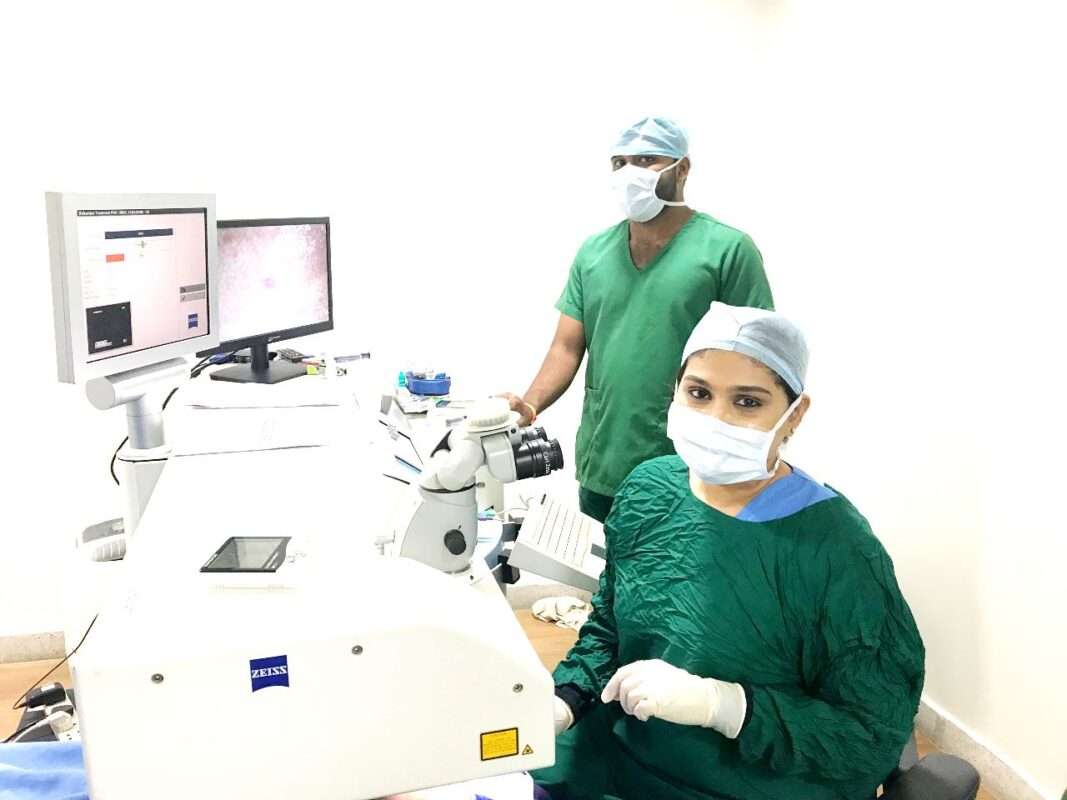
The key to SMILE’s success is the femtosecond laser, which works with extreme precision. Clinics also use corneal mapping systems and advanced diagnostic tools to ensure safety and accuracy.
SMILE vs LASIK vs PRK
- SMILE: Minimally invasive, flapless, best for myopia.
- LASIK: Widely available, fast results, but involves a corneal flap.
- PRK: No flap, good for thin corneas, but longer recovery.

Cost of SMILE Eye Surgery Near Me
The average cost ranges between ₹70,000 to ₹1,20,000 per eye in India (or $2,500–$4,500 in the US). Factors like doctor expertise, clinic reputation, and technology used affect pricing. Some insurance may cover partial costs if prescribed medically.
Recovery and Aftercare Tips
The recovery process is one of the highlights of SMILE compared to LASIK or PRK. Since there’s no large flap, healing is faster and more comfortable.
Immediate Recovery Timeline
- Day 1: Slight blurriness or haze, but vision improves quickly.
- Day 2–3: Most patients resume normal activities, including work.
- Week 1: Eyes feel normal; vision stabilizes further.
- Month 1: Full clarity achieved, though some fluctuations are normal.
Post-Surgery Care Instructions
- Use prescribed antibiotic and anti-inflammatory drops to prevent infection.
- Avoid rubbing your eyes, swimming pools, and dusty environments for at least a week.
- Wear protective sunglasses when outdoors to shield against UV rays.
When You Can Return to Activities
- Work: 1–2 days
- Exercise: Light workouts in 3–5 days, contact sports after 1 month
- Driving: Usually the next day, pending surgeon’s approval
Most patients are amazed at how seamless the recovery feels. Unlike PRK, which may require weeks of discomfort, SMILE offers near-instant results with minimal downtime.
Possible Risks and Side Effects
Like any surgery, SMILE carries minor risks such as:
- Mild dry eyes (less frequent than LASIK).
- Temporary glare or halos at night.
- Rare under or overcorrection.
These usually improve with time and proper aftercare.
Success Rate of SMILE Eye Surgery
Studies show that over 95% of patients achieve 20/20 vision or better after SMILE. Patient satisfaction is high, thanks to its safety and effectiveness.
Patient Experiences and Testimonials
Many patients report freedom from glasses within a day or two. Stories often highlight the painless procedure, minimal downtime, and life-changing results.
How to Prepare for Your SMILE Surgery Appointment
- Stop wearing contact lenses 1–2 weeks before.
- Get enough rest the night before.
- Arrange someone to drive you home after surgery.
- Prepare your questions about cost, risks, and aftercare.
Future of SMILE Eye Surgery
The technology is evolving rapidly. Soon, SMILE will treat higher levels of astigmatism and even hyperopia. More clinics are adopting it, making it accessible to more people.
Conclusion
Searching for “SMILE laser eye surgery near me” is the first step toward ditching glasses and contacts for good. With its advanced technology, minimally invasive approach, and quick recovery, SMILE is one of the best choices for modern vision correction. Just make sure you choose an experienced surgeon and follow post-surgery care strictly.
FAQs
1. How long does SMILE surgery take?
The surgery itself takes about 15–20 minutes for both eyes.
2. Is SMILE painful?
No, it’s painless. You may feel slight pressure, but no discomfort.
3. Can SMILE treat hyperopia (farsightedness)?
Currently, it’s mainly for myopia and astigmatism, but advancements are coming.
4. How soon can I return to work after SMILE?
Most patients return within 1–2 days, depending on recovery.
5. Is SMILE safer than LASIK?
Both are safe, but SMILE reduces the risk of flap-related issues and dry eyes.